
Voice AI Trends and Strategies for 2024: Your Guide to Success
Stay ahead in Voice AI for 2024 with key trends and strategies. Discover how to leverage this technology effectively for your business.
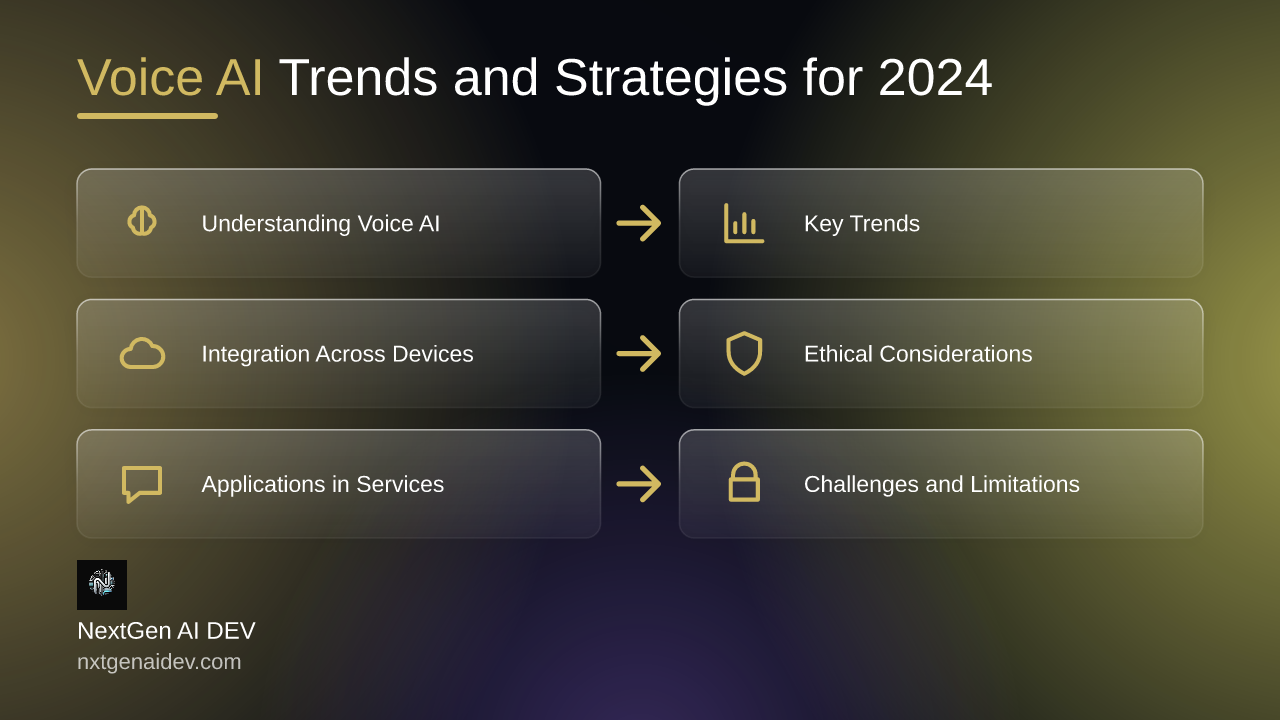
Voice AI Trends and Strategies for 2024: Your Guide to Success
Imagine having a device that not only understands your queries but also tailors responses to your unique preferences. Voice AI is transforming our interactions with technology, and as we step into 2024, its evolution promises groundbreaking changes. This guide will navigate the latest trends and strategies to ensure your success with Voice AI in the upcoming year.
Understanding Voice AI: Definition and Functionality
What is Voice AI?
Voice AI, at its core, is the integration of artificial intelligence technologies that enable machines to interpret and respond to human speech. It encompasses several capabilities, including speech recognition, natural language processing (NLP), and speech synthesis, which together create a seamless interaction layer between users and devices. As businesses adopt Voice AI, they enhance the customer experience and operational efficiency.
How does Voice AI work?
Voice AI operates through a series of complex processes:
Speech Recognition: Converts spoken words into text using machine learning algorithms.
Natural Language Understanding (NLU): Interprets the meaning behind the transcribed text.
Natural Language Generation (NLG): Creates responses in human-like speech.
This triad allows Voice AI systems to process commands and answer queries effectively, ensuring interactions feel more human and less mechanical.
Common use cases for Voice AI agents
Various industries are embracing Voice AI to streamline operations and enhance user engagement.
Healthcare: Voice AI assists in patient management, allowing nurses to document patient information verbally.
Retail: Brands use voice assistants to guide customers through their purchase journey, improving satisfaction and conversion rates.
Finance: Voice AI can answer customer inquiries regarding accounts, making transactions more accessible.
Key Trends Shaping Voice AI in 2024
Hyper-personalization in voice interactions
As consumers demand tailored experiences, hyper-personalization is becoming a cornerstone of Voice AI technology. By analyzing user data, companies can customize interactions based on individual preferences and behavior, creating a seamless dialogue that fosters brand loyalty.
Generative AI's impact on conversational interfaces
Generative AI is set to redefine conversational interfaces. By understanding context and producing relevant and coherent responses, generative AI enhances Voice AI's capabilities. This advancement not only improves user engagement but also influences satisfaction rates, with studies indicating that personalized experiences can boost user interactions by over 30% (link text).
Integration of Voice AI Across Smart Devices
Voice AI in smart home technology
Voice AI is reshaping smart home systems, making them more intuitive and user-friendly. Devices like smart speakers and assistants facilitate control over multiple home functions—lighting, temperature, and security—through simple voice commands, significantly enhancing convenience.
Future of Voice AI in IoT
The integration of Voice AI with the Internet of Things (IoT) is poised to skyrocket. Imagine a refrigerator that reminds you to buy groceries or a thermostat that adjusts based on your spoken preferences. This seamless interaction across devices paves the way for an automated, responsive living environment, offering unprecedented control and efficiency.
Ethical Considerations in Voice AI Implementation
Data privacy and security
With the rapid adoption of Voice AI, the importance of data privacy cannot be overlooked. Organizations must ensure user data is handled securely, implementing robust encryption and compliance with privacy regulations like GDPR to protect sensitive customer information.
Addressing bias in voice models
Voice models are often trained on datasets that do not represent the diversity of human speech. Companies need to develop strategies that minimize biased outcomes, ensuring equitable interactions. Solutions could involve collecting diverse datasets and continuously refining algorithms to reflect a broader spectrum of human voices.
Voice AI Applications in Customer Service and Healthcare
Customer support automation
Voice AI is revolutionizing customer service by automating responses to frequently asked questions, thus enhancing efficiency. Businesses that leverage Voice AI report faster resolution times and reduced operational costs, allowing human agents to focus on more complex issues.
Enhancing patient care with Voice AI
In healthcare settings, Voice AI applications are improving patient care. For example, voice-activated assistants can help clinicians access patient records hands-free, streamlining workflows and enhancing patient interactions. Case studies have highlighted significant efficiency gains, paving the way for future advancements in healthcare delivery.
Challenges and Limitations of Voice AI
Handling multiple languages
One of the primary challenges facing Voice AI is multilingual support. Effective communication in different languages requires extensive training and data collection. Voice AI systems must continue to evolve to handle this challenge effectively.
Technical hurdles in understanding accents
Voice recognition accuracy varies, particularly with accents and dialects. Users may encounter limitations when systems fail to comprehend variations in pronunciation. Tech developers need to address these challenges to create a universally accessible Voice AI.
Looking Ahead: Strategies for Implementing Voice AI Effectively
Steps to integrate Voice AI into business
Integrating Voice AI into your business involves several key steps:
Define Objectives: Clearly outline what you hope to achieve with Voice AI integration, whether it's improving customer service or streamlining operations.
Choose the Right Technology: Evaluate different Voice AI platforms to ensure you select the right tools for your needs.
Invest in Training: Educate your team on how to utilize Voice AI effectively for optimal results.
Measuring the success of Voice AI initiatives
Establishing key performance indicators (KPIs) is crucial for evaluating the success of Voice AI initiatives. Consider metrics such as user engagement rates, response accuracy, and customer satisfaction scores to gauge performance. Long-term strategies should focus on continuous improvement, incorporating user feedback to refine and enhance the experience further.
As we venture into 2024, Voice AI is evolving at an exponential rate, presenting both opportunities and challenges. With a proactive approach and an understanding of current trends, your business can harness the full potential of this technology.
What challenges have you encountered while implementing Voice AI in your work or daily life?
💬 Join the conversation — share your take in the comments and tell us what you’d add.