
Unlocking the Future of Voice AI: Innovations and Applications Explained
Explore how Voice AI is revolutionizing interactions and streamlining tasks. Discover innovative applications today!
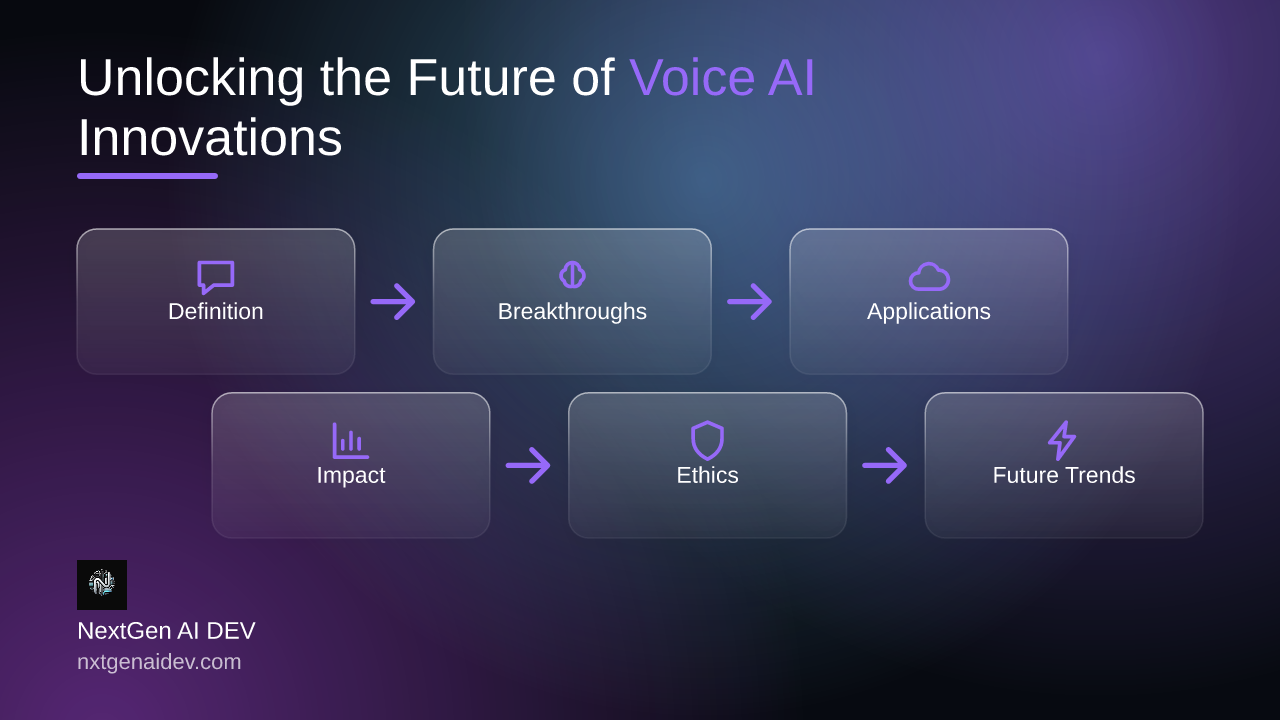
Unlocking the Future of Voice AI: Innovations and Applications Explained
The world of Voice AI is evolving at a breathtaking pace, reshaping how we interact with technology. From voice-activated assistants to customer service bots, Voice AI is transforming the way we communicate, making technology more accessible and intuitive than ever before.
What is Voice AI?
Definition of Voice AI
Voice AI is defined as technology that enables machines to interpret and respond to human speech. By leveraging sophisticated algorithms and machine learning, Voice AI aims to bridge the gap between human communication and computer understanding.
How Voice AI Works
This technology relies on several key elements: speech recognition allows the system to capture spoken words, natural language processing (NLP) interprets the meaning behind those words, and speech synthesis translates the response back into human-like speech. Each component works harmoniously to create seamless interactions between users and machines.
Latest Breakthroughs in Voice AI Technology
Human-like AI Speech Generation
Recent advancements in deep learning have led to significant progress in creating more natural-sounding voice assistants. Techniques such as WaveNet and Tacotron allow for a near-human level of emotional intonation and rhythm. Brands like Google and Amazon are rapidly adopting these technologies, enhancing the overall user experience.
LLM Integration in Voice Systems
The integration of large language models (LLMs) like GPT-3 has taken Voice AI systems to new heights. These models enable improved comprehension and context-awareness, allowing systems to provide more accurate and relevant responses. This advancement has revolutionized applications within customer service and personal assistants, making them more efficient and user-friendly.
Common Applications of Voice AI Today
Conversational AI in Customer Service
Many brands harness the power of Voice AI to enhance customer interactions. For example, companies like Starbucks use voice assistants to streamline order processing, allowing customers to place orders through simple voice commands. This results in faster service and improved customer satisfaction.
Voice Biometrics for Security
In sectors such as banking and healthcare, voice biometrics are employed to bolster security measures. This technology analyzes unique vocal characteristics to verify identity, making online banking more secure and minimizing identity theft risks. By replacing traditional PINs with voice authentication, companies not only enhance security but also simplify user access.
Impact on Content Creation and Marketing
Using Speech AI for Content Generation
Content creators are increasingly adopting Voice AI tools to aid in generating scripts and articles. For instance, platforms like Descript allow users to transcribe video and audio content into text, facilitating a smoother editing process. This means writers can focus on creativity while the technology handles the heavy lifting of transcription and initial drafts.
Voice Assistants in Marketing Strategies
Voice assistants such as Alexa and Google Assistant have become crucial components of modern marketing strategies. Brands leverage these platforms to create interactive advertisements and promotions, driving engagement through voice searches. A notable example is how Nestlé integrated recipes into Google Home, encouraging customers to interact with their brands while cooking.
Privacy and Ethical Concerns around Voice AI
Understanding Privacy Issues
As Voice AI becomes more integrated into our daily lives, privacy concerns grow. Users often worry about data security and the extent of data collected during interactions. Transparency about data handling practices is essential for maintaining user trust in Voice AI systems. Brands need to prioritize ethical data usage while providing robust privacy policies.
Addressing Discrimination and Bias
Bias in voice recognition systems is another pressing concern, potentially impacting user experiences based on accents, dialects, or speech patterns. Recognizing and addressing this bias is crucial for the technology's developers. Strategies like diversifying training data can help create more inclusive systems, ensuring that all users feel understood and represented.
Future Trends in Voice AI
Accent and Multilingual Support
Emerging technologies aim to enhance Voice AI's ability to support diverse accents and dialects. Companies are now investing in training models on varied linguistic data to ensure that the systems can understand and interact with users from different backgrounds. This inclusivity is essential for global reach and user satisfaction.
Emotional and Contextual Understanding
The future of Voice AI may well lie in its ability to understand emotions and context. Incorporating sentiment analysis can allow systems to adjust their responses based on the user's emotional state. For instance, a voice assistant that detects frustration might alter its tone or simplify instructions, significantly enhancing user interactions.
Real-world Case Studies of Voice AI Implementation
Successful Voice AI Applications
Several companies have successfully integrated Voice AI into their operations, improving efficiency and customer engagement. Take the example of a healthcare provider that implemented a voice recognition system for patient check-ins. This innovation not only streamlined the process but also reduced waiting times significantly.
Lessons Learned from Implementations
However, implementing Voice AI isn’t without its challenges. Companies often face hurdles such as technical limitations, user resistance, and data privacy concerns. Learning from these experiences is crucial for future advancements. For instance, one retailer's unsuccessful voice shopping integration highlighted the need for user-centric design and robust backend support to ensure seamless functionality.
What has been your most intriguing experience or challenge with Voice AI technology?
💬 Join the conversation — share your take in the comments and tell us what you’d add.