The Future of Voice AI: Innovations and Opportunities for Startups
Explore Voice AI innovations and unlock opportunities for startups. Join the wave of transformative technology today!
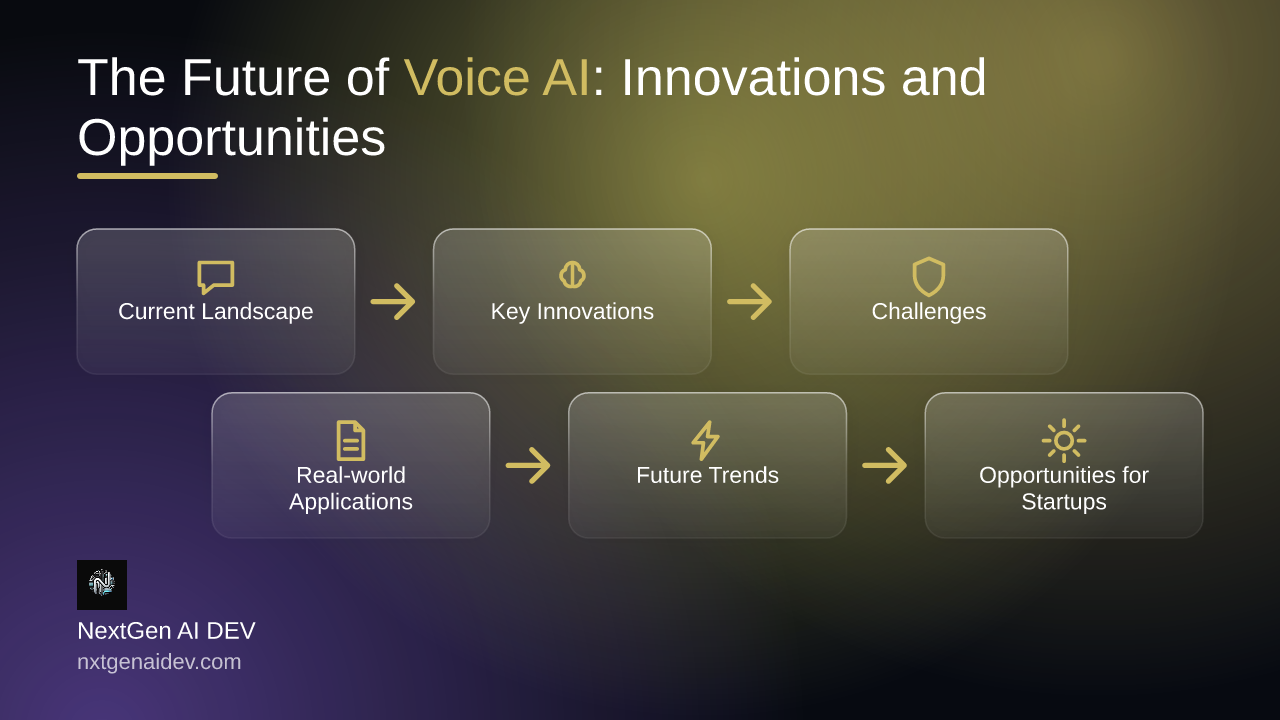
Understanding Voice AI and Its Current Landscape
Voice AI is not just a trend; it's a transformative technology reshaping how we interact with machines. From virtual assistants to customer service bots, the applications are expansive and continuously evolving.
What is Voice AI?
Voice AI refers to artificial intelligence systems that can understand, process, and respond to spoken language. At its core, it harnesses technologies like Natural Language Processing (NLP), speech recognition, and speech synthesis. These components work in conjunction to allow for seamless human-computer interactions, providing users with a natural and intuitive interface. The goal? To enable machines to interpret and respond to voice commands with a human-like understanding.
Current Applications of Voice AI
Voice AI has made significant inroads across various sectors. In customer service, for instance, chatbots powered by voice technology are streamlining support systems, resolving queries quickly and efficiently. Personal assistants like Google Assistant and Alexa are harnessing voice commands to manage tasks, play music, or even control smart home devices. As these technologies become more integrated into our daily lives, their impact on business operations and user experiences becomes increasingly profound. Businesses leveraging Voice AI are witnessing enhanced customer engagement and improved operational efficiency.
Key Innovations Shaping the Future of Voice AI
The landscape of Voice AI is rapidly evolving, driven by numerous innovations that enhance user experience and redefine capabilities.
Human-like Voice AI and Natural Interaction
One of the most exciting developments in Voice AI is the advent of human-like voice synthesis. Companies like OpenAI and Google are pioneering voice generation technologies that produce sound indistinguishable from a human speaker. This creates an immersive interaction experience, allowing users to engage in conversations rather than mere commands.
Advanced NLP and Large Language Models
At the heart of these advancements lies NLP, which has seen remarkable improvements in its ability to comprehend context and intent. Large language models, such as GPT-3, are available to startups aiming for more sophisticated understanding and response generation. These models allow for more nuanced interactions, opening avenues for more engaging and relevant user experiences.
Challenges and Limitations of Current Voice AI
Despite the promise of Voice AI, several critical challenges hinder its advancement.
Low-Latency and Real-time Processing
One major hurdle is ensuring low latency in real-time processing. Slow response times can severely detract from user experience, making interactions feel clunky and frustrating. Customers accustomed to instant feedback may disengage if they perceive delays. Startups developing Voice AI tools must prioritize optimizing response times to create fluid interactions.
Legal and Ethical Considerations
Moreover, the deployment of Voice AI raises legal and ethical questions. Issues like user data privacy, consent, and the potential for bias in AI responses are paramount. For example, startups must navigate compliance with regulations like GDPR while ensuring their models do not perpetuate existing biases. Addressing these concerns is vital for ethical success in the Voice AI landscape.
Real-world Applications and Success Stories
Understanding how startups leverage Voice AI is vital for anyone looking to dive into this space.
Case Studies of Startups Using Voice AI
Consider a startup like Mighty AI, which uses Voice AI to enhance automated customer interactions. By integrating dialogues that mirror human interactions, they’ve significantly improved customer satisfaction and reduced operational costs. This case illustrates how a focus on user experience can result in tangible business benefits.
Comparative Analysis of Voice AI Technologies
Not all Voice AI technologies are created equal. Comparing platforms like Amazon Polly and IBM Watson reveals significant differences in voice quality, supported languages, and ease of integration. Each technology has its strengths and weaknesses, making it crucial for startups to select the one that best aligns with their specific needs and use cases.
Future Trends: What’s Next for Voice AI?
As Voice AI continues to develop, several trends promise to redefine its future trajectory.
Multilingual Orchestration and Real-time Translation
One exciting frontier is the enhancement of multilingual capabilities. The ability to seamlessly switch between languages in real time can revolutionize customer service and global communications. Companies that invest in this area will likely capture a broader audience, opening international markets and fostering inclusivity.
End-to-End Speech-to-Speech Models
End-to-end speech-to-speech models are also emerging. These technologies facilitate the translation of spoken language directly to another spoken language without intermediate text processing. Startups developing solutions in this area can stand to benefit immensely, from simplifying cross-language communication to enhancing global collaboration.
Opportunities for Startups in the Voice AI Space
The rapidly evolving Voice AI landscape presents numerous opportunities for innovative startups.
Identifying Gaps in the Market
One of the most significant opportunities lies in identifying gaps within the existing Voice AI solutions. For instance, while many solutions cater to English-speaking customers, there is a vast potential market for languages or dialects that remain underrepresented in Voice AI platforms. Startups that focus on these gaps can offer compelling solutions to underserved communities.
Developing Innovative Solutions
Moreover, there’s a pressing need for innovative use cases tailored to diverse industries. For example, integrating Voice AI into healthcare to assist with patient documentation could transform care delivery. Encouraging startups to innovate around these identified gaps will lead to the creation of more robust and specialized solutions.
Conclusion
The future of Voice AI is brimming with potential, offering countless opportunities for startups ready to innovate and challenge the status quo.
What unique challenge would you like to solve using Voice AI in your startup?
💬 Join the conversation — share your take in the comments and tell us what you’d add.