The Future of Automation: AI Innovations Transforming Business Workflows
Discover how automation is transforming workflows with AI innovations. Unlock efficiency and stay ahead in your industry today!
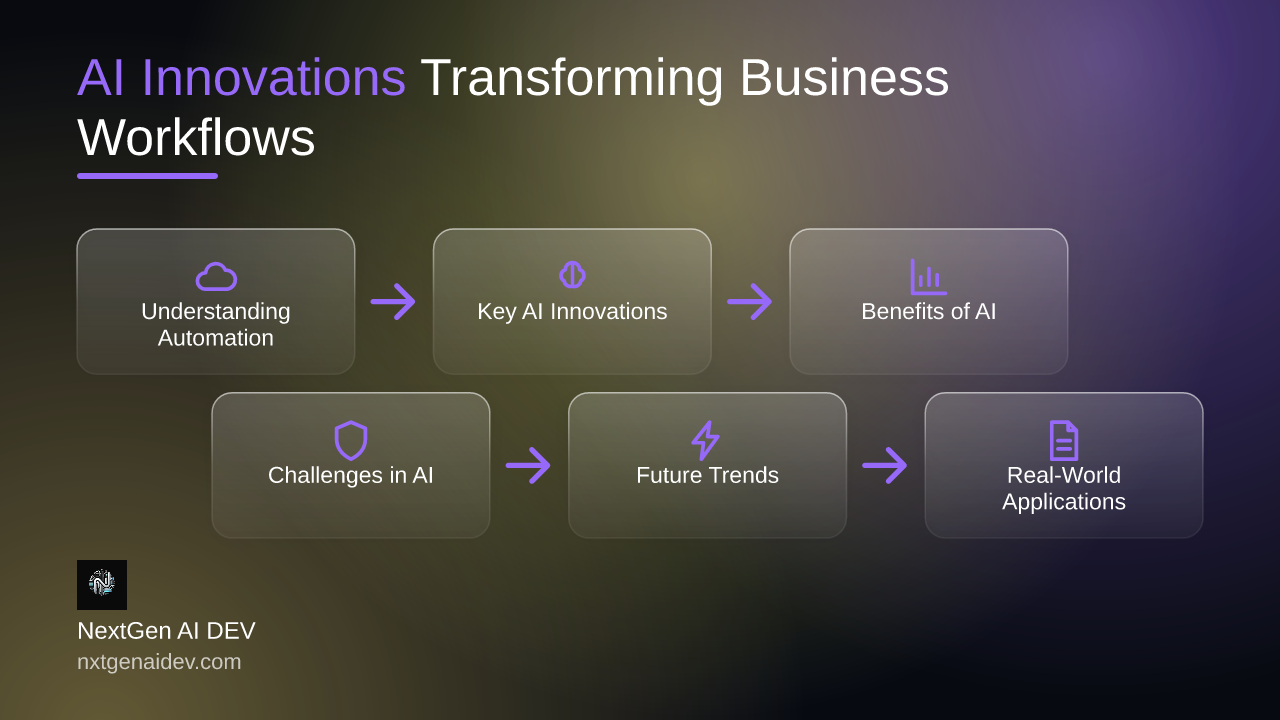
Understanding Automation in the Age of AI
Automation has traditionally streamlined repetitive tasks, allowing businesses to enhance productivity and focus on strategic initiatives. Today, the landscape is changing rapidly with the integration of artificial intelligence (AI). As we pivot from standard automation to more sophisticated, AI-driven solutions, it's vital to understand what this transition entails.
What is Automation?
At its core, automation refers to using technology to perform tasks with minimal human intervention. It spans various applications from manufacturing assembly lines to software applications managing data entry. Traditional automation might involve a simple script to handle routine email responses, but the introduction of AI heralds a new era. It transforms static operations into dynamic systems capable of learning and adapting.
The Evolution of Workflows
The evolution from traditional automation to AI-driven automation has brought about more than just efficiency. While traditional systems execute predefined tasks, AI systems learn from data to improve and optimize processes. For instance, AI can analyze user behavior to personalize experiences or predict inventory needs in real time. This shift not only enhances the functionality of existing workflows, but it also opens the door to innovative business models that can be tailored to market demands.
Key AI Innovations Transforming Business Workflows
As businesses seek to adopt AI, several key innovations are leading this transformation. Understanding these developments is crucial for organizations looking to stay competitive.
Hyperautomation for Enterprise Operations
Hyperautomation takes automation to the next level. It combines advanced technologies like RPA (Robotic Process Automation), AI, and machine learning to automate increasingly complex business processes. This approach is particularly relevant for enterprise operations, where coordinating multiple workflows can become cumbersome. By leveraging hyperautomation, businesses can eliminate bottlenecks across departments, driving efficiency and enhancing agility.
Generative AI's Role in Business
Generative AI is changing the way businesses approach problem-solving. By creating new content, designs, or solutions based on input data, generative AI enables unique insights that were previously unattainable. For example, marketing teams can use generative AI to create targeted campaigns based on customer behavior data, leading to high conversion rates and increased customer satisfaction. This innovation empowers businesses to be more creative and responsive to evolving market trends.
Intelligent Document Processing (IDP)
Intelligent Document Processing (IDP) enhances how organizations manage digital documents. Rather than manual data entry, IDP utilizes machine learning to extract, classify, and process information from documents automatically. This technology has significant implications for data management and compliance, ensuring that businesses can maintain organization without risking human error. By integrating IDP, companies can streamline their documentation processes while adhering to regulatory requirements efficiently.
Benefits of AI-Driven Business Process Automation
The shift toward AI-driven business process automation comes with numerous benefits, transforming not just workflows but also the fundamental manner in which organizations operate.
Improved Operational Efficiency
One of the most significant advantages of AI in automation is improved operational efficiency. By minimizing repetitive tasks, organizations can allocate their human resources to higher-value activities. For instance, customer service chatbots using AI can handle common inquiries, allowing human agents to focus on complex issues that require nuanced understanding and empathy.
Enhanced Decision-Making
AI-powered decision intelligence leads to significantly better business outcomes. By analyzing large datasets, AI can uncover patterns and trends that may go unnoticed by human analysts. Businesses can make informed decisions based on these insights, optimizing strategies and responses in real time. For example, predictive analytics can help businesses adjust inventory levels based on anticipated demand fluctuations, reducing waste and increasing customer satisfaction.
Cost Reduction
A direct impact of implementing AI-driven workflows is the reduction in operational costs. By automating time-consuming processes, businesses can save money on labor costs and increase productivity. For example, firms that have adopted hyperautomation report up to a 30% reduction in operational costs while enhancing service delivery. These savings can then be reinvested into growth initiatives, further amplifying the business’s competitive edge.
Challenges in Implementing AI in Business Workflows
As organizations tread the path of implementing AI, it's crucial to recognize the potential challenges that can emerge. Addressing these head-on ensures smoother transitions and more sustainable benefits.
Integration with Legacy Systems
One of the primary hurdles businesses face is integrating AI solutions with existing legacy systems. Many organizations rely on outdated technologies that may not support modern AI capabilities. This situation can lead to increased costs, as businesses might need to invest in updated infrastructure or develop bespoke solutions to enable compatibility. Ensuring smooth integration is essential for maximizing the effectiveness of AI solutions.
Ethical Considerations
With great power comes great responsibility. The ethical implications of using AI in automation are significant. Concerns around bias in AI algorithms, data privacy, and job displacement must be addressed transparently. Organizations need to establish ethical guidelines for AI usage, ensuring decisions are made responsibly to maintain customer trust and uphold societal values.
Future Trends in Automation Driven by AI
As AI continues to evolve, several trends are emerging that will shape the future of automation in business workflows. These developments promise even greater efficiencies and collaborative innovations.
Agentic AI Systems and Multi-Agent Collaboration
Agentic AI systems are designed to operate autonomously within defined parameters, facilitating enhanced collaboration between various AI agents. These systems can work together to tackle complex tasks, optimizing results far beyond what an individual agent could achieve. For example, in supply chain management, multiple AI agents can collaborate to forecast demand, manage inventory, and streamline logistics, creating a robust ecosystem aimed at efficiency.
Low-Code Automation Platforms
Low-code automation platforms are democratizing automation development, empowering non-technical users to create automated solutions tailored to their needs. By reducing the technical barriers typically associated with automation, businesses can accelerate their transformation efforts and speed up the deployment of AI-driven workflows. This shift means that more employees can contribute to innovation without relying solely on IT specialists, fostering a culture of creativity and responsiveness.
Real-World Applications of AI in Automation
Bringing theory into practice, let's explore some real-world examples of successful AI implementations in automation across various industries.
Case Studies of AI Implementations
Organizations using AI have seen transformative results. In healthcare, for example, AI technologies are being employed to predict patient admissions based on historical data, significantly improving resource allocation and care delivery. Retailers like Amazon harness AI to recommend products based on user behavior, driving higher sales conversion rates.
Lessons Learned from Small Businesses
Small businesses often face unique challenges while adopting AI but are finding ways to overcome them. A local e-commerce store that integrated chatbots into its customer service strategy reported reducing response times by 50%. However, the owner emphasizes the importance of starting small—testing AI applications in manageable increments before scaling. This approach allows for practical adaptation and smoother transitions.
Understanding AI-driven automation's potential and challenges is vital as we look forward. If businesses can navigate these waters thoughtfully, they can reap substantial rewards.
What has been your experience with implementing AI in your business workflows, and what challenges or successes have you encountered?
💬 Join the conversation — share your take in the comments and tell us what you’d add.