Streamline Security with Passwordless Auth and Multi-Org RBAC
Enhance enterprise security with passwordless auth and multi-org RBAC. Simplify user access and boost protection today.
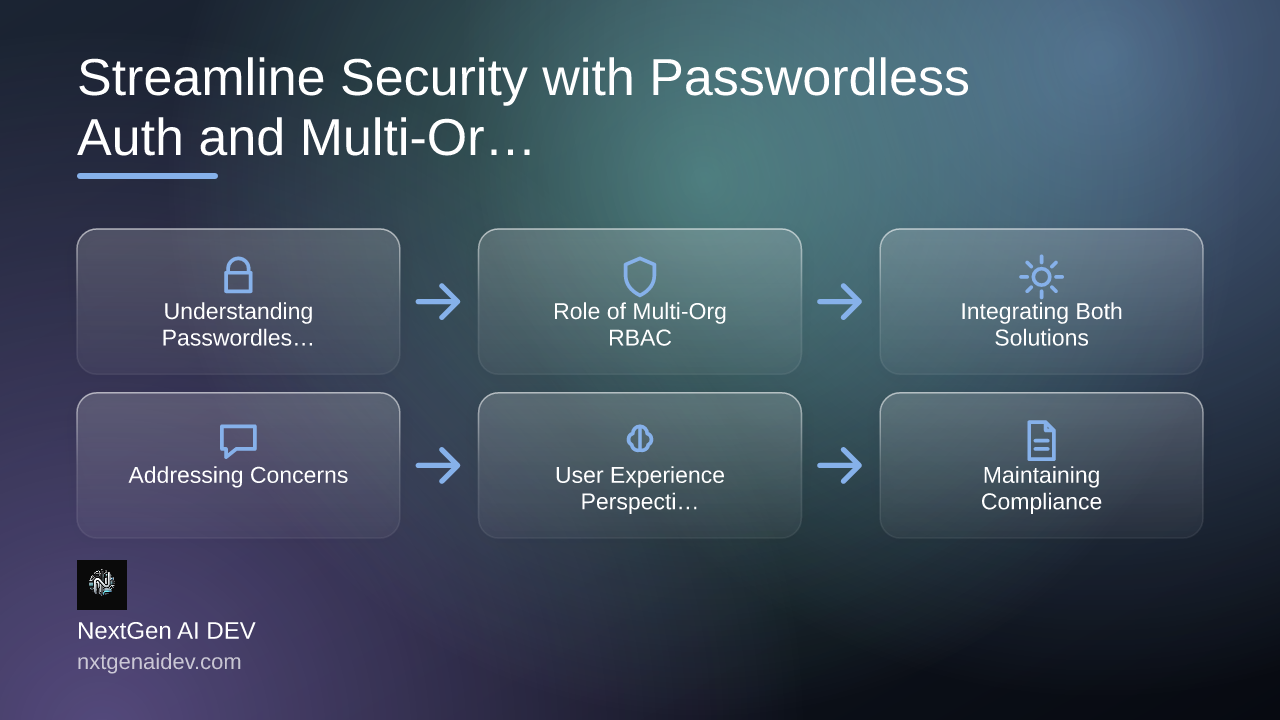
Streamline Security with Passwordless Auth and Multi-Org RBAC
Imagine a world where your organization's security is unbreachable, yet user access remains seamless and intuitive. With NextGen AI DEV, implementing passwordless authentication and multi-org Role-Based Access Control (RBAC) can make that vision a reality. These innovative solutions work in tandem to enhance security while significantly improving user experience and management.
Understanding Passwordless Authentication
What is Passwordless Authentication?
Passwordless authentication is revolutionizing how organizations verify user identities by eliminating traditional passwords. Instead of relying on passwords vulnerable to theft or phishing, NextGen AI DEV employs alternative verification methods such as biometrics, hardware keys, or magic links. This not only makes the login process smoother but also fortifies security by reducing common breaches associated with weak or stolen passwords.
How Does Passwordless Authentication Work?
At its core, passwordless authentication operates through a variety of mechanisms that align with modern security needs. For instance, biometric scans ensure that only authorized users gain access, while hardware security keys provide an additional layer of protection. Magic links send one-time access codes via email or SMS, ensuring that even if a malicious entity obtains a user's password, they're kept at bay with smarter authentication methods.
Benefits of Passwordless Authentication
By moving to a passwordless framework, organizations can drastically improve their security posture. Phishing attempts and password leaks are significantly reduced, creating a more robust defense against cyber threats. Additionally, this move simplifies the user experience. Employees no longer need to remember complex passwords or routinely update them, reducing frustration and enhancing productivity.
The Role of Multi-Org RBAC in Security
What is Multi-Org RBAC?
Multi-Org Role-Based Access Control (RBAC) is critical in managing permissions across multiple organizational units within NextGen AI DEV. This system allows organizations to customize user roles and permissions finely, ensuring that sensitive information is only accessible to those who truly need it.
Benefits of Multi-Org RBAC
The structured approach of RBAC provides greater control over user access, which is essential not only for security but also for compliance. By defining specific roles, organizations can audit and demonstrate compliance with internal policies and external regulations. Additionally, this granularity in permission settings means that risks are minimized across the board.
Ensuring Tenant Isolation
A cornerstone of multi-org RBAC is its ability to effectively isolate tenants. By employing techniques like user group segregation, NextGen AI DEV guarantees that sensitive information stays compartmentalized. This means that if one organizational unit experiences a breach, others remain shielded, preserving overall security integrity.
Integrating Passwordless Auth and Multi-Org RBAC
How They Work Together
Integrating passwordless authentication with multi-org RBAC exponentially enhances overall security and access control. By eliminating passwords, organizations can reduce the vector for attacks while simultaneously employing RBAC to manage different access levels coherently. This harmony ensures that users experience fluid access while security measures remain stringent.
Implementation Strategies
To achieve successful integration, organizations should consider starting with pilot programs that involve key stakeholders early in the process. This collaborative approach facilitates smoother adoption across the board. NextGen AI DEV offers guidelines to help you navigate these implementations effectively, ensuring that the transition is as seamless as possible.
Examples of Successful Integration
Several organizations, including some prominent players in tech and finance, have successfully integrated passwordless authentication and multi-org RBAC. For instance, a major financial institution saw a 50% reduction in security incidents after deploying NextGen AI DEV’s solutions. User satisfaction also surged, with employees finding the login process to be considerably more straightforward.
Addressing Common Concerns
Security Risks and Solutions
While the transition to passwordless authentication does present potential risks, such as device theft, these can be mitigated effectively. NextGen AI DEV provides strategies and security measures, including the use of multi-factor authentication (MFA) to bolster security against unauthorized access.
User Adoption Challenges
Ensuring user buy-in can be tough, especially for teams accustomed to traditional methods. To combat this, NextGen AI DEV recommends conducting training sessions and clear communication regarding the benefits. Providing detailed walkthroughs can demystify the new systems and pave the way for widespread adoption.
Integration with Existing Systems
Many organizations grapple with the integration of new systems with legacy infrastructure. However, NextGen AI DEV offers robust APIs and support structures to ensure that organizations can adopt passwordless authentication and multi-org RBAC seamlessly within their existing frameworks.
The User Experience Perspective
Enhancing User Experience with Passwordless Auth
A significant advantage of moving to passwordless authentication is the streamlined login process it offers. Employees experience less friction when accessing systems, which can improve productivity markedly. With fewer hurdles to navigate, users report higher satisfaction levels.
Simplifying User Management
Multi-org RBAC simplifies user management by allowing IT departments to manage user roles effectively without excessive administrative burden. This freedom gives organizations time to focus on more strategic initiatives that drive value.
Feedback from Users
Gathering user feedback is a critical step in iterating and improving systems. By understanding user experiences and challenges, organizations can refine their implementations, ensuring that both security and user satisfaction evolve cohesively.
Maintaining Security Compliance
Aligning with Modern Security Standards
NextGen AI DEV’s passwordless systems align with Zero Trust principles, reinforcing an organization's security posture by verifying every attempt to access resources. This dynamic alignment not only fortifies internal security but also builds trust with clients and stakeholders.
Regular Audits and Analytics
Utilizing detailed audit logs and usage analytics, organizations can maintain transparency and accountability within their systems. By closely monitoring how employees interact with sensitive information, companies can quickly identify potential breaches or areas for improvement.
Compliance Challenges
Navigating compliance with industry regulations can be challenging, but NextGen AI DEV ensures that its solutions help organizations stay aligned with the latest standards. Regular audits and adherence to compliance best practices streamline the process, allowing for smooth facilitation of security measures.
Conclusion: Next Steps for Implementation
To summarize, investing in passwordless authentication and multi-org RBAC signifies a major leap forward in organizational security and user management. By evaluating your current systems and considering the transformative solutions offered by NextGen AI DEV, you can position your enterprise for success.
Ready to enhance your enterprise security? Explore how NextGen AI DEV can help you implement passwordless authentication and multi-org RBAC seamlessly.