
Navigating the Landscape of Voice AI: Opportunities for Startups
Explore how Voice AI can revolutionize your startup. Discover opportunities and challenges now! Start leveraging innovative tech today.
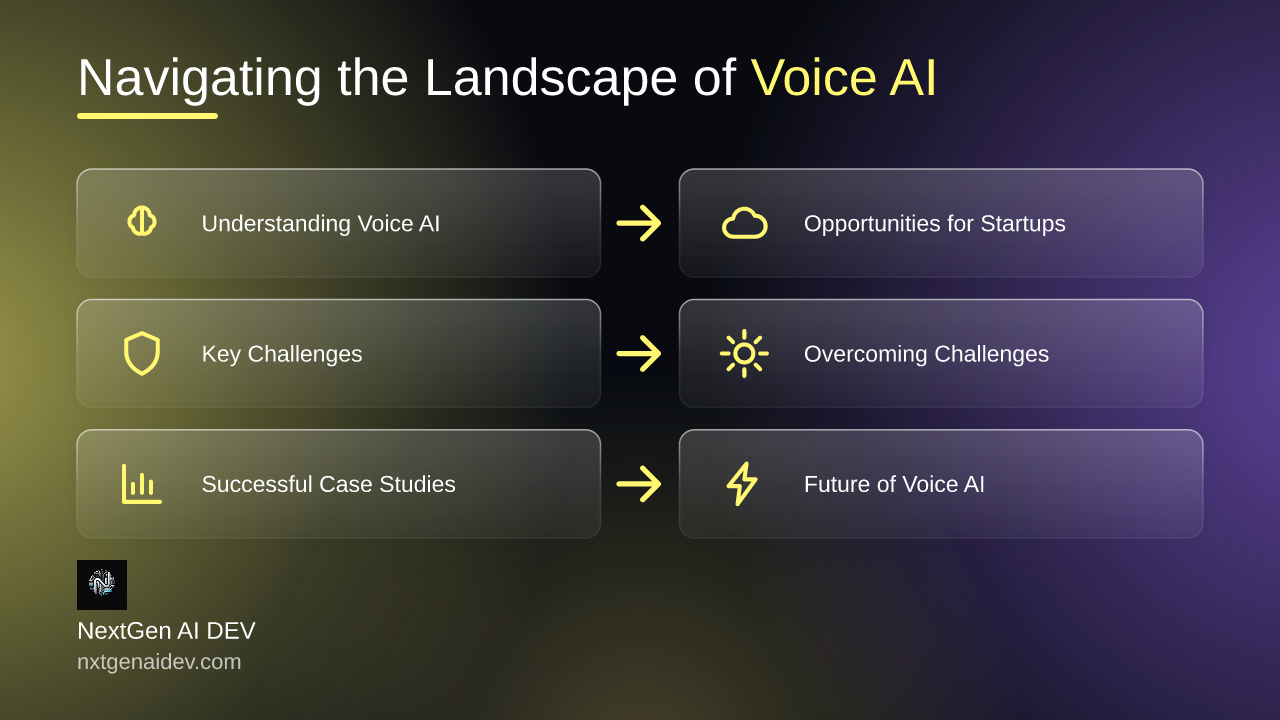
Understanding Voice AI: What It Is and Why It Matters
Voice AI is rapidly changing the way we interact with technology, bridging the gap between human language and machine understanding. As businesses increasingly recognize its transformative capabilities, from enhancing customer service to revolutionizing healthcare, the question emerges: just what is Voice AI, and why should startups pay attention?
The Basics of Voice AI Technology
At its core, Voice AI encompasses two primary components: speech recognition and natural language processing (NLP). Speech recognition systems convert spoken language into text, while NLP enables machines to understand, interpret, and respond to human language in a meaningful way. Together, these technologies create a powerful interface that allows for seamless human-computer interaction, enabling applications ranging from voice assistants like Siri and Alexa to advanced customer service chatbots.
According to recent research, the Voice AI market is projected to grow significantly, with statistics indicating a 25% increase in business adoption rates over the past year. Industries such as healthcare, customer service, and retail are at the forefront of this shift, utilizing voice technology to streamline processes, enhance user experiences, and drive engagement.
Current Trends in Voice AI Adoption
As businesses integrate Voice AI into their operations, certain trends are emerging. The rise of voice commerce is a significant opportunity, with 44% of consumers indicating a preference for voice-activated shopping. Additionally, with the increasing sophistication of machine learning algorithms, voice technology is becoming more contextually aware, enhancing its effectiveness in varied applications. Businesses are leveraging this evolution to create personalized experiences, paving the way for new revenue streams rooted in consumer preferences.
Opportunities for Startups in the Voice AI Sector
With the Voice AI landscape evolving, startups have unprecedented opportunities to carve out their niches. Innovations are not only welcomed but essential in a market that demands fresh perspectives and unique solutions.
Unique Use Cases and Applications
Startups can explore specific niches where Voice AI can make a significant impact, such as education and assistive technology. For example, voice-activated learning assistants can aid students with disabilities, allowing for a more inclusive educational environment. Similarly, startups offering solutions that enhance user engagement in sectors like fitness and wellness have substantial room for innovation.
The emergence of voice commerce is an exciting frontier. Startups focusing on this area can create integration platforms that allow businesses to easily adopt voice shopping features, catering to a growing demographic that favors hands-free solutions.
Market Demand and Consumer Trends
With consumers increasingly embracing voice technologies, understanding this shift is crucial. Recent surveys reveal that 60% of consumers use voice-activated devices regularly, showcasing a significant consumer trend towards voice-activated solutions. This growing preference demands that startups align their offerings to meet changing consumer behavior, prioritizing user-friendly voice interfaces and solutions that provide real value.
Key Challenges Facing Startups in Voice AI
While opportunities abound, startups in the Voice AI space must navigate several challenges that could impede growth and adoption.
Technical and Developmental Obstacles
Common technical hurdles include achieving high accuracy and developing a robust contextual understanding. Startups often find that nuances in language and tone can lead to misunderstandings, impacting user experience. A practical approach for tackling these issues involves developing iterative prototypes, employing real-world user feedback to refine algorithms and enhance performance over time.
Navigating Data Privacy Regulations
Compliance with data privacy regulations, such as GDPR in Europe and CCPA in California, poses another significant concern. Startups must prioritize data security and user privacy from the outset. Building transparency and user trust into voice applications is not just a regulatory requirement; it also serves as a trust-enhancing strategy that can differentiate a startup in a crowded marketplace. Moreover, understanding the ethical implications of voice data usage is becoming increasingly pivotal in this sector.
Essential Strategies for Overcoming Voice AI Challenges
Startups can employ several strategies to overcome the inherent challenges of developing AI-focused voice solutions.
Building Robust Voice AI Solutions
A user-centric approach should be at the forefront of developing Voice AI products. Startups can utilize frameworks like Design Thinking, which emphasizes empathy and iterative testing, to ensure that the solution not only meets technological requirements but also addresses real user pain points effectively. Continuous training and adaptation of AI models based on user interactions can further enhance product offerings.
Engaging with Users for Feedback
Collecting user feedback is crucial for refining products. Utilizing methods such as surveys, direct interviews, or beta testing programs can provide insights into user experiences and areas for improvement. Establishing a feedback loop can significantly enhance product innovation, leading to a more engaging and effective voice solution.
Case Studies of Successful Startups in Voice AI
Analyzing real-world examples can offer valuable insights for startups venturing into Voice AI.
Innovative Startups Leading the Way
Take Rasa, a startup transforming the conversational AI space by providing a platform that empowers businesses to create customized voice agents. Their successful implementation shows that with the right tools, startups can facilitate unique interactions that resonate with user needs.
On the flip side, there are also lessons to be learned from failures. Say was a once-promising startup that focused on voice control for smart homes but struggled to gain traction due to a lack of clear market differentiation. Their case highlights the importance of understanding market needs and positioning solutions effectively.
Lessons Learned from Failures
The key takeaways from failures often revolve around the necessity of user engagement and technical robustness. Startups should ensure that their offerings not only meet a clear gap in the market but also deliver a seamless user experience that fosters long-term adoption.
Looking Ahead: The Future of Voice AI for Startups
As we peer into the future, several emerging trends are set to shape the Voice AI landscape.
Emerging Trends to Watch
Notable trends include the adoption of multi-modal interfaces, allowing users to interact with devices using voice, touch, and visual prompts. Personalized voice experiences are also gaining traction, with AI technologies evolving to better understand user preferences and contexts.
Preparing for a Voice-First World
For startups, future-proofing voice solutions involves not only adapting to current trends but also remaining responsive to changes in technology and consumer behavior. Agility and continuous learning should underpin development strategies, ensuring that offerings remain relevant and competitive.
As startups navigate this dynamic landscape, embracing innovation, compliance, and user feedback will be essential for success.
What unique challenges have you faced while integrating Voice AI into your startup? Share your experiences!
💬 Join the conversation — share your take in the comments and tell us what you’d add.