Mobile App Development: Harnessing the Power of AI Innovations
Unlock efficient mobile app development with AI innovations. Boost your project’s success and streamline your process today!
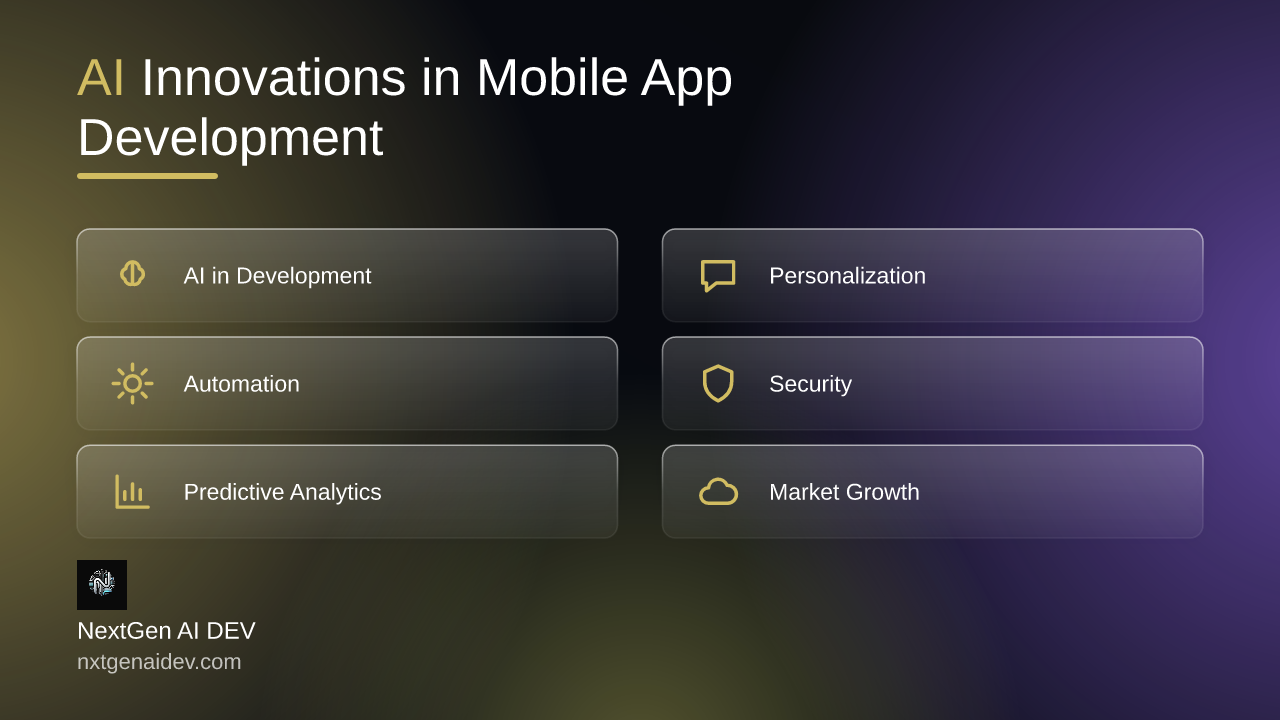
The Role of AI in Mobile App Development
Artificial Intelligence (AI) is revolutionizing mobile app development, offering innovative solutions that enhance functionality and user experience. By integrating AI technologies, developers are not only streamlining processes but also significantly improving user engagement and satisfaction.
Understanding AI's Impact
AI plays a crucial role in mobile app development by enabling applications to learn from user interactions and adapt to their preferences. This evolution is pivotal in creating applications that not only meet user expectations but predict and exceed them. With the capacity to analyze vast amounts of data quickly, AI improves both efficiency and decision-making for developers.
Key AI Technologies Influencing App Development
Several AI technologies are shaping the future of mobile app development:
Machine Learning (ML): ML allows applications to learn and improve from experience without being explicitly programmed. This technology can analyze user behavior to recommend personalized content and features, providing a more engaging experience.
Natural Language Processing (NLP): NLP enables apps to better understand and respond to user queries in a conversational manner. This is essential for apps that include chatbots or voice commands, enhancing user interaction significantly.
Computer Vision: This technology allows applications to interpret and make decisions based on visual data. For instance, image recognition powers features in social media apps that allow users to tag friends or identify objects in photos.
Enhanced Personalization and UX through AI
AI excels at enhancing user experience (UX) through tailored interfaces that respond to individual preferences, making apps more relevant and engaging.
How AI Tailors User Experiences
Real-time analysis of user behavior allows AI to personalize experiences on-the-fly. By assessing how users navigate through apps, AI can recommend relevant content based on past interactions, increasing engagement and user retention. The result is an application that feels personalized rather than generic.
Case Studies of AI in Personalization
Many successful apps have leveraged AI for personalization:
Spotify uses AI to create personalized playlists based on listening habits, which not only keeps users engaged but also drives subscription renewals.
Netflix employs algorithms to suggest content that aligns with user preferences, effectively keeping users glued to the platform by continuously presenting relevant shows and movies.
The importance of user data in crafting these tailored experiences cannot be overstated. Without solid data analytics, understanding user preferences is nearly impossible, resulting in generic apps that fail to resonate with audiences.
Automation and Operational Efficiency with AI
Leveraging AI for automation can drastically cut development time while improving overall efficiency in the app development lifecycle.
Streamlining Development Processes
Automation activities, such as code generation and testing processes, can radically reduce development costs and timeframes. For instance, the use of AI to automate repetitive coding tasks allows developers to focus on more complex aspects of their projects.
AI Tools for Enhanced Productivity
A suite of AI-driven tools is reshaping how developers work:
GitHub Copilot: This tool assists in writing code by suggesting entire code blocks based on the context, speeding up the coding process.
Test.ai: It automates app testing, ensuring that new features work as intended before going live.
Businesses leveraging these tools report increased productivity, allowing them to bring apps to market faster.
AI-Driven Security and Fraud Detection in Apps
As the digital landscape evolves, so do security threats. AI is becoming a cornerstone for securing applications against breaches and fraud.
Understanding AI Security Measures
AI systems can identify unusual patterns that indicate potential security breaches. By continuously learning from historical data, these systems trigger alerts and take preemptive measures to protect sensitive information. This proactive approach is essential in today’s threat landscape.
Examples of AI Preventing Fraud
AI has demonstrated its effectiveness in preventing fraud in various sectors:
A recent study revealed that AI technology prevented over 80% of credit card fraud transactions through real-time monitoring and analysis (source).
E-commerce platforms like Amazon use AI to identify and block fraudulent accounts and transactions, ensuring safer shopping experiences for users.
Continuous security updates are vital. Developers must regularly patch known vulnerabilities, allowing AI systems to adapt to new threats effectively.
Predictive Analytics for User Behavior
By utilizing predictive analytics, developers can gain insights into user behavior patterns, enhancing app engagement significantly.
Leveraging Data for Future Trends
Predictive analytics can inform developers about future user engagement trends, allowing them to adjust app features accordingly. By analyzing data inputs, such as user interactions and preferences, developers create a proactive development roadmap.
Tools for Implementing Predictive Analytics
Several tools assist in implementing these techniques:
Google Analytics provides in-depth insights into user behavior trends and offers features for setting up prediction modeling.
Segment collects and unifies user data, making it easier for developers to derive actionable insights for app adjustments.
Changing user behavior patterns driven by AI showcase how adaptive and responsive future applications will need to be.
The Growth of AI Mobile App Development Market
The mobile app development market continues to flourish, driven by growing advancements in AI capabilities.
Market Trends and Forecast
According to recent reports, the AI mobile application market is projected to grow at a rate of 42.2% annually, highlighting significant industry investment and interest (source). This growth presents lucrative opportunities for developers and businesses alike.
Investing in AI for Future Success
Industries investing in AI development, such as healthcare, finance, and retail, are witnessing substantial returns on investment (ROI) by integrating AI features into their applications. AI not only enhances user experiences but also improves operational efficiencies that drive profitability.
Integration of Machine Learning and NLP in Apps
The integration of Machine Learning and Natural Language Processing is essential in enhancing app functionality.
Use Cases for ML and NLP
Real-world applications of ML and NLP include:
Virtual assistants like Siri or Google Assistant that help users with daily tasks through voice recognition.
E-commerce apps that utilize NLP for search queries, providing users with more accurate product suggestions.
Challenges and Considerations
Despite their potential, implementing these technologies comes with challenges. Developers face hurdles such as ensuring data privacy, managing biases in AI algorithms, and maintaining user trust. Continuous refinement and user feedback are essential to overcoming these challenges.
As AI continues to redefine mobile app development, developers must stay informed about technological advancements and market demands to create groundbreaking applications.
What challenges have you encountered in integrating AI into mobile app development, and how did you overcome them?
💬 Join the conversation — share your take in the comments and tell us what you’d add.