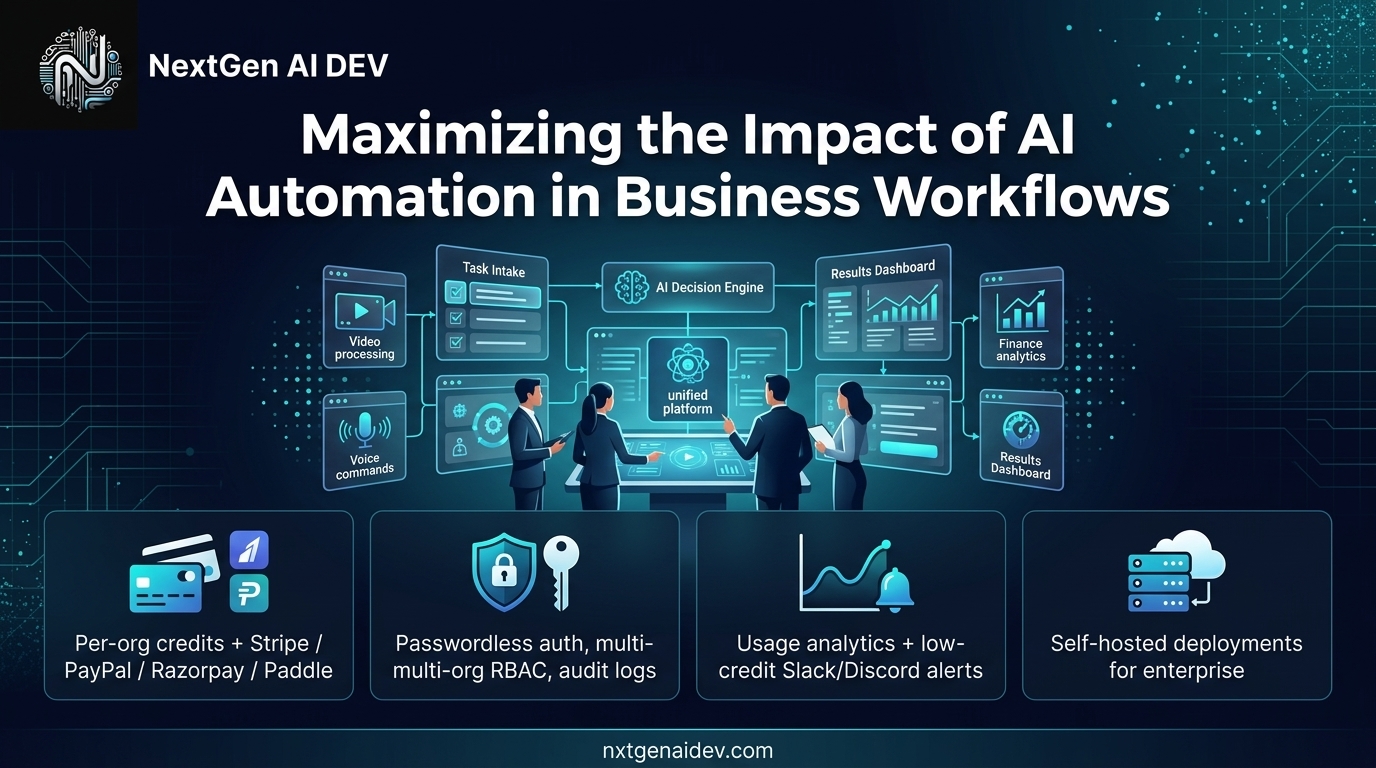
Maximizing the Impact of AI Automation in Business Workflows
Boost efficiency and reduce costs with AI automation in your workflows. Discover strategies to implement today!
Understanding the Role of AI Automation in Business Workflows
AI automation is reshaping how businesses operate, profoundly enhancing efficiency and decision-making across various functions. By leveraging artificial intelligence to automate tasks, companies can not only boost productivity but also significantly reduce operational costs.
What is AI Automation?
At its core, AI automation involves utilizing artificial intelligence technologies to execute tasks that would traditionally require human intervention. These tasks can range from simple data entry to complex decision-making processes. Key components of AI automation include machine learning algorithms, natural language processing, and robotics. This multifaceted approach allows businesses to streamline their workflows effectively.
AI-driven systems can analyze vast amounts of data rapidly, identify patterns, and make predictions. This capability not only speeds up operations but also enhances accuracy, minimizing human errors often encountered in manual processes.
Key Benefits of AI Automation
The advantages of implementing AI automation into business workflows are substantial. First and foremost, companies can expect reduced operational costs. By automating repetitive tasks, businesses can allocate resources more efficiently, ensuring that human talent is focused on higher-level strategic initiatives rather than mundane activities.
Additionally, AI automation significantly improves accuracy. Automated systems are designed to execute tasks with precision, which reduces errors and leads to better data integrity. This level of reliability is especially critical in industries where compliance and data accuracy are paramount. By adopting AI automation, organizations can achieve a notable increase in their operational efficiencies, fostering an environment of continuous improvement.
Identifying Areas for AI Automation
To maximize the benefits of AI automation, businesses must identify the right areas to implement these technologies.
Pinpointing Bottlenecks in Business Workflows
The first step in this identification process is conducting a thorough workflow analysis. By examining existing processes, companies can pinpoint crucial bottlenecks—those frustrating slowdowns that impede business flow. Inadequate information transfer, prolonged approval processes, or redundant tasks are common culprits. Utilizing tools and techniques such as process mapping can provide valuable insights into where automation can be most benefitably applied.
Prioritizing Tasks for Automation
Once bottlenecks are identified, it's essential to prioritize tasks based on their repetitive nature and susceptibility to errors. Tasks that are not only repetitive but also prone to mistakes should be prime candidates for automation. To ascertain which tasks should be automated first, businesses can employ metrics such as time spent on activities, error rates, and overall impact on productivity. Focused efforts in these areas can lead to significant performance increases.
The Integration of AI and RPA for Enhanced Efficiency
Combining AI with Robotic Process Automation (RPA) creates a powerful synergy that enhances operational efficiency.
Understanding RPA and Its Synergy with AI
RPA specializes in automating rule-based tasks that are structured and repetitive, like data entry or invoice processing. When AI is integrated, the capabilities expand. For instance, while RPA can handle the straightforward processes, AI can analyze data and make intelligent decisions based on contextual information. Together, they enable businesses to handle complex workflows more effectively.
Real-Time Decision-Making Through Automation
This integrated approach allows businesses to implement real-time decision-making processes. For example, in finance, automated systems can analyze financial data, identify trends, and alert teams to anomalies or opportunities for cost savings. This level of responsiveness not only improves operational agility but also equips businesses to react swiftly to changing market dynamics, giving them a competitive edge.
Leveraging Generative AI for Workflow Optimization
Generative AI is revolutionizing how organizations approach content creation and overall communication, making it a valuable tool for workflow optimization.
Improving Productivity with Generative AI
Generative AI uses algorithms to create text, images, or even programming code based on patterns learned from existing data. This technology not only speeds up content production but can also enhance marketing efforts through personalized customer interactions. By automating the creation of reports or emails, businesses can improve response times and engagement rates, leading to higher customer satisfaction.
Case Studies in Generative AI Applications
Take the example of a global marketing agency that integrated generative AI for content generation. The agency reported a 40% reduction in time spent on creating ad copy and a 30% increase in campaign performance metrics. However, it's essential to recognize the potential pitfalls during implementation, such as ensuring that generated content aligns with brand voice and maintaining quality control. Organizations should establish guidelines and leverage human oversight to ensure that the outputs are both accurate and relevant.
Enhancing Customer Service through Conversational AI
Conversational AI has the potential to revolutionize customer interactions, offering new levels of convenience and efficiency.
The Role of Conversational AI in Customer Interactions
By enabling automated chatbots and virtual assistants, companies can streamline customer inquiries and support. These tools can handle frequently asked questions, solve common issues, and provide 24/7 availability, greatly improving customer satisfaction.
Benefits and Challenges of Implementing Conversational AI
The benefits of adopting conversational AI include reduced response times and the ability to manage high volumes of interactions without scaling customer service teams. However, challenges exist, such as ensuring that conversational interfaces are intuitive and capable of effectively addressing more complex queries. It's crucial for businesses to continuously monitor performance and optimize their AI tools accordingly.
Measuring the Success of AI Automation
To ensure the effective implementation of AI automation, businesses need to establish clear metrics for measuring success.
Key Metrics to Track Automation Performance
Some of the essential metrics include error rates pre-and post-automation, time saved on specific tasks, and overall productivity increases. By tracking these metrics, organizations can gain insights into the performance of automated processes and areas that may require further refinement.
Long-Term Impact of AI on Workforce Roles
It's also vital to consider the long-term effects of AI on roles within the workforce. As tasks become automated, the nature of many jobs will evolve, requiring employees to adapt their skills and focus on more strategic, value-added responsibilities. Continuous training and upskilling will be essential to ensure teams are prepared for the future. Developing a culture of adaptability and learning can foster a workforce that thrives alongside AI technologies.
Maximizing the impact of AI automation in business workflows is not just a strategy; it’s an essential evolution. Start your journey towards optimizing business workflows with AI automation—explore our resources to guide your implementation!