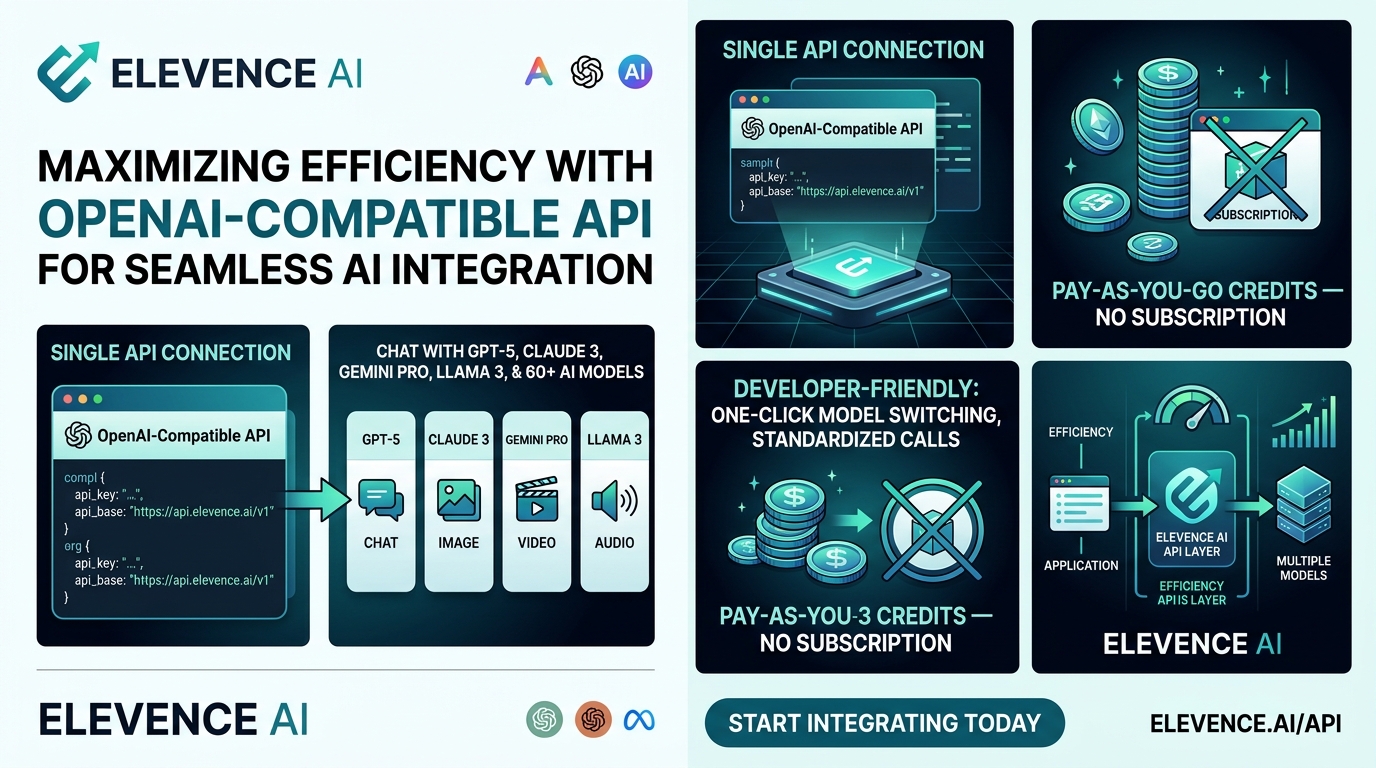
Maximizing Efficiency with OpenAI-Compatible API for Seamless AI Integration
Leverage an OpenAI-compatible API to streamline integration and boost productivity. Unlock the potential of AI in your projects now!
Understanding OpenAI-Compatible API
The release of the OpenAI-Compatible API marked a game-changing moment in the realm of artificial intelligence development. This API is not just a piece of software; it’s a powerful tool that drives efficiency and innovation across various industries.
What is OpenAI-Compatible API?
The OpenAI-Compatible API allows developers and businesses to seamlessly integrate AI functionalities into their existing systems. Its significance lies in the versatility it offers, enabling organizations to adopt and implement advanced AI solutions without needing extensive resources. By simplifying the integration process, the API opens up AI opportunities that were previously difficult to access.
Key Features of OpenAI-Compatible API
Among its notable features, the OpenAI-Compatible API shines in its flexibility. Developers can customize how they implement AI solutions, ensuring that it aligns with specific business objectives. Additionally, the API is designed for ease of use, with extensive documentation that guides users through the integration process. This documentation is not only comprehensive but regularly updated, reducing learning curves significantly. Ultimately, businesses can integrate these APIs into their existing systems without heavy lifting, ensuring smooth transitions while enhancing productivity.
Benefits of Using OpenAI-Compatible API
When looking at the advantages of the OpenAI-Compatible API, the gains in efficiency stand out prominently.
Efficiency Gains
Integrating this API can drastically cut down development time, allowing teams to focus on what matters most—creating impactful solutions rather than getting bogged down in technical roadblocks. Through streamlined workflows, organizations often find that operational costs drop as a result of decreased project timelines.
Cost-Effectiveness
For many companies, the substantial cost-effectiveness of the OpenAI-Compatible API cannot be overstated. With lower barriers to entry in harnessing artificial intelligence, the potential return on investment becomes evident. Businesses can leverage AI technologies without massive upfront costs, making innovation accessible even for smaller enterprises.
Scalability
As businesses grow, so do their needs, and this is where the scalability of AI solutions offered by the OpenAI-Compatible API becomes crucial. The API allows organizations to effortlessly expand their AI capabilities in tandem with their growth. This adaptability ensures that as new needs arise, solutions can evolve without requiring a complete overhaul of existing systems.
Integrating OpenAI-Compatible API into Your Workflow
Successful integration is key to realizing the full potential of the OpenAI-Compatible API.
Step-by-Step Integration Guide
When starting the integration process, developers should first familiarize themselves with the API's documentation. This can provide critical insights into necessary prerequisites. A basic example of integration might look like this:
import openai

openai.api_key = "your-api-key"

response = openai.Completion.create(
  engine="text-davinci-003",
  prompt="Translate the following English text to French: '{}'",
  max_tokens=60
)
Common Pitfalls to Avoid
While integrating, developers often face common challenges, such as incorrectly set parameters or failure to account for rate limits. It’s essential to prioritize testing and monitoring throughout the process to ensure reliability. By tackling these issues head-on, teams can avoid bottlenecks that may hinder efficiency.
Use Cases of OpenAI-Compatible API
Although the potential applications are vast, certain industries stand out as particularly beneficiating from the OpenAI-Compatible API.
Industry Applications
In the healthcare sector, for example, the API streamlines processes like medical data analysis and patient interaction while in finance, it aids in risk assessment and customer service solutions. Retail businesses have also found success in utilizing the API to enhance customer experience through personalized recommendations.
Real-World Success Stories
Numerous organizations are already reaping the benefits of the OpenAI-Compatible API. For instance, one healthcare startup utilized the API to reduce patient wait times significantly by automating the query response process, demonstrating both efficiency and improved patient satisfaction. Another financial entity integrated the API for better fraud detection, showcasing not only innovative applications but also tangible results.
Future of AI with OpenAI-Compatible API
As technology continues to advance, so do the capabilities and offerings of APIs.
Evolving Technologies
The landscape of artificial intelligence is ever-changing. Upcoming trends suggest that APIs will increasingly leverage machine learning techniques for improved performance, resulting in applications that can adapt and learn over time, enhancing their effectiveness.
Predictions for API Development
Looking forward, developments in the OpenAI-Compatible API are expected to focus on refining user experience and broadening functionality. Continuous learning features are anticipated, allowing the API to better understand user interactions, leading to more personalized AI solutions for businesses across industries.
Conclusion: Elevating Your AI Strategy
Integrating the OpenAI-Compatible API into your operational framework can significantly transform your AI strategies. By offering enhanced efficiency, cost savings, and scalable solutions, this API empowers businesses to break new ground in innovation.
Are you ready to elevate your AI capabilities? Start your journey towards efficient AI integration today with OpenAI-compatible API!