
Leveraging Voice AI for Enhanced User Engagement in Mobile Applications
Unlock user engagement with Voice AI in mobile apps. Discover actionable insights and elevate your user experience today!
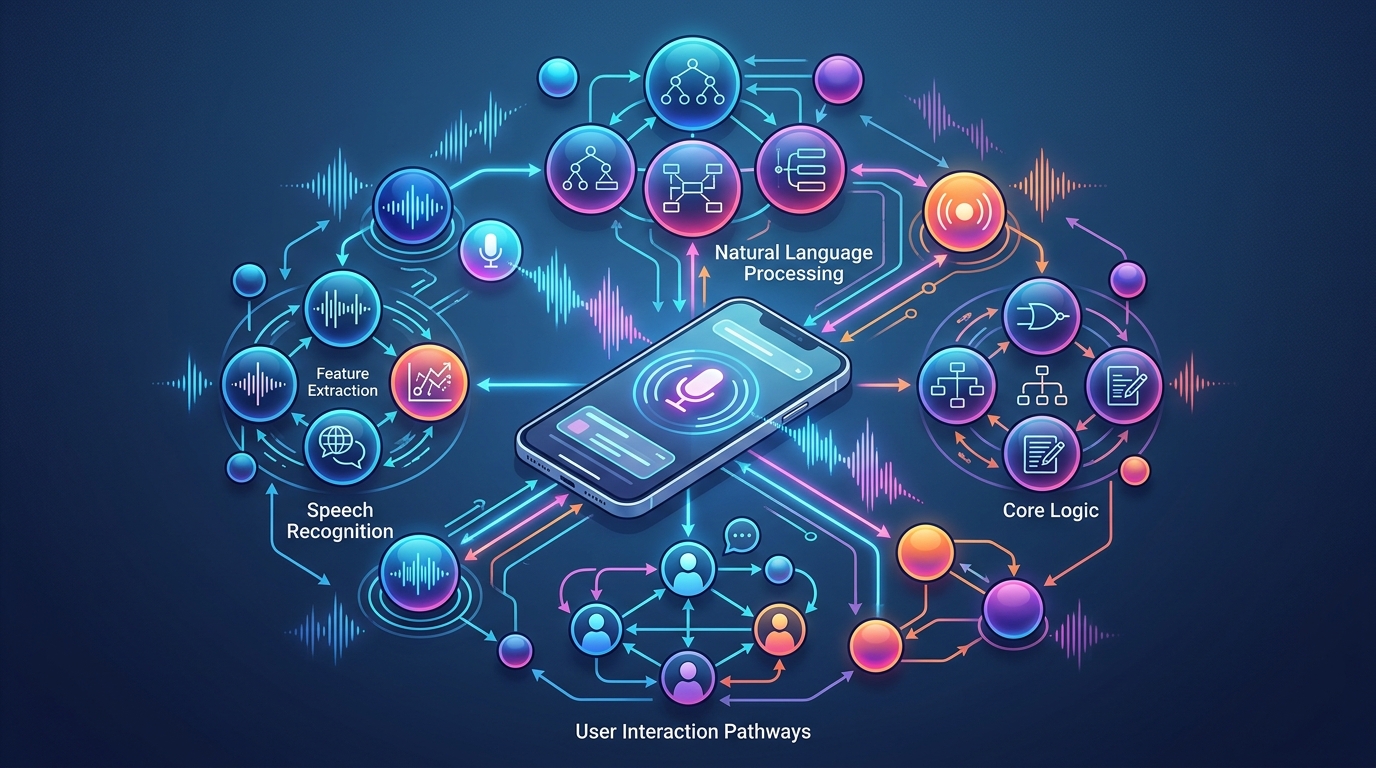
Understanding Voice AI and Its Importance in Mobile Apps
Is your mobile app silently missing out on enhancing user engagement? Integrating Voice AI could be the game-changer you've been looking for. This technology is redefining interactions, turning traditional user experiences into conversational journeys.
What is Voice AI?
Voice AI refers to the technology that enables applications to interpret and respond to human speech in a natural manner. From passive voice recognition to active conversational agents, Voice AI encompasses a range of functionalities, delivering a more human-like interaction between users and mobile applications.
The Impact of Voice AI on User Experience
Voice AI can significantly enhance overall user engagement. By enabling natural language interfaces, users can interact with apps using their voice, making it easier to navigate or find information. Statistical trends indicate that 27% of the global online population uses voice searches on mobile devices, and this number is expected to increase as technology becomes more accessible (source). Such a shift not only simplifies user interactions but also fosters a deeper connection with the application.
Building Intuitive Voice Commands for User Engagement
To truly benefit from Voice AI, app developers must focus on building intuitive voice commands. This begins with understanding how users think and speak.
Best Practices for Designing Conversational Flows
Creating effective conversational flows requires clear and thoughtful design. Techniques like User Journey Mapping help visualize the user’s path through your app, identifying critical touchpoints where voice interaction could be beneficial. Here’s a simple step-by-step guide for designing conversational flows:
Identify Key User Goals: What are users trying to achieve?
Map out Potential Queries: How do users phrase these goals?
Design Back-and-Forth Interactions: Create a conversational script that feels natural.
Test and Refine: Use A/B testing to compare different flows and gather user feedback.
Intuitive Voice Commands: Strategies and Tips
Natural Language Processing (NLP) is pivotal for understanding user queries. The technology allows apps to grasp the intent behind spoken words. Successful voice command interfaces like Google's Assistant or Apple's Siri follow consistent features:
Prompt Recognition: Start with a specific cue like “Hey [Assistant Name]” to minimize false activations.
Follow-up Questions: Enable apps to ask clarifying questions to refine user needs.
Feedback Mechanisms: After performing tasks, providing verbal confirmation enhances user trust.
Enhancing Interaction with Emotion-Aware Voice AI
Emotion-aware Voice AI takes user engagement a step further by recognizing emotional cues.
What is Emotion-Aware Voice AI?
This technology understands not just the words spoken but also the emotional context behind them. By analyzing tone, pitch, and speech patterns, it can determine if a user is happy, frustrated, or in need of assistance.
Case Studies of Emotional Engagement in Apps
An app like Replika uses emotion-aware AI to engage users empathetically. When it detects distress in a user’s voice, it adjusts its tone and responses, creating a comforting interaction. In studies, apps employing emotional intelligence have reported a notable increase in user satisfaction and retention rates.
Proactive User Engagement through Memory and Context
Memory plays a critical role in enhancing user interactions.
Utilizing User History for Enhanced Interaction
Leveraging past user interactions helps create a more personalized experience. For instance, if a user frequently asks about weather updates, the app can proactively provide this information when the AI senses a similar query during future interactions.
Challenge of Maintaining Contextual Awareness
While beneficial, maintaining contextual awareness poses significant challenges. Voice AI systems must be designed to remember past user preferences while also safeguarding user privacy. Methodologies like Contextual Update Protocols can help reinforce continuity, allowing Voice AI to adapt effortlessly as discussions evolve.
Ensuring Security with Voice Biometrics
Security remains a paramount concern for users when adopting Voice AI features.
Understanding Voice Biometrics
Voice biometrics uses unique vocal characteristics to authenticate users, offering an additional security layer to mobile applications. This not only protects user data but also enhances user experience by minimizing tedious password requirements.
Enhancing User Trust through Security Measures
As users grow increasingly concerned about data privacy, transparent practices around Voice AI authentication can foster trust. Highlighting the security benefits in app descriptions can improve user adoption rates. Implementing secure voice interactions can also yield positive financial returns; a study showed a 30% increase in user engagement when security measures were effectively communicated (source).
The Future of Voice AI in Mobile Applications
Voice AI is on the verge of revolutionary advancements.
Upcoming Trends in Voice AI Technology
Emerging trends suggest that the future of Voice AI will be dominated by improved NLP capabilities, contextual learning, and emotional intelligence. The convergence of these technologies will lead to even more engaging and personalized user experiences.
Preparing for Multi-Language and Inclusive Experiences
As Voice AI evolves, so will its capacity to support multilingual interactions. Apps that seamlessly switch languages can cater to diverse user bases, making them more accessible and inclusive. This focus on inclusivity is set to become a cornerstone in user engagement strategies.
As we embrace these advancements, it’s crucial to consider the challenges and opportunities that lie ahead in the Voice AI landscape.
Embracing Voice AI technology isn’t just about adopting a trend; it’s about reimagining how we engage with users on a deeper, more meaningful level.
What voice AI feature have you implemented or seen in mobile apps that significantly improved user engagement?
💬 Join the conversation — share your take in the comments and tell us what you’d add.