Leveraging RAG Systems for Enhanced AI Applications in Development
Discover how RAG Systems can elevate your AI projects. Unlock new levels of efficiency today!
Understanding RAG Systems
What is RAG (Retrieval-Augmented Generation)?
Retrieval-Augmented Generation (RAG) systems are transforming the landscape of artificial intelligence by seamlessly blending retrieval mechanisms with generation models. At their core, RAG combines the strengths of both information retrieval systems and natural language generation, enabling AI to provide highly accurate, contextually relevant responses. Instead of relying solely on pre-existing training data, RAG systems harness a dynamic approach to source information in real-time, enhancing their ability to generate meaningful outputs.
How does RAG work?
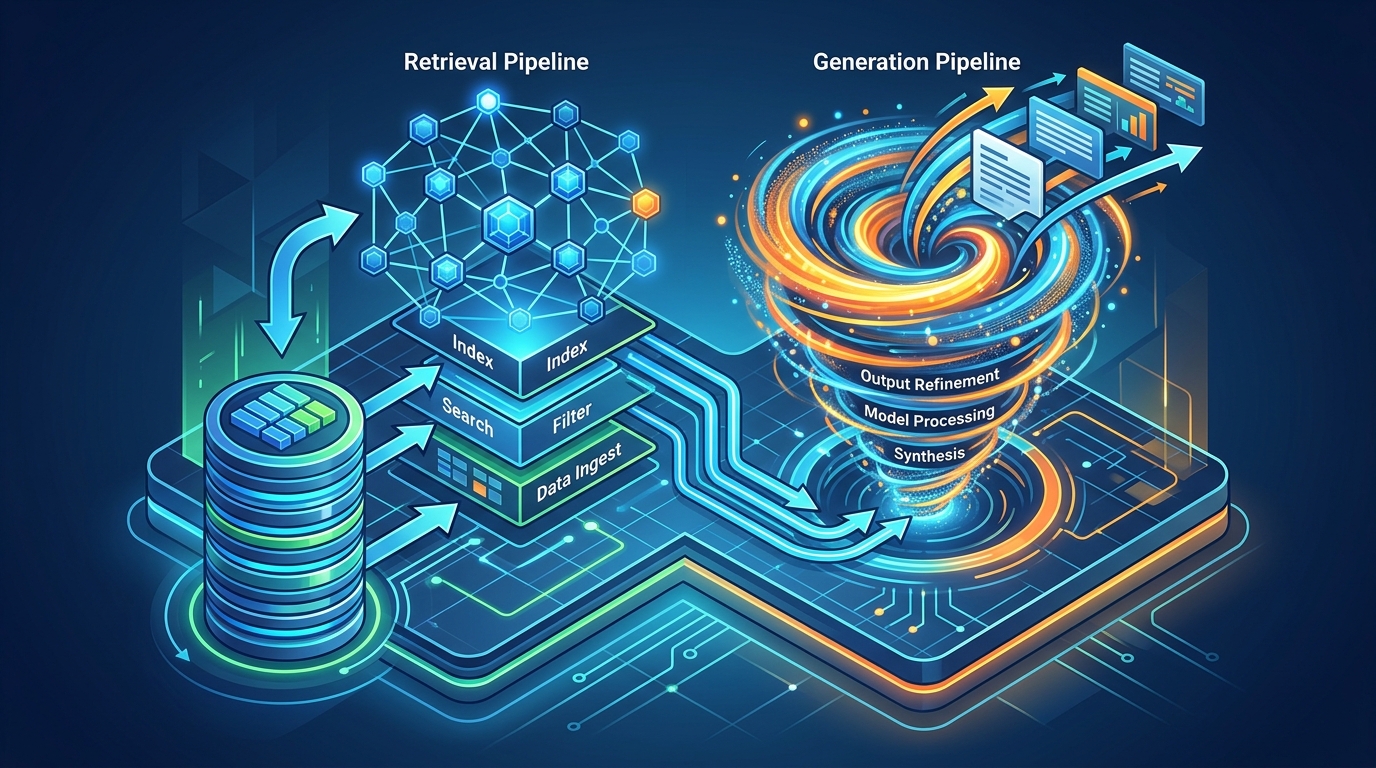
The functionality of RAG systems revolves around two primary processes: data retrieval and response generation. Initially, when a user query is made, the retrieval mechanism scans a vast database of documents or external sources to find relevant information. This is achieved through sophisticated algorithms that prioritize context and relevance. Once the pertinent data is retrieved, the generation component synthesizes this information, creating a coherent and contextually aware response. This two-step process not only ensures accuracy but also aligns closely with real-world applications where up-to-date information is paramount.
Key components of RAG systems
RAG systems consist of several crucial components that work in harmony. These include:
Retrieval Mechanism: Responsible for fetching relevant documents or data points based on user queries.
Generation Model: This utilizes the retrieved data to formulate responses, typically powered by advanced language models.
Contextual Framework: A set of contextual guidelines that helps the system prioritize which information is most pertinent to the user’s needs.
The interplay between these components is vital for achieving accuracy and maintaining the relevance of the generated content.
Benefits of Using RAG Systems in AI Applications
Enhanced Accuracy and Context Awareness
One of the standout features of RAG systems is their ability to enhance accuracy in AI-driven applications. By accessing real-time data, these systems can provide answers that reflect the most current information available, unlike traditional models that may become outdated over time. For example, in a customer service chat application, RAG can pull up the latest updates on product availability or policy changes, ensuring the responses are not only accurate but also contextually relevant.
Cost-Efficiency and Adaptability
RAG systems can lead to significant cost savings compared to traditional AI systems. The ability to retrieve information rather than relying solely on pre-trained models allows businesses to reduce the need for extensive data training cycles. This is particularly valuable in environments where data changes frequently, as the adaptation can occur on-the-fly without substantial overhead.
Practical applications of RAG systems
The implications of RAG systems span various sectors. For instance:
Chatbots: RAG enhances customer interactions by providing up-to-date responses that improve user satisfaction.
Personalized Recommendations: In e-commerce, RAG can curate personalized product suggestions based on the latest trends and customers’ browsing history.
Enterprise Document Processing: Organizations can leverage RAG for efficient information extraction and summarization, reducing time spent on manual document reviews.
Evolution to Agentic RAG Systems
Defining Agentic RAG
Agentic RAG represents the next step in the evolution of retrieval-augmented systems by allowing for more autonomous decision-making processes. Unlike standard RAG models, which primarily focus on retrieving and generating information, Agentic RAG systems incorporate an element of agency, enabling them to take actions based on the information they acquire. This can enhance user interaction by enabling the system to self-correct or even suggest next steps without requiring manual input.
Use cases for Agentic RAG in AI
Real-world applications demonstrate the potential of Agentic RAG systems. For example, in healthcare, an Agentic RAG system can analyze patient data, retrieve relevant medical literature, and suggest treatment options, thus playing a critical role in decision-making processes. Similarly, in customer service, these systems can proactively address user needs by not only responding to questions but also anticipating future queries or actions.
Advanced Evaluation Methodologies for RAG Systems
Metrics for success
Evaluating the effectiveness of RAG systems is crucial for continuous improvement. Key performance metrics include:
Response Accuracy: Measures how often the system retrieves and generates correct information.
User Satisfaction: Surveys and feedback tools can quantify how satisfied users are with the interaction.
Response Time: Assessing how quickly the system can retrieve and respond to queries is essential for user experience.
Case studies demonstrating evaluation
Case Study 1: A financial institution implemented a RAG system for customer interaction and reported a 30% increase in resolution rates due to improved accuracy.
Case Study 2: A tech company evaluated its chatbot's performance after integrating RAG. They found that users experienced a 25% reduction in handling time, attributed to the system's ability to pull real-time data efficiently.
Enterprise-Scale Implementation Challenges
Integration of multimodal data
Implementing RAG systems at an enterprise scale introduces complexities, particularly in the integration of multimodal data. Organizations must ensure that various data types—text, images, and structured databases—are effectively accessible and interpretable by RAG systems. This often requires robust data architecture and process reevaluation to accommodate real-time data retrieval and maintenance.
Security and compliance considerations
Security is paramount when deploying RAG solutions, especially in sectors dealing with sensitive data. Organizations must establish strict security measures, including encryption and access controls, alongside compliance with relevant regulations (like GDPR). Failure to mitigate potential risks can lead to significant repercussions, both financially and reputationally.
Future Trends in RAG Systems
Hybrid and multimodal retrieval approaches
As the demands on AI technology evolve, hybrid and multimodal retrieval approaches are gaining traction. The next generation of RAG systems will likely incorporate diverse data sources, enhancing the capability to deliver more comprehensive responses. This trend suggests a future where AI can access not only text but also visual information and interactive data, refining its contextual understanding.
What’s next for RAG technology?
The future holds exciting possibilities for RAG technology as advancements in machine learning and natural language processing continue. The integration of source credibility assessments and ethical data use may play a crucial role in shaping how RAG systems operate, as users increasingly demand transparency and reliability in AI responses.
What unique experiences have you had with RAG systems in your development projects?
💬 Join the conversation — share your take in the comments and tell us what you’d add.