Leveraging Agentic AI for Next-Gen Business Automation: A Complete Guide
Explore how Agentic AI enhances automation in business processes for efficiency. Discover solutions that drive your success today!
Understanding Agentic AI: What's Different?
Defining Agentic AI
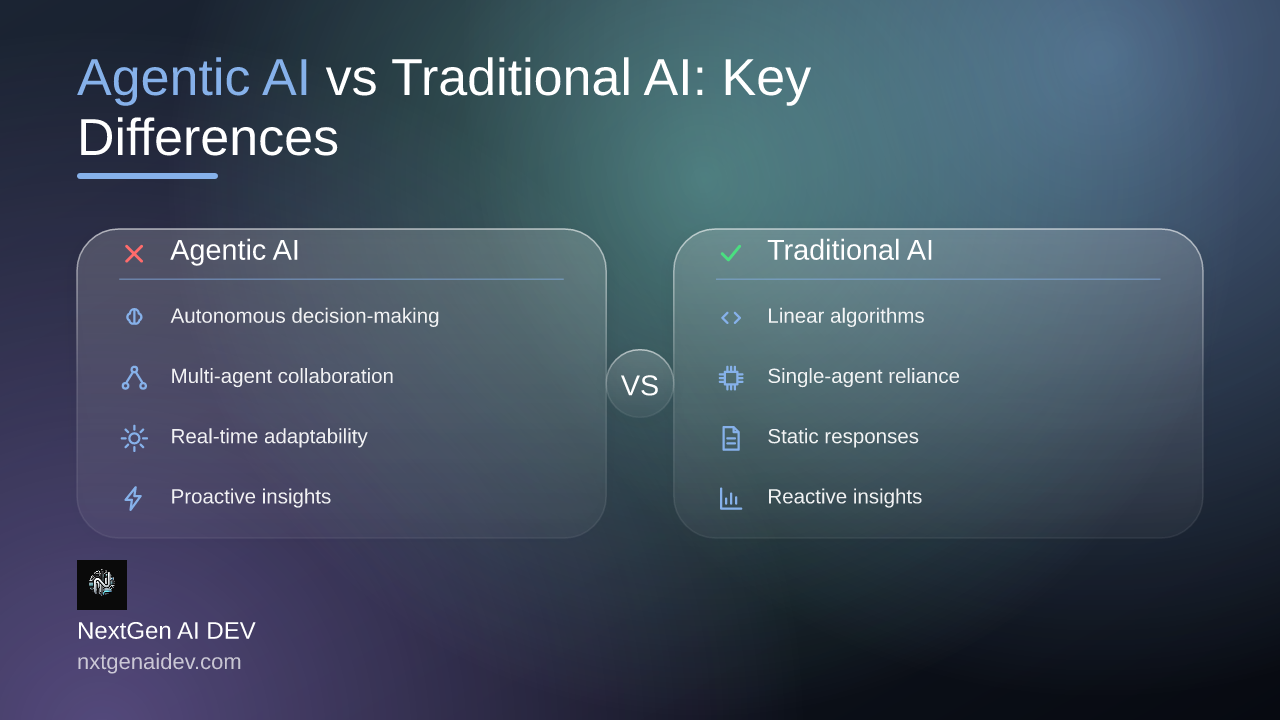
Agentic AI represents a paradigm shift in artificial intelligence, empowering systems to function autonomously through multi-agent interactions. Unlike traditional AI, which relies heavily on pre-programmed responses or shallow learning algorithms, Agentic AI encapsulates core components like decision-making, adaptability, and collaboration among multiple agents. These multiple units work together to assess real-time data inputs, enabling a more cohesive operational environment that mimics human reasoning but on a much grander scale.
Comparing Agentic AI to Traditional AI
The key distinctions between Agentic AI and traditional AI revolve around their decision-making processes. Traditional AI typically follows a linear path guided by predetermined algorithms, making it reactive rather than proactive. In contrast, Agentic AI utilizes collective intelligence from various agents to evaluate various possibilities and make autonomous decisions, greatly enhancing efficiency in dynamic environments. While traditional AI does provide valuable insights, it lacks the multi-faceted, interdependent system that characterizes Agentic AI (link text).
Optimizing Business Processes with Agentic AI
Use Cases in Various Industries
Many sectors are starting to harness the power of Agentic AI for optimizing business processes. For instance, in the retail industry, AI-driven inventory management systems can predict stock levels by analyzing purchasing patterns across multiple stores through various agents. Similarly, in customer service, chatbots powered by Agentic AI can offer tailored support, adapting to customer behavior in real-time better than their traditional counterparts.
Take the example of a leading e-commerce platform that deployed Agentic AI to handle customer queries. The platform integrated various AI agents focused on natural language understanding, customer history, and real-time analytics to create a seamless user experience, resulting in a 25% increase in customer satisfaction scores.
Real-time Data Processing Integrations
Another compelling feature of Agentic AI is its ability to interact with IoT devices for improved automation. When integrated with smart sensors, Agentic AI can monitor warehouse conditions in real-time, adjusting environmental controls automatically to safeguard products. For instance, an automated warehouse system can employ Agentic AI to coordinate robotic pickers, ensuring that tasks are executed simultaneously, thereby reducing operation time significantly.
Navigating the Risks of Implementing Agentic AI
Data Privacy Concerns
While Agentic AI comes with significant advantages, organizations must also navigate potential risks. One pressing concern is data privacy. With multiple agents processing sensitive information, robust measures for safeguarding user data are crucial. Organizations must ensure compliance with laws such as GDPR while implementing Agentic AI solutions, confirming that data is both secure and used appropriately.
Scalability Challenges
Scalability poses another challenge when adopting Agentic AI systems. As organizations expand, the complexity of managing numerous agents can become cumbersome. Proper planning must evolve to ensure that systems can adapt to increased data loads and user demands without compromising performance. Simple solutions can include phased rollouts that incorporate feedback loops to adapt the project efficiently as it scales up.
Case Studies: Success Stories with Agentic AI
Case Study: Retail Industry
A prominent case in the retail sector involved a company that adopted Agentic AI to revamp its supply chain processes. The implementation led to a fully automated fulfillment system capable of forecasting demand spikes, reducing excess stock by 30% and increasing overall operational efficiency. Consequently, profit margins soared, and customer satisfaction followed suit as orders were processed more swiftly due to the synchronized functioning of multiple agents.
Case Study: Financial Services
In the financial services arena, a major institution migrated to Agentic AI, streamlining customer interactions and internal operations. Their newly introduced system utilized parallel processing for loan approvals, drastically reducing the time taken from weeks to mere hours. This increased customer acquisition rates and simultaneously improved employee output, as tasks previously mired in paperwork became more efficient.
Key Considerations Before Adopting Agentic AI
Ethical Implications
Before diving into Agentic AI, it’s essential to address the ethical implications that come with AI’s governance. Transparency in algorithms and decisions made by AI agents must be prioritized to build customer trust. Ethical frameworks should guide the deployment, ensuring that AI acts in ways beneficial to society while minimizing the potential for biased outcomes.
Regulatory Compliance
Another major consideration involves regulatory compliance. Organizations must stay updated with the latest regulations affecting Agentic AI adoption, as legal requirements can differ significantly across regions. For instance, implementation in Europe may require adherence to stricter data protection laws compared to those in North America. A proactive approach to compliance can mitigate risks before issues arise (link text).
Future Trends in Agentic AI for Business Automation
Emerging Technologies
As the demand for automation continues to rise, emerging technologies will increasingly intertwine with Agentic AI. Innovations in quantum computing, for instance, could vastly improve processing speeds, unlocking the potential for even more complex decision-making capabilities. Similarly, advancements in machine learning algorithms will enable AI agents to learn and adapt more rapidly, further refining efficiencies in business environments.
Integration with Current Systems
Businesses will need to strategically consider how to best integrate Agentic AI with their existing systems. Predictions indicate that hybrid models combining traditional AI with Agentic AI will dominate the landscape. This integration will require careful planning and execution, aiming to enhance current processes while introducing the benefits inherent in a multi-agent framework.
What industry do you think will benefit the most from Agentic AI, and why? Share your insights and experiences!
💬 Join the conversation — share your take in the comments and tell us what you’d add.