Integrating AI Innovations in Mobile App Development: Key Trends
Explore how AI is transforming mobile app development. Stay ahead of trends and enhance user experiences with cutting-edge innovations.
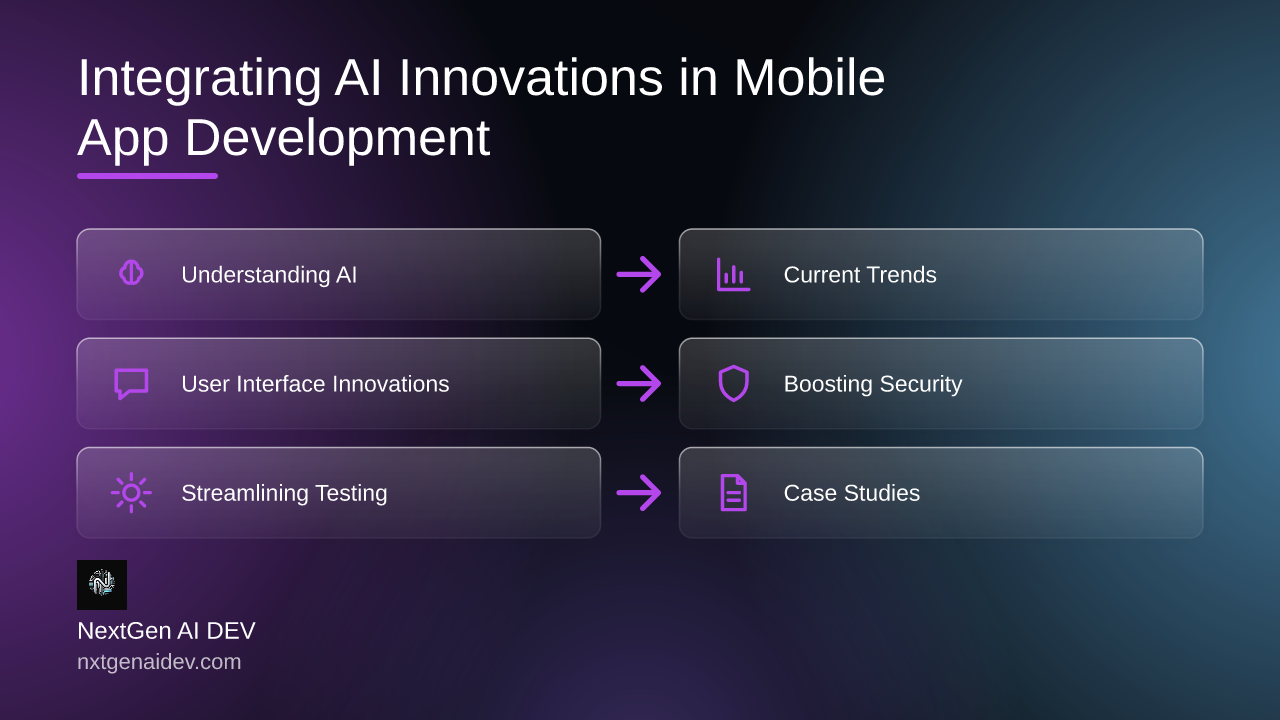
Understanding Mobile App Development and AI Integration
The landscape of mobile app development is rapidly evolving, and at the center of this transformation is artificial intelligence (AI). As apps become more intelligent, integrating AI innovations allows developers to create experiences that not only engage users but also anticipate their needs.
What are AI-Powered Mobile Apps?
AI-powered mobile apps employ algorithms to analyze data and enhance user interactions. Through machine learning, natural language processing, and predictive analytics, these apps learn from user behaviors and preferences. For example, a fitness app could tailor workout plans based on user activity levels, while a shopping app could recommend products based on previous purchases.
Benefits of AI in Mobile App Development
Incorporating AI into mobile app development offers several advantages:
Enhanced User Experience: AI equips apps to provide personalized content, making them more user-friendly. This personalization often results in increased user engagement and satisfaction.
Improved Efficiency: Automation of routine tasks through AI minimizes human error and reduces operational costs. This allows developers to focus more on innovation rather than mundane tasks.
Current Trends in AI-Driven Mobile App Development
As AI technology matures, it's driving key trends that significantly shape app development.
Enhanced User Personalization through AI
AI facilitates hyper-personalization in apps. By leveraging data analytics, many mobile applications now dynamically adjust content and features according to individual user behavior. For instance, Netflix uses AI to curate show recommendations, making user experiences highly tailored. According to a recent study, apps featuring personalized content see retention rates boost by up to 50%([source]).
AI-Powered Chatbots and Virtual Assistants
Chatbots and virtual assistants are becoming integral to mobile apps. Apps like Facebook Messenger and WhatsApp incorporate bots to assist users in tasks like booking, ordering, or providing immediate answers to queries. This capability not only enhances user satisfaction but also reduces response times significantly.
Innovations in User Interface: Voice and Image Recognition
The advent of voice and image recognition is reshaping how users interact with their devices.
Impact of Voice Recognition in Apps
Voice recognition technology empowers users by allowing them to control apps and search content using their voices. A notable example is Google Assistant, which aids users in managing tasks hands-free. This functionality is not just for convenience; it also enhances accessibility for users with disabilities.
Image Recognition Capabilities
Apps utilizing image recognition can significantly enhance user engagement. For instance, Pinterest’s visual search feature allows users to take pictures of objects and find similar items. Such capabilities open doors for augmented reality (AR) applications, providing users with interactive experiences that were previously unfathomable.
Boosting App Security with AI Technologies
As mobile threats become more sophisticated, AI emerges as a robust shield.
AI in Identifying Security Threats
AI technologies can analyze patterns and detect anomalies that signal potential security breaches. For example, machine learning algorithms assess user behavior in real time to flag suspicious activities, enabling apps to respond before unauthorized access occurs.
User Data Protection with AI
AI also plays a pivotal role in safeguarding user data. Techniques such as encryption and biometric verification enhance security protocols. Real-time analytics powered by AI can predict security threats, implementing measures to protect sensitive information automatically.
Streamlining App Testing and Development with AI
AI not only transforms the user experience but also the development process.
Benefits of AI in App Testing
AI streamlines app testing by automating repetitive tasks, thus speeding up the quality assurance phase. For instance, tools like Appium leverage AI to perform regression testing, enabling developers to validate app integrity efficiently.
Automation in Mobile Development
Leveraging AI-based automation tools significantly cuts development time. By using predictive models, developers can allocate resources more effectively. For example, Firebase offers tools for both real-time app testing and deployment, streamlining the entire development cycle.
Challenges in Integrating AI into Mobile Apps
Despite the promising capabilities of AI, several challenges persist.
Common Integration Issues
Integrating AI into mobile applications often requires substantial upfront investment and access to specialized technical expertise. Costs associated with data collection and processing can be prohibitive for smaller businesses, which may lack the resources to embark on AI projects.
Mitigation Strategies for Businesses
To address these challenges, businesses must focus on gradual implementations or pilot programs. This allows companies to assess the effectiveness of AI integrations without a hefty commitment. Starting small can also minimize risks and provide valuable insights before scaling up.
Case Studies of Successful AI Integration in Mobile Apps
Let's explore some success stories that showcase effective AI integration.
Successful Mobile Apps Utilizing AI
Spotify: Utilizes advanced algorithms to curate personalized playlists and discover weekly recommendations, leveraging user data to enhance musical experiences.
Sephora's Virtual Artist: This mobile app allows users to try on makeup virtually, enhancing customer satisfaction and increasing conversion rates.
Lessons Learned from Case Studies
Key takeaways from these integrations highlight the importance of data-driven decision-making and user-centric design. Apps that prioritize user needs and continuously adapt based on feedback are more likely to succeed in the competitive mobile landscape.
What specific AI technology have you implemented in your mobile app, and how has it improved user experience?
💬 Join the conversation — share your take in the comments and tell us what you’d add.