Implementing Passwordless Auth in NextGen AI Applications
Unlock seamless user access with passwordless auth in AI apps. Learn the best strategies and enhance security today!
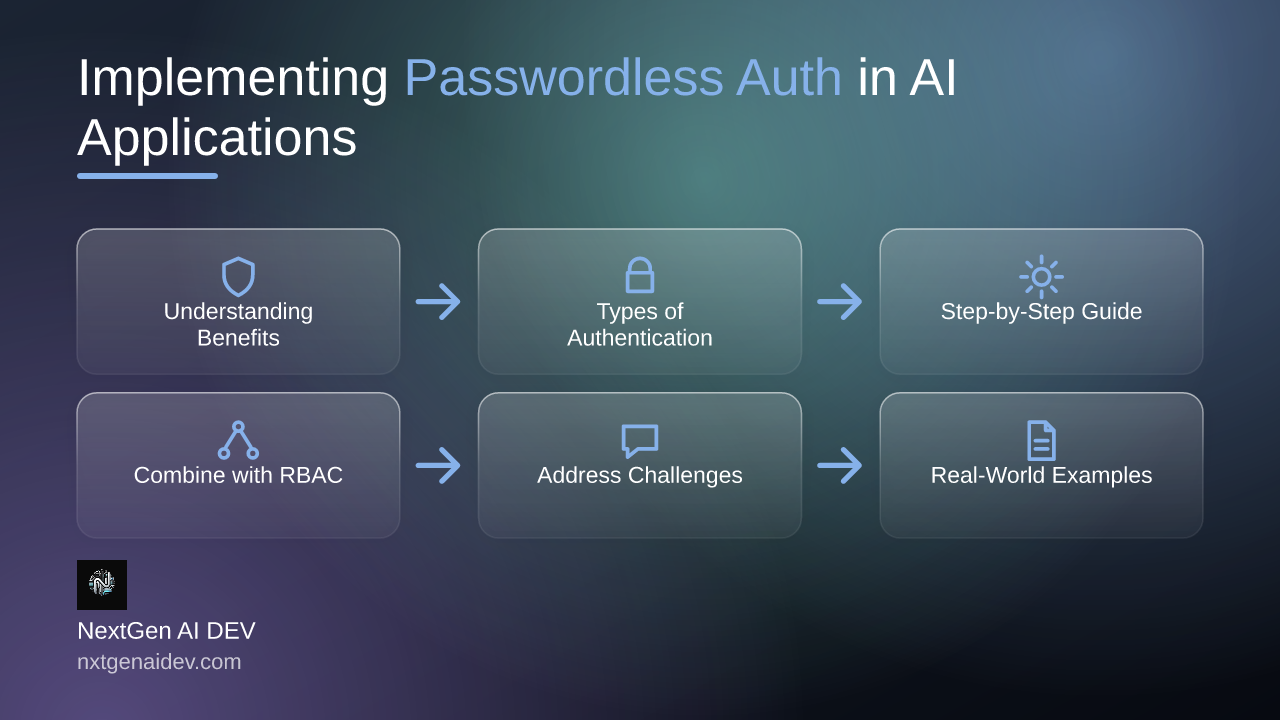
Understanding Passwordless Authentication and Its Benefits
Imagine a world where users access their applications without the cumbersome process of remembering intricate passwords. Passwordless authentication is revolutionizing this space, offering both security and a seamless user experience. By eliminating passwords, we reduce the attack surface, making your applications far less vulnerable to data breaches.
What is Passwordless Authentication?
Passwordless authentication replaces traditional password-based logins with alternative methods. Popular strategies include one-time codes sent via email or SMS, biometric verification (like fingerprint or facial recognition), or magic links. This method not only streamlines the user login experience but also drastically improves security, mitigating the risk of password theft and phishing attacks.
How Passwordless Authentication Improves Security
The security enhancements that come with passwordless authentication are substantial. First, it eliminates vulnerabilities associated with weak password choices and poor password habits. In addition, these methods often employ multi-factor authentication (MFA), which requires users to verify their identity through another channel after the initial login attempt. This layered security approach makes unauthorized access significantly harder. With NextGen AI DEV, passwordless options can also work alongside audit logs and real-time analytics, providing comprehensive insights into user behavior and potential threats.
Types of Passwordless Authentication Suitable for NextGen AI
Enhancing AI applications with passwordless authentication opens the door to innovative technology and user satisfaction.
Common Passwordless Authentication Methods
Biometrics: Leveraging unique biological traits like fingerprints or iris scans for user verification. This method is one of the safest available, as individual biological markers are incredibly difficult to replicate.
Magic Links: Users receive an email or SMS with a link that automatically logs them into their account. This eliminates the need for a password but requires secure channels to deliver the link.
Push Notifications: Users receive a prompt on their registered device to approve or decline the login attempt. This is fast, user-friendly, and secure.
AI-Driven Enhancements in Passwordless Authentication
Integrating AI can elevate passwordless authentication to new heights. AI improves security by analyzing user behavior in real time, applying machine learning to identify suspicious activities swiftly. For instance, if an unauthorized user tries to access the system from a new device, AI can flag this behavior, prompting additional verification.
NextGen AI DEV harnesses AI to facilitate these features, enabling customizable authentication options and enhancing user engagement with smart, adaptive interfaces that grow smarter over time.
Step-by-Step Guide to Implement Passwordless Auth in Your AI Applications
Implementing passwordless authentication may seem daunting, but with a structured approach and NextGen AI DEV, it can be straightforward.
Preparing Your NextGen AI Platform
Begin by ensuring your platform supports the necessary integrations for passwordless authentication. This might involve upgrading to the latest version of NextGen AI DEV and enabling the passwordless feature in your account settings. Additionally, taking advantage of self-hosted deployments can provide added security tailored to enterprise needs.
Integrating Passwordless Authentication
Select Your Method: Choose from available options—biometrics, magic links, or push notifications—based on your user base and security requirements.
Implement the API: Utilize NextGen AI DEV’s robust API documentation to incorporate the chosen authentication method into your application. The API will guide you through setting up user interfaces and backend configurations seamlessly.
Configure Roles and Permissions: As you set up passwordless authentication, ensure that role-based access controls (RBAC) are in place, allowing you to define user permissions effectively.
Testing and Monitoring Implementation
Once you’ve integrated passwordless authentication, rigorous testing is crucial. Conduct alpha and beta testing phases within controlled environments to identify any discrepancies. NextGen AI DEV offers detailed usage analytics that allows you to monitor user sign-in attempts, providing insights into potential areas of concern.
Combining Passwordless Auth with Multi-Org RBAC
What is Multi-Org RBAC?
Multi-Organization Role-Based Access Control (RBAC) allows companies to manage user access across various domains or organizations efficiently. Understandably, as organizations grow, so does the necessity for a secure and flexible permissions management system.
Benefits of Integrating Passwordless Auth with RBAC
Combining passwordless authentication with multi-org RBAC results in a fortified security posture. You can define granular permissions while also streamlining user access, thus enhancing operational efficiency. Implementing both systems together can lead to reduced administrative oversight and improved user satisfaction.
Use cases demonstrating effective integration are plentiful. For instance, a collaborative AI research platform could benefit from secure workspaces where each project team has tailored access yet shares a unified login experience.
Challenges in Transitioning to Passwordless Authentication
Anticipating and Overcoming Integration Challenges
Transitioning to a passwordless system can present challenges such as resistance from users accustomed to traditional logins or technical obstacles during integration. Address these early by developing a clear roadmap that outlines the transition, accompanied by tutorials and guides for users.
Addressing User Concerns and Education
Educating users is paramount in smoothing the transition. Utilize email campaigns, webinars, or in-app notifications that explain the benefits of passwordless authentication clearly. NextGen AI DEV offers resources to help you communicate these changes effectively, fostering trust and encouraging acceptance among users.
Real-World Examples of Passwordless Authentication in AI Applications
Success Stories and Use Cases
Numerous platforms have successfully transitioned to passwordless authentication, exhibiting higher user engagement and security. Companies using NextGen AI DEV reported up to a 60% decrease in password-related support tickets post-implementation.
Lessons Learned from Implementation
Key takeaways from these implementations include the importance of user education and robust testing prior to full rollout. These insights can guide new developers in their journey, providing a blueprint for success, informed by real examples.
Conclusion and Next Steps for Developers
Passwordless authentication in NextGen AI applications is more than just a trend; it’s a crucial shift toward more secure and user-friendly systems. With the right tools and strategies, you can easily integrate this technology into your platform.
Ready to enhance your AI application security? Start implementing passwordless authentication with NextGen AI DEV today!