Implementing Passwordless Auth and Multi-Org RBAC in NextGen AI DEV
Learn to implement passwordless auth with multi-org RBAC for enhanced security. Start streamlining your user access today!
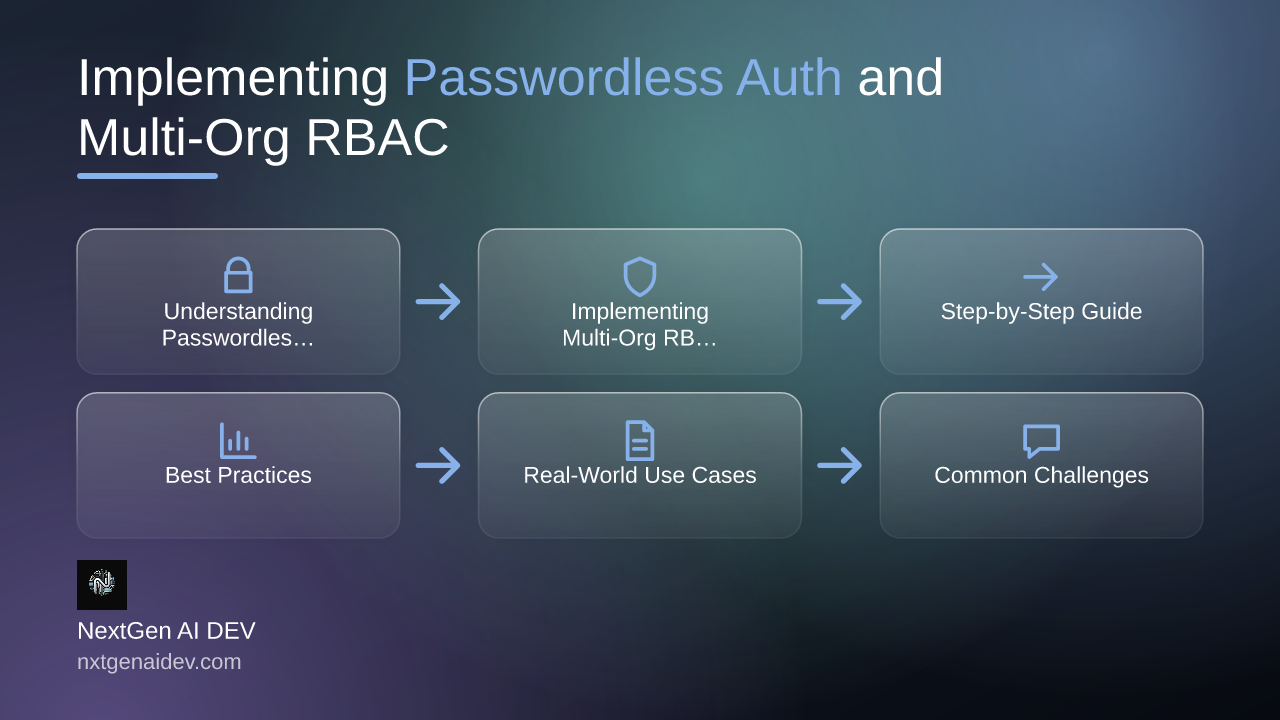
Understanding Passwordless Authentication in NextGen AI DEV
Imagine a world where logging into applications is as seamless as tapping a button. That's the promise of passwordless authentication—a modern solution designed to enhance security without the hassle of traditional passwords. This feature is not just a trend; it’s a necessity in our increasingly digital landscape. NextGen AI DEV embraces this concept, integrating passwordless authentication to streamline user experiences while fortifying security.
What is Passwordless Authentication?
Passwordless authentication eliminates the need for users to remember complex passwords, relying instead on alternative methods such as biometrics, one-time codes, or device-based credentials. This approach significantly reduces vulnerabilities associated with password theft, making it a vital feature for any modern application.
How Passwordless Auth Works in NextGen AI DEV
In NextGen AI DEV, passwordless authentication is not just an add-on; it's an integral part of the platform's security architecture. By utilizing state-of-the-art technologies like biometric verification and time-sensitive codes sent to trusted devices, NextGen AI DEV offers a robust authentication process that's both user-friendly and highly secure. This not only improves user experience but also aligns with security protocols that protect sensitive data from unauthorized access.
Implementing Multi-Org RBAC with Passwordless Auth
As businesses grow, the management of user roles across different organizational units becomes crucial. Multi-organization role-based access control (RBAC) addresses this need by defining specific access rights for each user based on their role, ensuring that sensitive information is only accessible to authorized personnel.
Defining Role-Based Access Control (RBAC)
RBAC is a security paradigm that allows organizations to manage user permissions efficiently. By assigning roles to users rather than individual permissions, it simplifies access management and enhances security. This makes it easier for developers and administrators to enforce security policies across their applications, facilitating better control over data access.
Setting Up Multi-Org RBAC in NextGen AI DEV
Configuring multi-org RBAC in NextGen AI DEV is straightforward. Here’s a step-by-step guide to get you started:
Define Roles: Establish the various roles within your organization—admin, user, guest, etc.—and determine the permissions associated with each.
Create User Groups: Organize users into groups based on their roles to streamline management.
Assign Permissions: Link roles to specific access rights within your application.
Monitor Access: Utilize NextGen AI DEV’s audit logs to track user activity and ensure compliance with security standards.
This structured approach helps maintain strict security protocols while simplifying user management.
Step-by-Step Guide to Implement Passwordless Auth
Implementing passwordless authentication requires a few foundational steps. Here’s how you can prepare for and configure this feature in NextGen AI DEV.
Prerequisites for Implementation
Before diving into the implementation, ensure you have the following tools at your disposal:
A NextGen AI DEV account
Access to API keys for integration
Familiarity with basic security protocols
Configuring Passwordless Auth in NextGen AI DEV
Follow these steps to enable passwordless authentication:
Access Configuration Settings: Navigate to the security settings in your NextGen AI DEV dashboard.
Enable Passwordless Options: Choose your preferred authentication methods (e.g., biometrics or email-based OTP).
Set Up User Permissions: Ensure that users have roles configured that reflect their access needs.
Test the Integration: Conduct a thorough test of the login process to verify that the passwordless flow is functioning correctly.
By following these steps, you can seamlessly enable passwordless access for your users.
Best Practices for Securing Your Applications
Every implementation needs a robust security posture to safeguard user data and maintain compliance with industry standards.
Utilizing Audit Logs for Security
Audit logs are fundamental in monitoring user activity. In NextGen AI DEV, these logs provide detailed insights into user interactions with the application, enabling you to detect anomalies and ensure that access policies are being followed. Regularly reviewing these logs can help identify potential security threats and streamline compliance audits.
Maintaining Compliance with Security Standards
Adhering to security standards, such as Zero Trust, is essential when implementing passwordless authentication and multi-org RBAC. Zero Trust architecture mandates that no user, regardless of their location within the network, should be trusted by default. By establishing a rigorous verification process and continuous monitoring, NextGen AI DEV ensures that compliance is not just a checkbox but an ongoing effort.
Real-World Use Cases of Passwordless Auth and Multi-Org RBAC
Understanding how these features function in practical applications can enhance their appeal and understanding.
Case Study: Integration in Web Applications
Consider a financial web application that securely processes sensitive transactions. By implementing passwordless authentication, the application can reduce the risk of phishing attacks, while multi-org RBAC allows businesses to delegate access permissions based on departmental roles, ensuring that only authorized personnel can execute specific functions.
Benefits in Mobile App Development
In mobile app development, applying passwordless authentication can drastically improve user retention rates. Users are often deterred by complex login processes and forgotten passwords. With NextGen AI DEV’s passwordless features, mobile applications become more user-friendly, reducing friction and enhancing overall satisfaction.
Common Challenges and How to Overcome Them
Implementing innovative technologies often poses challenges that require careful management.
Identifying and Addressing Integration Issues
During the transition to passwordless authentication, integration issues may arise due to legacy systems or user resistance. To overcome these challenges, engage in comprehensive testing and offer user training sessions to facilitate smooth adoption.
Managing User Adoption of Passwordless Solutions
User resistance is a common barrier, and addressing it involves clear communication about the benefits of passwordless solutions. Utilize feedback mechanisms to address concerns, and offer incentives for users who transition smoothly to the new system.
Conclusion and Next Steps
Implementing passwordless authentication alongside multi-org RBAC in NextGen AI DEV offers an impressive array of benefits—enhanced security, improved user experience, and simplified access management. These features empower developers to create applications that are not only secure but also intuitive for users.
Ready to elevate your application's security profile? Explore NextGen AI DEV today to start implementing secure, passwordless authentication and multi-organization role-based access control in your applications.