
How Voice AI Transforms Customer Engagement in SaaS Solutions
Discover how Voice AI boosts customer engagement in SaaS, enhancing user experience and driving satisfaction. Explore the benefits now!
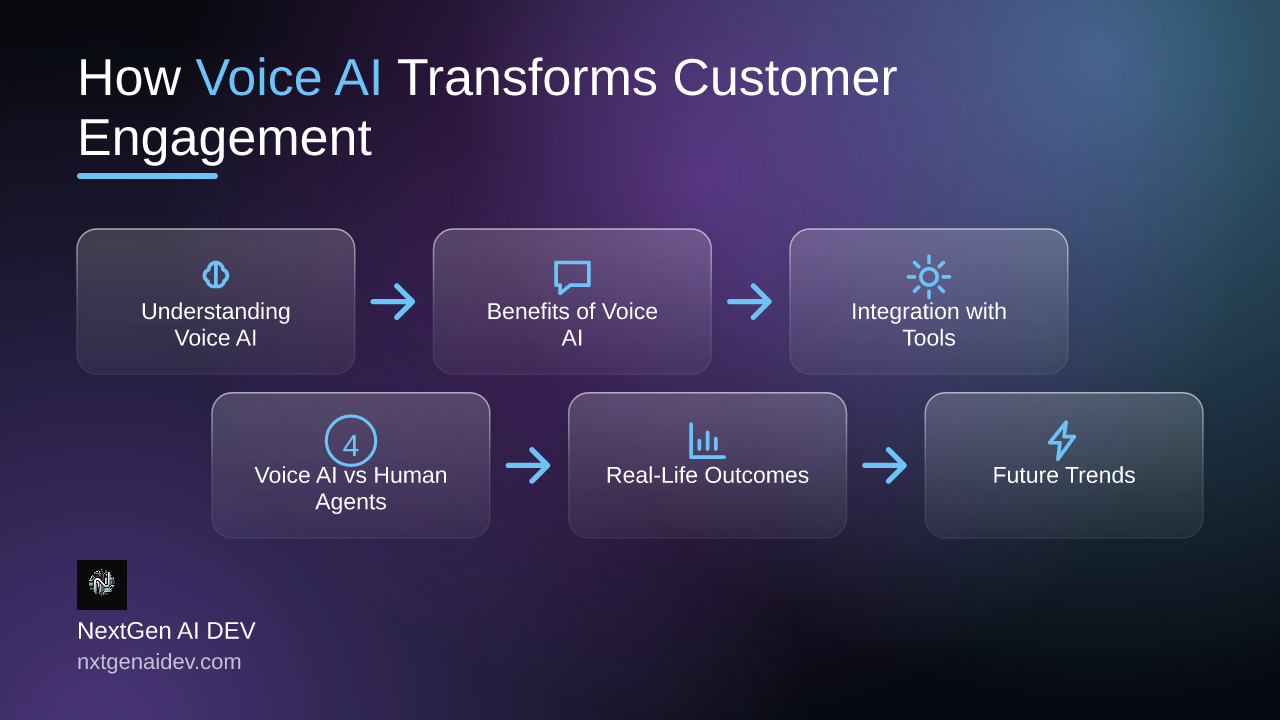
Understanding Voice AI and Its Relevance in SaaS
Voice AI is redefining how businesses interact with customers by adding a layer of usability and engagement that traditional platforms lack. As SaaS (Software as a Service) companies strive to stay competitive, integrating Voice AI technology offers an innovative approach to enhancing customer service, making it a game-changer in the industry.
What is Voice AI?
Voice AI refers to technology that enables devices to understand and respond to human voice commands, facilitating smoother interactions. This includes functionalities such as natural language processing, speech recognition, and voice synthesis, allowing for more conversational interactions between software and users. In SaaS applications, these functionalities empower businesses to streamline customer engagement, automate routine inquiries, and provide personalized experiences.
The Growing Importance of Voice AI in SaaS
Statistics indicate that the adoption of Voice AI technology is rising rapidly, with a projected 34% growth in the market size by 2025 (source). This technology enhances customer interactions by enabling instant responses and freeing up human agents to tackle more complex inquiries. As customer expectations continue to evolve, integrating Voice AI into SaaS solutions isn't just a trend—it's becoming a necessity for businesses looking to maintain a competitive edge.
Benefits of Voice AI for Customer Engagement
Adopting Voice AI brings several advantages that significantly enhance customer engagement for SaaS providers.
24/7 Customer Support with Voice AI
One of the standout benefits of Voice AI is its capacity to provide round-the-clock customer support. Unlike traditional support systems that operate only during business hours, Voice AI can handle inquiries and issues at any time of day or night. This uninterrupted service not only boosts customer satisfaction but also helps businesses cater to a global audience, accommodating different time zones.
Proactive Customer Engagement Strategies
Voice AI enables proactive customer engagement, allowing companies to reach out based on user behavior and preferences. For example, a SaaS provider may use voice technology to send reminders or updates about upcoming features or account enhancements. A study of companies utilizing Voice AI demonstrated a 20% increase in customer retention rates, showcasing the tangible benefits of a proactive approach.
Emotional tone detection is another innovative feature of Voice AI. By analyzing customer sentiment, Voice AI can adjust its responses to align with a user's mood, further enhancing the customer experience. This not only fosters positive relations but also increases the likelihood of upsells and customer loyalty.
Voice AI Integration with Existing Tools
Incorporating Voice AI into existing SaaS solutions requires thoughtful planning and execution to ensure a seamless user experience.
Integrating Voice AI with CRM Systems
Integrating Voice AI with Customer Relationship Management (CRM) systems can significantly enhance customer service by providing immediate data access. This allows AI to pull relevant customer information when a query is made, making responses more contextual and relevant. Seamless integration means that customers get efficient responses while agents can focus on more nuanced concerns.
Challenges of Implementation
While the benefits are compelling, the implementation of Voice AI does come with its challenges. Businesses often face obstacles such as data incompatibility, complexity in user interface design, and ensuring consistent quality in voice recognition. Addressing these issues requires a robust strategy, including extensive testing and iterative feedback, to refine the technology and enhance user satisfaction.
Possible solutions to overcome these challenges include ongoing training for staff on technology use, selecting user-friendly platforms, and building a dedicated team for maintenance and updates.
Comparing Voice AI and Human Agents
The ongoing debate about the roles of Voice AI and human agents in customer service deserves attention.
Can Voice AI Replace Human Agents?
Though Voice AI brings efficiency, the question remains: can it truly replace human agents? While Voice AI can handle routine queries and FAQs, it lacks the emotional intelligence that human agents provide. This makes it clear that, while Voice AI can cover basic interactions, it is unlikely to fully replace the nuanced capabilities of a trained human agent.
The Hybrid Human-AI Model
The hybrid model combines the strengths of both human agents and Voice AI, resulting in a robust customer service framework. Companies that adopt this model often witness a marked improvement in customer feedback. For instance, a leading SaaS provider implemented this hybrid approach and reported a 30% decrease in response times coupled with a boost in customer satisfaction scores.
Real-Life Outcomes of Using Voice AI in SaaS
Implementing Voice AI is not merely about keeping up with technology; it directly impacts business outcomes.
Impact on Customer Satisfaction
Many SaaS companies have experienced significant increases in customer satisfaction post-implementation of Voice AI. Metrics show a 40% increase in positive customer feedback and a decrease in support resolution times by 25%. These figures substantiate the claim that Voice AI is an effective tool for enhancing the customer experience.
Long-Term Cost Implications
Financially, Voice AI presents numerous benefits when compared to traditional customer service methods. A comprehensive analysis revealed that companies using Voice AI enjoyed up to 60% reductions in operational costs, mainly due to less reliance on human agents for routine tasks. Over time, the investment in Voice AI not only pays off but also enhances profitability through improved customer retention.
Future Trends in Voice AI for Customer Engagement
As technology continues to evolve, so does Voice AI.
Emerging Technologies
The future of Voice AI holds promise as advancements in machine learning and natural language processing reach new heights. Innovations like voice biometrics for increased security and personalization are set to become standard in the near future. Such advancements will enrich the customer experience by making interactions more secure and tailored.
Future of Voice AI in SaaS
Anticipating how these trends will shape customer engagement strategies reveals an exciting landscape. Businesses will need to adapt, incorporating more sophisticated AI technologies that can predict customer needs and behaviors, making engagement even more intuitive and responsive.
The SaaS industry will also see shifts in the competitive landscape as Voice AI becomes more prevalent, ensuring that early adopters will likely gain a significant advantage.
As you reflect on the transformative potential of Voice AI in your SaaS solutions, consider this: What specific challenges have you faced or anticipate facing when implementing Voice AI into your customer engagement strategy?
💬 Join the conversation — share your take in the comments and tell us what you’d add.