How Multi-Org RBAC Enhances Security for Enterprise AI Deployments
Discover how multi-org RBAC can elevate your AI security and governance. Streamline access control today!
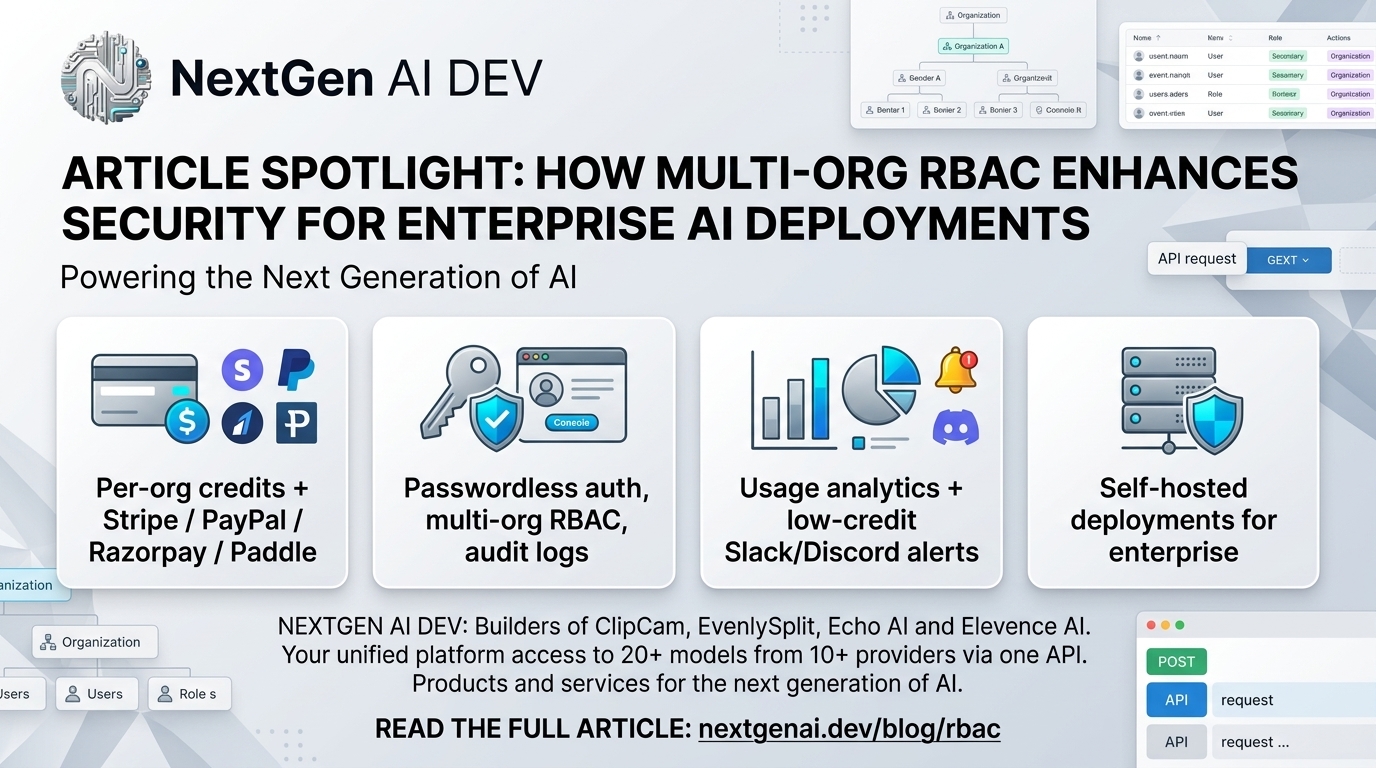
How Multi-Org RBAC Enhances Security for Enterprise AI Deployments
Multi-Org Role-Based Access Control (RBAC) is transforming how enterprises safeguard their AI deployments. With the rapid rise of artificial intelligence, ensuring that sensitive data remains secure has never been more critical. This post dives into how Multi-Org RBAC provides a robust framework to enhance security in enterprise settings, addressing growing concerns about data integrity and compliance.
Understanding Multi-Org RBAC
What is Multi-Org RBAC?
Multi-Org RBAC is an advanced access control system that enables organizations to manage permissions across multiple tenants or departments within a single platform. Unlike traditional access models, which often focus on linear hierarchies, Multi-Org RBAC provides a more granular, context-sensitive approach to permissions. This is particularly vital in environments where various teams might access shared resources, enabling organizations to maintain control over who accesses what data within their AI ecosystems.
Differences from Traditional RBAC
The primary distinction between Multi-Org RBAC and traditional RBAC systems lies in their architecture and flexibility. Traditional RBAC relies heavily on roles assigned to users, often making it cumbersome to manage in large, dynamic environments. Multi-Org RBAC, however, provides a multi-dimensional approach to role assignment, allowing for more precise permission settings that can adapt to organizational changes quickly. This agility is crucial in today’s fast-paced environments, especially when integrating AI technologies that require nuanced access controls.
Importance of Tenant Isolation in Multi-Org Environments
In a Multi-Org RBAC setting, tenant isolation is vital for maintaining security. Each tenant represents an independent entity, and ensuring that they do not intersect is crucial for data protection. When tenant isolation is weak, it opens the door to potential data breaches, risking data integrity and customer trust. The implications are significant, particularly in mixed-tenant environments where various departments or organizations collaborate on AI projects. A lapse in isolation can cause unauthorized data access, leading to severe compliance issues and reputational damage.
Key Benefits of Multi-Org RBAC for AI Deployments
Enhanced Security Features
One of the main advantages of Multi-Org RBAC is the implementation of least privilege principles, which ensures that users have only the permissions necessary to fulfill their tasks. This minimizes the risk of data exposure and reduces the attack surface. In AI systems, which often handle sensitive information, this approach can significantly enhance security practices. By strictly managing access, organizations can proactively prevent unauthorized activities that could exploit vulnerabilities.
Effective Resource Management
Resource management becomes more streamlined with Multi-Org RBAC. Organizations can allocate resources based on user roles and organizational needs, optimizing performance while maintaining security. Efficient resource management can also improve operational effectiveness, ensuring that teams have access to the tools and data they require without unnecessary interference from unrelated departments.
Simplified Compliance
Navigating compliance requirements can be a daunting task, especially when it comes to AI systems that deal with sensitive data. Multi-Org RBAC simplifies compliance by providing clear role definitions and access trails. With a structured approach to who can access what, organizations can more easily meet regulatory standards, thus reducing the risk of compliance violations and potential fines.
Implementing Least Privilege in AI Systems
Techniques for Achieving Least Privilege
Achieving least privilege in AI environments requires a series of deliberate strategies. Organizations should first conduct a thorough assessment of user roles and responsibilities. Following that, they should define strict access policies based on job functions, regularly review access rights, and incorporate automation wherever possible. These techniques can drastically reduce the likelihood of unauthorized access while ensuring optimal operational integrity.
Role Design Considerations
When designing roles in a Multi-Org RBAC system, there are several considerations to keep in mind. Each role should be crafted with specific access needs in mind, focusing on the principle of least privilege. Moreover, organizations must remain adaptable, periodically revisiting roles to ensure they align with evolving business needs and security requirements. Effective role design is an ongoing process that requires input from various stakeholders to ensure a comprehensive security strategy.
The Role of Context-Aware Access in AI Security
Context-aware access is integral to enhancing security within AI systems. By taking into account the context in which data is accessed—such as the location of the user, the device being used, and the specific data being requested—organizations can implement dynamic access controls that adapt to real-time scenarios. For instance, if a user typically accesses data from a corporate network, attempting to access it from a public Wi-Fi network could trigger additional authentication measures, thus providing another layer of security.
Measuring Success with Visibility and Audit Logging
Implementing Audit Logging
Implementing robust audit logging within a Multi-Org RBAC system is essential for tracking user activities and identifying potential security breaches. By capturing detailed logs of access attempts, organizations can have a comprehensive view of user behaviors and detect anomalies quickly. This predictive capability is invaluable for preemptively addressing security threats before they escalate.
Best Practices for Visibility
To ensure visibility in access control, organizations should adopt best practices such as regular audits of access logs, configuring alerts for erratic access patterns, and creating dashboards that provide real-time insights into user activity. By maintaining transparency in access control mechanisms, organizations can foster a culture of accountability and significantly bolster security posture.
Challenges in Adopting Multi-Org RBAC
Integration with Hybrid Models
Integrating Multi-Org RBAC into existing hybrid models presents its own set of challenges. Many organizations operate with a mix of on-premises and cloud resources, and ensuring seamless interoperability between these systems can be complex. A thoughtful approach to architecture and clear communication between departments are vital to navigate these hurdles successfully.
Addressing Implementation Difficulties
Organizations may also face resistance during the implementation phase of Multi-Org RBAC. Lack of understanding among employees about the benefits of this system, coupled with concerns over increased complexity, can hinder adoption. To address these challenges, it is crucial to provide comprehensive training and to cultivate buy-in from all levels of the organization, showcasing the long-term security benefits of Multi-Org RBAC.
Multi-Org RBAC empowers organizations to establish fortified security controls within their AI deployments. By embracing this sophisticated access control model, enterprises can not only enhance security but also achieve operational efficiency and compliance.
Explore how your enterprise can leverage multi-org RBAC for enhanced AI security today!