How Edge AI is Revolutionizing Mobile App Performance: Key Benefits
Discover how Edge AI enhances mobile app performance, delivering faster responses and improved user experiences. Learn more today!
Understanding Edge AI and Its Impact on Mobile Applications
What is Edge AI?
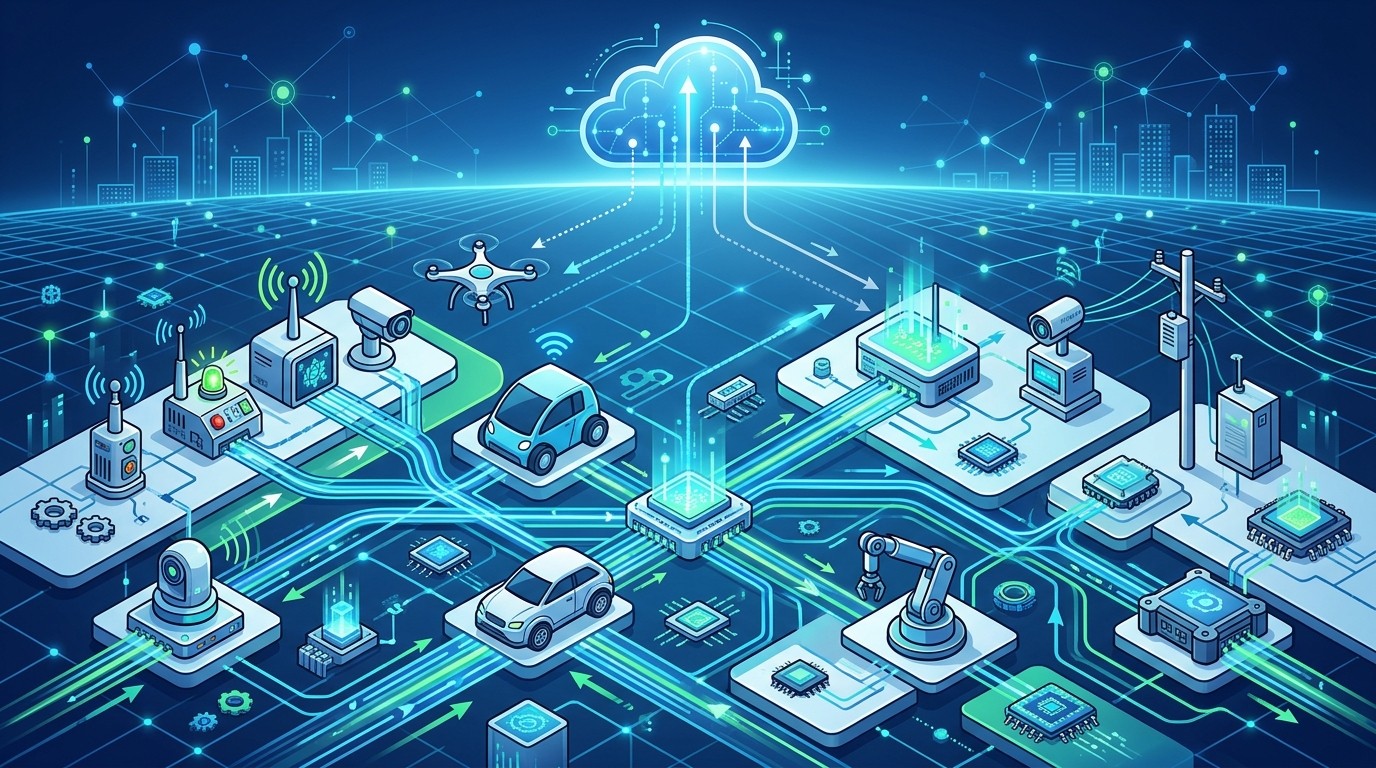
Edge AI refers to the processing of data on local devices rather than relying on cloud servers. This innovation dramatically shifts how mobile applications function compared to traditional cloud-based AI, which typically sends data back and forth between the device and server. With Edge AI, everything happens closer to the source of data, leading to quicker response times.
By enabling on-device processing, Edge AI mitigates delays caused by internet lag, making it particularly beneficial for applications requiring immediate feedback, such as gaming, augmented reality (AR), and real-time analytics. Its relevance is underscored by the growing demand for real-time processing in mobile applications, as users expect instantaneous results and seamless interaction.
Why is Edge AI Crucial for Mobile Apps?
Mobile architecture plays a pivotal role in leveraging Edge AI. Unlike the centralized cloud model, Edge AI decentralizes processing, allowing mobile apps to function more efficiently. This is especially important in contexts where quick decisions are needed, like facial recognition or voice commands.
With the rise of Internet of Things (IoT) devices and the increased dependency on mobile technologies, the need for Edge AI is more pressing than ever. It not only enhances user experience but also reduces the operational strain on cloud services, making it a winning solution for developers and end-users alike.
Key Benefits of Edge AI for Mobile App Performance
Decreased Latency and Enhanced Responsiveness
One of the most notable advantages of Edge AI is its ability to significantly reduce latency. With local processing capabilities, Edge AI allows mobile applications to access and analyze data instantly. For example, consider a navigation app that leverages Edge AI to provide real-time traffic updates. By processing data directly on the device, it can deliver faster and more accurate routing information without the delays typical of cloud-based systems.
Improved Data Privacy and Security
Data privacy is increasingly critical in today's digital landscape. Edge AI enhances data security by keeping sensitive information on the device rather than transmitting it to cloud servers. This reduces the risk of data breaches and enhances user trust. For instance, health apps that manage sensitive medical data can benefit immensely by ensuring that this information is processed locally, safeguarding it from potential external threats.
Offline Functionality
Offline functionality is a game-changer for many mobile applications. Edge AI empowers apps to perform essential tasks even without an internet connection. An excellent example is a photo editing app that relies on machine learning. By using Edge AI, it can apply filters and effects directly on the device, ensuring that the user experience remains seamless regardless of connectivity. This is particularly important in rural areas or during travel.
Resource Implications of Running AI Models on Mobile Hardware
Processing Speed and Real-Time Capabilities
Running AI models directly on mobile hardware allows for optimized processing speed. Edge AI efficiently manages complex tasks, enabling applications to function seamlessly without lag. For example, a gaming app incorporating real-time AI can react to player actions instantaneously, enhancing engagement and immersion.
The advantages of Edge AI aren't limited to speed. It also allows the application to function independently of constant server communication, making it robust in challenging network environments.
Battery Efficiency Considerations
One concern with running AI models on mobile devices is the potential strain on battery life. However, Edge AI is designed to be resource-efficient. By optimizing AI models specifically for mobile hardware, developers can minimize energy consumption. This approach is exemplified in applications focused on fitness tracking, where accuracy and battery life are crucial across extended periods of use.
Integration of Edge AI with 5G Technology
Transformative Power of 5G
The synergy between Edge AI and 5G technology is profound. 5G’s low latency and high bandwidth capabilities amplify Edge AI's potential, creating a perfect ecosystem for mobile applications. For instance, consider how a smart city might utilize this combination. Traffic management systems could leverage real-time data from Edge AI applications to optimize traffic flows, reducing congestion and enhancing safety.
Real-World Applications
Industries across the board are capitalizing on the integration of Edge AI and 5G. In healthcare, for instance, remote monitoring devices can transmit critical health data in real-time, allowing medical professionals to make quicker, more informed decisions. Likewise, in manufacturing, predictive maintenance via Edge AI can minimize downtime and enhance productivity.
Emerging Technologies in Edge AI for Mobile Apps
Generative AI on Mobile Devices
Generative AI is witnessing an uptick in mobile applications, thanks to Edge AI's processing capabilities. Imagine an art creation app where users can input keywords, and the app generates unique images. By relying on Edge AI, such applications can operate with minimal latency while maintaining user privacy, as generated content does not need to be sent to external servers.
TinyML and Federated Learning
TinyML is another groundbreaking technology driving Edge AI forward. It allows complex machine learning models to run on constrained devices, making it feasible to perform sophisticated AI tasks on smartphones without heavy resource usage. Federated learning further revolutionizes Edge AI by enabling models to learn collaboratively from multiple devices without sharing raw data. This maximizes privacy and data security while allowing the model to improve continuously.
Best Practices for Integrating Edge AI in Mobile Apps
Frameworks and Tools for Development
Several frameworks and tools are available for developers looking to implement Edge AI in their mobile applications. Google’s TensorFlow Lite, for instance, provides an efficient way of deploying machine learning models on mobile devices. Similarly, Apple's Core ML offers a streamlined approach tailored for iOS developers. Leveraging these tools can significantly expedite the development process while ensuring high performance.
When to Choose Edge AI Over Cloud AI
Deciding between Edge AI and traditional cloud AI requires assessing your application's specific requirements. If real-time processing, data privacy, or offline functionality is paramount, Edge AI is clearly the superior choice. However, for applications that rely heavily on vast datasets or complex computations that don't necessarily require immediate feedback, cloud AI may still hold an advantage.
Conclusion: The Future of Mobile Apps with Edge AI
Edge AI promises a revolutionary shift in mobile applications, enhancing performance, security, and user experiences. As technology evolves, users can expect increasingly sophisticated applications that not only perform tasks efficiently but also protect their data.
Looking ahead, we can anticipate advancements in AI models tailored for mobile hardware and further breakthroughs in connectivity, such as 6G. The possibilities are boundless for developers and consumers alike.
What specific enhancements have you experienced in your own mobile apps with Edge AI? Share your insights!
💬 Join the conversation — share your take in the comments and tell us what you’d add.