
How Automation is Revolutionizing Mobile App Development Today
Discover how automation powers faster, cost-effective mobile app development. Start benefiting today with our expert insights!
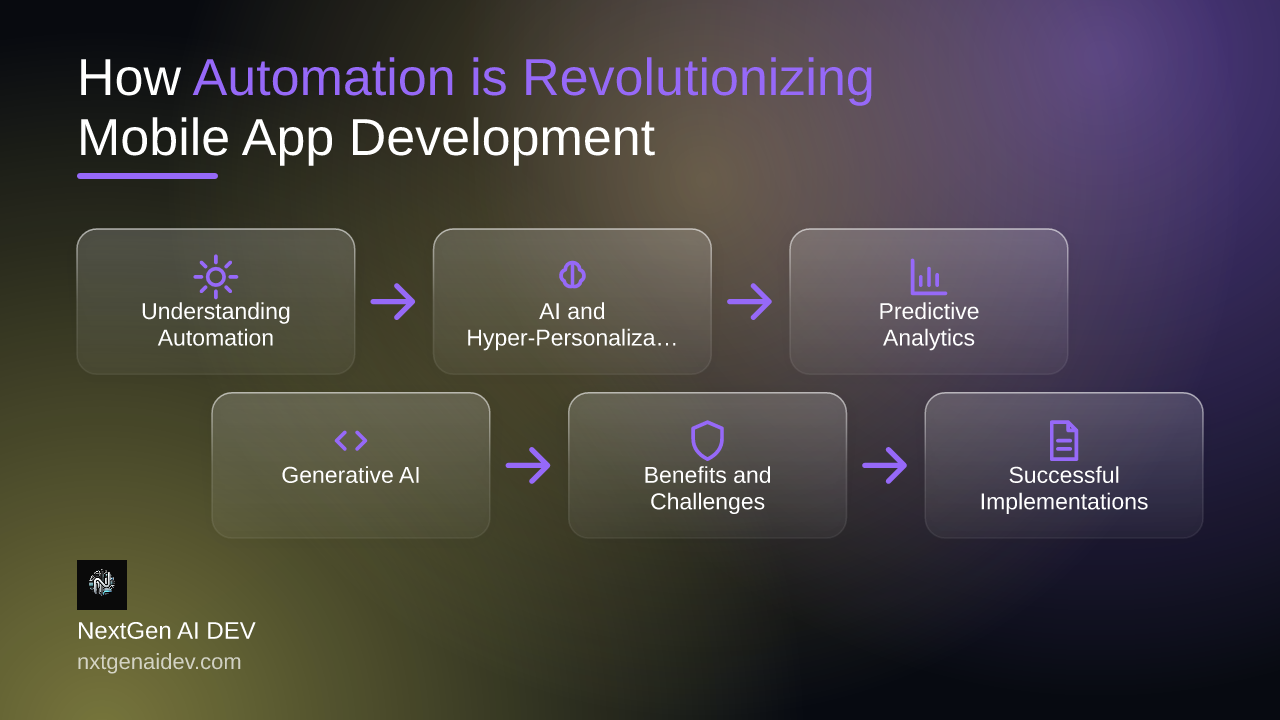
Understanding Automation in Mobile App Development
What is Automation?
Automation in the context of mobile app development refers to using technology to perform tasks and processes with minimal human intervention. This encompasses various aspects, from coding and testing to deployment and maintenance. The goal is to improve efficiency, minimize errors, and free developers to focus on higher-level activities, such as design and user experience.
Why Automation Matters in Development
The growing complexity of mobile applications calls for agile development methodologies that can respond quickly to change. Automation significantly enhances productivity by enabling faster development cycles and reducing the manual workload. By automating repetitive tasks, teams can accelerate time-to-market, a crucial competitive advantage in the fast-paced app ecosystem.
Key Areas Where Automation is Applied
Key areas benefiting from automation include:
Testing: Automated testing frameworks can run numerous test cases simultaneously, identifying issues quicker than manual testing methods. Tools like Selenium and Appium are widely used.
Deployment: Continuous Integration and Continuous Deployment (CI/CD) pipelines automate the build and deployment process, allowing for seamless updates.
Maintenance: Monitoring tools can automatically analyze performance and report issues, improving application longevity.
The Role of AI and Hyper-Personalization
AI-native Applications
AI-native applications are transforming the mobile app landscape by integrating advanced algorithms that enhance user interaction and experience. They adapt to changing user needs and behaviors, setting new standards for functionality and usability.
On-Device AI and User Privacy
On-device AI processes user data locally, which not only speeds up app performance but also bolsters user privacy. By minimizing the need to send data to the cloud for processing, users feel more secure about their information. This shift addresses privacy concerns while increasing the responsiveness of applications.
Hyper-Personalization Techniques
Hyper-personalization leverages AI and machine learning to tailor app experiences to individual users. Techniques include:
Recommendation Systems: Apps use algorithms to suggest content or features based on user behavior.
Dynamic Interfaces: User interfaces can adapt in real-time to user preferences, enhancing engagement and satisfaction.
Streamlining Development with Predictive Analytics
What is Predictive Analytics?
Predictive analytics involves using statistical algorithms and machine learning to analyze historical data and predict future outcomes. In mobile app development, it plays a crucial role in understanding user behavior, allowing developers to make informed decisions based on data-driven insights.
Improving User Engagement through Data Insights
By analyzing user data, developers can identify patterns that impact user retention and satisfaction. For instance, if analytics show that users drop off after a particular step in a process, developers can tweak the user interface or provide additional guidance to improve retention rates.
Generative AI: The Future of Content and Interaction
How Generative AI Works
Generative AI learns from existing data and can create new content that mimics the style and structure of the original dataset. This could mean generating reviews, suggestions, or even entire sections of app content.
Use Cases in Mobile Apps
Generative AI is already being employed in various mobile applications, such as:
Chatbots: Automated customer service representatives capable of understanding and responding to user inquiries.
Content Creation: Apps that can create personalized marketing materials or even assist in writing code snippets.
Benefits and Challenges of Automation
Pros of Implementing Automation
Reduced Time and Cost: Automation allows repetitive tasks to be completed faster, significantly lowering development costs.
Improved Accuracy: Automated systems tend to have fewer errors compared to human handling, leading to more reliable applications.
Faster Iteration: Agile practices become more feasible with automation, allowing for rapid experimentation and development.
Potential Hurdles and Solutions
While the benefits are compelling, there are challenges to consider:
Initial Costs: Setting up automated systems can be expensive upfront. However, these costs are often offset by long-term savings.
Need for Skilled Personnel: Implementing automation requires trained professionals. Development teams should invest in training or consider hiring specialists to manage automated systems effectively.
Case Studies: Successful Implementations of Automation
Example 1: Company A's Journey
Company A implemented automated testing frameworks that drastically cut down their testing time. They transitioned from manual testing to automated scripts, allowing them to run over 300 test cases simultaneously. The result was not only faster releases but also a 40% reduction in post-launch bugs.
Example 2: Company B's Innovations
Company B leveraged AI to personalize user experiences significantly. By employing machine learning algorithms, they managed to increase user engagement by 30%, leading to higher retention rates and improved user satisfaction. Their approach showcased the potential of AI in mobile app interactions.
Future Trends in Mobile App Development Automation
Looking Ahead: What to Expect
Emerging trends indicate a deeper integration of AI and machine learning into mobile app development. Techniques like low-code and no-code development are also gaining traction, enabling more non-technical personnel to manage app development processes efficiently.
Preparing for Change in Development Teams
To thrive in this evolving landscape, development teams should embrace training in automation tools and keep abreast of new technologies. Collaboration between development and operations (DevOps) will become increasingly essential as teams adapt to these shifts.
What automation tools or techniques have you found most effective in your mobile app development projects? Your insights could help shape the future of automation in app development!
💬 Join the conversation — share your take in the comments and tell us what you’d add.