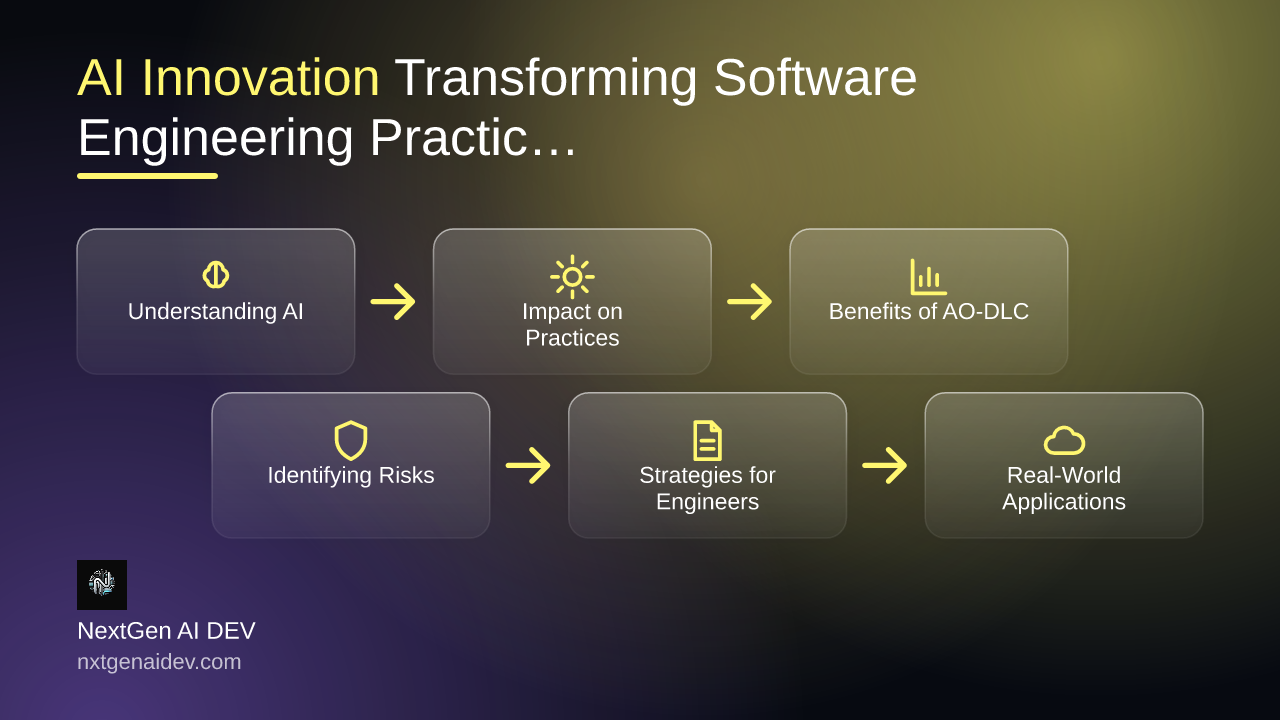
How AI Innovation is Transforming Software Engineering Practices
Discover how AI innovation transforms software engineering practices and boosts efficiency. Learn more for optimized development strategies today!
How AI Innovation is Transforming Software Engineering Practices
AI innovation is not just a buzzword; it’s revolutionizing software engineering practices at an unprecedented pace. The advent of agentic AI introduces a novel breed of automation, prompting software engineers to rethink their roles and methodologies. This deep dive explores the nuances of agentic AI and how it’s setting the stage for a new era in software development.
Understanding AI Innovation and Agentic AI
What is Agentic AI?
Agentic AI refers to artificial intelligence systems capable of executing tasks autonomously, making decisions, and learning from their environment. Unlike traditional algorithms, which follow predetermined rules, agentic AIs can adapt, reason, and take actions based on real-time data. This capability elevates their relevance in software engineering, where quick decision-making can significantly enhance productivity and quality.
Differences Between Agentic AI and Traditional AI
While traditional AI operates within defined parameters and relies heavily on data inputs, agentic AI introduces a layer of autonomy that changes the game. For instance, traditional AI might assist in writing code by suggesting snippets based on existing patterns but lacks the ability to independently assess problems or make complex decisions in real-time. In contrast, agentic AI can review code autonomously, identify flaws, and suggest improvements dynamically, thereby significantly improving the efficiency of the software development process.
The Impact of Agentic AI on Software Engineering Practices
Shifting Roles of Software Engineers
The integration of agentic AI is transforming the traditional role of software engineers. No longer solely responsible for coding and debugging, engineers are gravitating towards more strategic responsibilities that involve overseeing AI tools, improving them, and focusing on human-centric problem-solving. This shift allows engineers to engage in creative tasks, such as architecture design and requirement analysis, elevating their contribution to the development lifecycle.
AI in Code Reviews and Testing
Agentic AI has made significant inroads into automating code reviews and testing procedures. For example, tools like SonarQube utilize AI algorithms to analyze code and detect vulnerabilities, drastically reducing the time engineers spend reviewing code. The result? A pronounced improvement in efficiency. By allowing AI to handle routine tasks, engineers can focus more on refining complex aspects of the code, thereby fostering innovation and quality.
Accelerating Software Delivery Timelines
Real-world examples demonstrate that AI-driven methodologies are shortening software delivery timelines dramatically. A notable instance comes from Microsoft, where the adoption of AI in the Azure DevOps pipeline led to a 20% reduction in deployment times. By leveraging AI to manage workflows better and predict potential bottlenecks, teams can release features faster, stay competitive, and satisfy market demands with agility.
Benefits of Adopting Agent-Orchestrated Development Life Cycle (AO-DLC)
Enhanced Collaboration
The Agent-Orchestrated Development Life Cycle (AO-DLC) fosters better collaboration among team members by streamlining communication and integrating AI functionality into the developmental framework. For example, platforms like GitHub Copilot act as collaborative partners, suggesting code snippets and promoting real-time collaboration among team members, which is crucial during high-pressure project phases.
Improved Quality Assurance
Quality assurance processes are also enhanced through agentic AI. By automating testing protocols and continuously monitoring code quality, AI tools ensure that potential issues are flagged earlier in the development lifecycle. This consistency leads to more reliable software and significantly reduces the risk of bugs in production, highlighting the need for a culture shift towards more rigorous testing methodologies informed by AI.
Identifying Risks Associated with Agentic AI in Software Engineering
Job Security Concerns
The rise of agentic AI does raise legitimate job security concerns among software engineers. Automation has the potential to replace certain tasks traditionally performed by humans, leading to fears of obsolescence in specific roles. While routine coding tasks may diminish, the creativity and problem-solving acumen that engineers provide will become increasingly invaluable, necessitating a transformation rather than a complete elimination of jobs.
Dependence on AI Tools
As beneficial as agentic AI can be, there are inherent risks associated with over-reliance on AI tools. Developers may face challenges if they become overly dependent on AI for decision-making or code quality. This dependency can stifle critical thinking and analysis, making it essential to strike a balance between utilizing AI capabilities and maintaining independent oversight of engineering tasks.
Adapting to the Rise of Agentic AI: Strategies for Engineers
Skill Development
To thrive in a landscape shaped by agentic AI, engineers must enhance their skill sets. Focus areas include understanding AI algorithms, honing skills in data analysis, and familiarizing oneself with machine learning principles. Online courses on platforms like Kaggle or Coursera can be pivotal in building these competencies.
Embracing Collaboration with AI
Fostering an environment where teams can collaborate with AI systems is essential. Engineers should actively engage with AI tools, experimenting with their capabilities and integrating them into their workflow. This hands-on approach boosts comfort levels and encourages innovative uses of AI, making it an integral part of software projects.
Real-World Applications and Case Studies
Successful Implementations
Companies like Netflix have successfully integrated agentic AI into their recommendation systems, streamlining code generation and optimizing user experiences. Their AI-driven analytics enable continuous improvement based on user interactions, showcasing the impact agentic AI can have on enhancing functionality and user engagement.
Lessons Learned from Failures
Conversely, organizations that have failed to implement agentic AI effectively often cite a lack of clear objectives and team misalignment as their downfall. For instance, during a failed AI rollout, a company overlooked the importance of stakeholder engagement, resulting in a disconnect between the AI capabilities and user needs. This highlights the necessity for careful planning and alignment before attempting significant changes.
Looking Ahead: The Future of Software Engineering with AI Innovation
Long-Term Effects on Career Paths
Speculation about the long-term effects of agentic AI on career trajectories within software engineering raises interesting questions. As routine tasks become automated, the need for specialized roles may rise, emphasizing systems engineering, AI ethics, and data privacy, pivoting the landscape toward more strategic positions.
Future Trends in AI and Software Development
Emerging trends suggest that AI will revolutionize traditional software development paradigms. The focus will shift toward AI-driven designs, where algorithms generate code from high-level specifications. Tools that augment creativity and reduce the manual coding burden will become critical, emphasizing the importance of adaptability in engineering roles.
The landscape of software engineering is shifting rapidly due to AI innovation, particularly agentic AI. As professionals, adapting to this change is vital for continued success.
How have you experienced the integration of AI in your engineering projects, and what changes have you observed?
💬 Join the conversation — share your take in the comments and tell us what you’d add.