How AI Agents are Redefining Business Interactions in 2023
Discover how AI Agents enhance business communications. Unlock efficiency now with innovative solutions from Agentic AI.
How AI Agents are Redefining Business Interactions in 2023
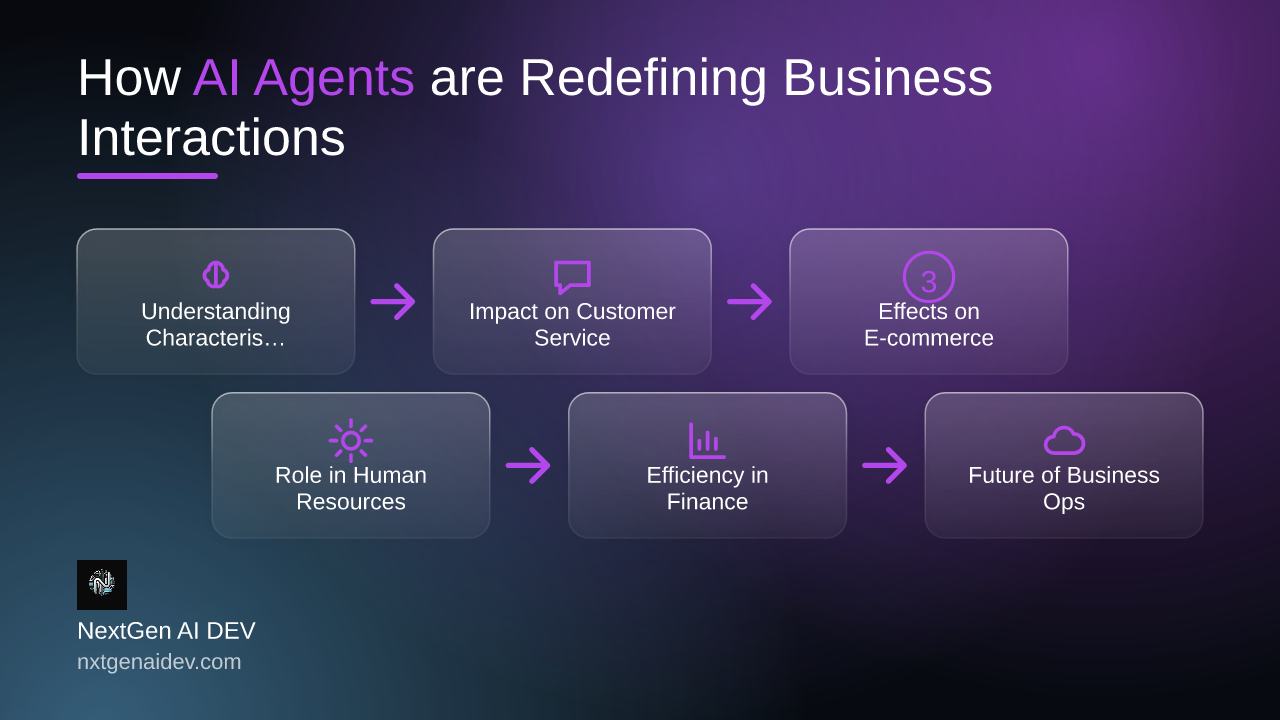
Imagine a world where your customers receive personalized assistance in real-time, and your workforce operates at peak efficiency without the constraints of human error. Enter AI agents, the powerful digital helpers transforming the landscape of business interactions in 2023. This blog explores the multi-faceted roles AI agents are playing across various sectors, from customer service to human resources, illustrating how they’re redefining operational norms.
Understanding AI Agents and Their Characteristics
Core Features of AI Agents
AI agents are software entities designed to perform tasks autonomously within business environments. Their core purpose is to enhance efficiency, improve customer interactions, and generate actionable insights from vast amounts of data. Three critical characteristics define them: autonomy, adaptability, and learning capabilities.
Autonomy: AI agents can make decisions without human intervention. This autonomy allows them to respond swiftly to customer inquiries or operational needs.
Adaptability: These agents learn and adjust their behavior based on new information or changing circumstances, making them invaluable in dynamic business landscapes.
Learning Capabilities: Most AI agents leverage machine learning to continuously improve performance over time, ensuring that they deliver increasingly sophisticated solutions.
The Technology Behind AI Agents
At the heart of AI agents lies advanced technology, primarily machine learning (ML) and natural language processing (NLP). Machine learning enables agents to analyze patterns and make data-driven predictions, while natural language processing allows for more natural interactions with users. This combination makes AI agents versatile, enabling them to handle tasks ranging from data analysis to customer conversations, creating a seamless communication channel between businesses and clients.
Comparisons with Traditional Systems
Unlike traditional automated systems, which often rely on static rules and pre-programmed responses, AI agents are designed to learn from experience and adapt to new situations. This shift from rigid automation to dynamic learning not only enhances customer interactions but also reduces operational costs, leading to a more agile business environment.
Impact of AI Agents on Customer Service
Personalization in Customer Interactions
Personalization is a hallmark of modern customer service, and AI agents excel in this area. By analyzing customer behavior and preferences, AI can tailor interactions that resonate with individual needs. For instance, chatbots can recommend products based on previous purchases or browsing history, creating a tailored shopping experience that boosts customer satisfaction.
Efficiency and Response Time
Statistics reveal that businesses utilizing AI agents have witnessed dramatic improvements in response times. According to recent studies, companies employing AI chatbots have reported up to a 70% reduction in average response time (source). This efficiency translates not only into happier customers but also into increased retention rates, making AI agents essential for success in today's competitive market.
Case Studies of Successful AI Implementations
Several companies have successfully integrated AI agents into their customer service strategies. For instance, a global telecommunications company deployed an AI-driven chatbot that handled approximately 40% of customer queries independently, leading to significant cost savings and improved customer experiences. By enhancing responsiveness and personalization, organizations like this are setting new benchmarks for customer service excellence.
Transformational Effects on E-commerce
AI Agents in Product Recommendations
E-commerce platforms are leveraging AI agents to provide better product recommendations. By analyzing user behavior, AI can suggest products that are more likely to convert. Amazon, for example, has famously used this strategy, attributing over 35% of its revenue to personalized recommendations powered by AI algorithms (source).
Dynamic Pricing Strategies
AI technology also influences pricing strategies, enabling real-time adjustments based on market demands and competitor pricing. Businesses using AI for pricing can optimize their offerings to attract customers without sacrificing profit margins. This agility is especially important in sectors like retail and travel, where prices can change rapidly.
Simplifying Checkout Processes
Checkout can be a major pain point for online shoppers. AI agents streamline this process by autofilling information, suggesting payment methods, and verifying transactions all in real-time. Research shows that simplifying the checkout process can lead to up to a 30% increase in conversion rates (source).
AI Agents in Human Resources and Workforce Management
Streamlining Recruitment Processes
AI agents are revolutionizing recruitment by automating candidate screening and shortlisting. Using advanced algorithms, AI can analyze resumes and predict which candidates best fit the role, vastly reducing the time HR teams spend on hiring processes.
Employee Engagement and Retention
Beyond recruitment, AI technologies enhance employee engagement by analyzing feedback and performance metrics. Tools powered by AI can recommend action plans to improve employee satisfaction, significantly impacting retention rates over time.
AI Agents for Performance Management
AI-driven insights help managers make data-informed decisions regarding promotions and performance reviews. By continuously analyzing employee data, AI ensures fair assessments and targets employee development more accurately.
Enhancing Efficiency in Financial Services
Automating Routine Transactions
The financial sector has also embraced AI agents to automate repetitive tasks, such as processing transactions and generating reports. This capacity frees financial teams to focus on strategic initiatives rather than mundane duties, boosting overall productivity.
Fraud Detection and Risk Management
AI’s predictive capabilities are pivotal in fraud detection. By analyzing patterns and anomalies in financial data, AI systems can flag potential fraudulent activities in real time, allowing organizations to mitigate risks effectively.
Customer Relations via AI Agents
Customer relationships in finance can be enhanced through AI interactions. AI-powered chatbots can resolve queries instantly, offering customers a more responsive service experience—an essential factor in building trust and loyalty.
AI Agents and the Future of Business Operations
Integration Across Supply Chains
AI agents are streamlining supply chain processes, enhancing logistics management through real-time tracking and predictive analytics. By anticipating demand fluctuations, AI helps businesses optimize inventory levels and reduce costs.
Emerging Business Models
The advent of AI technology is paving the way for innovative business models. Companies are increasingly offering AI as a service (AIaaS), enabling businesses of all sizes to leverage AI capabilities without large upfront investments.
Workforce Adaptations and Skills Needed
As AI increasingly reshapes operations, there’s a pressing need for workforce adaptations. Employees will require upskilling in data literacy and technology to seamlessly collaborate with AI tools, ensuring sustainable growth in the age of automation.
Ethical Implications and Challenges of AI Agent Adoption
Data Privacy Concerns
While AI agents offer numerous benefits, they also raise significant data privacy concerns. Organizations must prioritize responsible data management practices to protect customer data while leveraging AI technologies.
Bias in AI Decision Making
Another challenge lies in overcoming bias in AI algorithms. Inaccurate or biased data can lead to biased AI decisions, impacting critical business outcomes. A commitment to transparency in AI development can help address these issues.
Regulatory Considerations
Regulations governing AI use are still evolving, and businesses need to stay informed about compliance requirements. Understanding regulatory landscapes will be crucial for companies looking to ensure ethical use of AI in their operations.
AI agents are not just a passing trend; they are essential for businesses aiming to thrive in a competitive landscape. How has your organization integrated AI agents into its operations, and what challenges have you faced? Share your experiences!
💬 Join the conversation — share your take in the comments and tell us what you’d add.