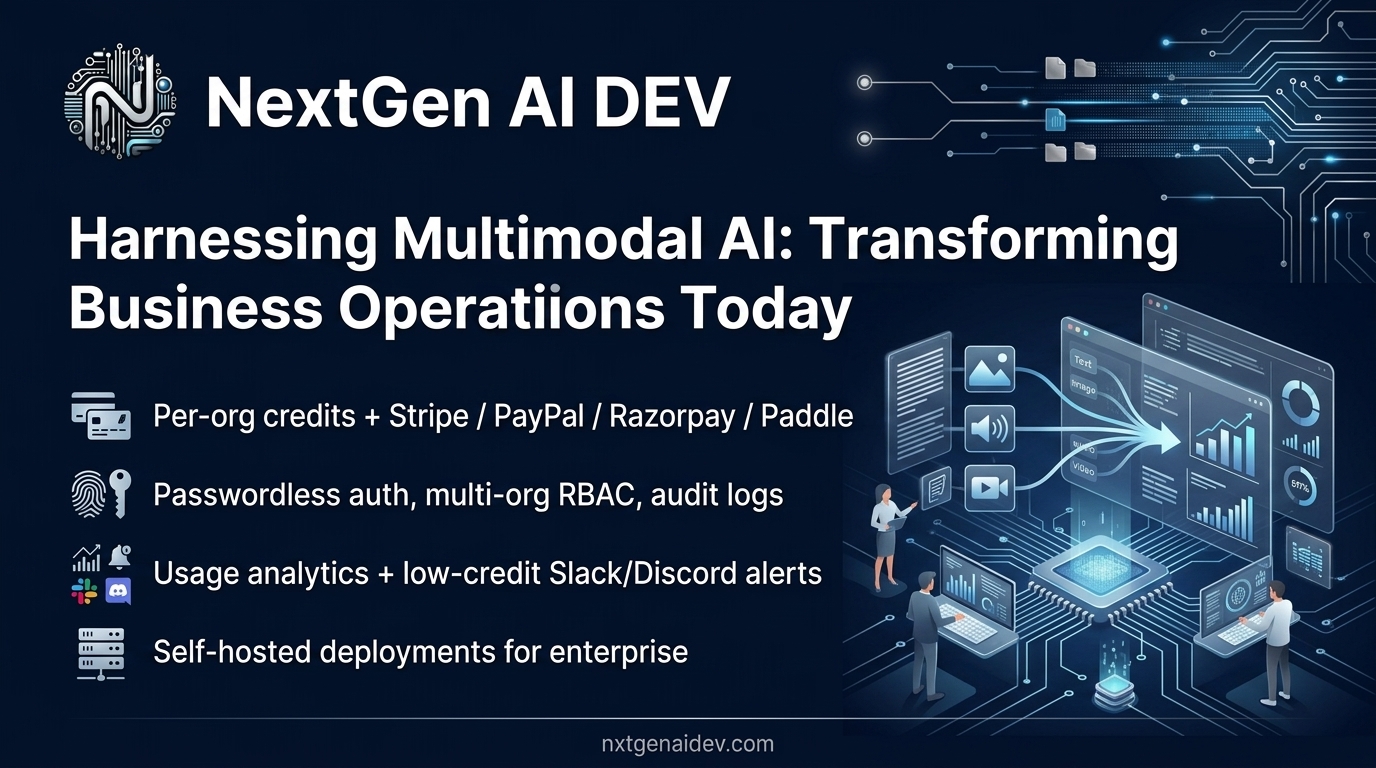
Harnessing Multimodal AI: Transforming Business Operations Today
Unlock efficiency with multimodal AI in your business operations. Discover benefits and strategies to implement today!
Understanding Multimodal AI in Business
Harnessing multimodal AI is not just a trend; it’s an innovation that can redefine how businesses operate. When organizations embrace this technology, they tap into a rich vein of potential for efficiency and decision-making. Let's demystify multimodal AI and uncover its vast benefits for today's enterprises.
What is Multimodal AI?
Multimodal AI refers to artificial intelligence systems trained to understand and interpret multiple forms of data, such as text, images, audio, and video. Unlike traditional AI, which often focuses on a single type of input—like text or image recognition—multimodal AI integrates various data types to provide more nuanced insights and capabilities. This blend equips businesses with a comprehensive understanding of complex scenarios, leading to superior operational performance.
How Does It Differ from Traditional AI?
Traditional AI systems are typically siloed, dealing with homogeneous streams of data. For instance, a text-based chatbot can solve customer queries but may struggle with visual inputs or audio cues. Multimodal AI, on the other hand, allows businesses to build more holistic models that can interpret and analyze context from various data inputs simultaneously. This integration enhances accuracy and makes responses more relevant, ultimately enriching user experiences.
Key Benefits of Multimodal AI for Businesses
The benefits of multimodal AI extend across various operational dimensions:
Enhanced Decision-Making: By combining multiple data types, businesses can arrive at more informed decisions swiftly.
Efficiency Improvements: With automated workflows driven by multimodal inputs, processes become faster and less error-prone.
Personalized Customer Experiences: Businesses can tailor interactions based on rich contextual data, leading to improved satisfaction rates.
Challenges of Implementing Multimodal AI
While the advantages are compelling, adopting multimodal AI isn’t without its hurdles. Addressing these challenges is essential for successful deployment.
Data Quality and Availability
High-quality data is the cornerstone of effective multimodal AI systems. Poor data quality can lead to incorrect insights, eroding trust in automated solutions. It’s crucial for businesses to invest in data management strategies that ensure accuracy, relevance, and accessibility across different formats.
Integration with Existing Systems
Integrating multimodal AI into legacy systems poses significant challenges. Many organizations have established workflows with traditional AI solutions that may be incompatible with newer, more versatile models. Effective transition strategies, leveraging API compatibility and robust architecture, can streamline this integration.
Real-Time Operation Challenges
Processing data in real-time is vital for the effectiveness of multimodal AI. However, the logistical constraints of real-time data management can delay responses and affect the accuracy of outputs. Businesses need to adopt efficient data pipelines capable of processing various data streams simultaneously, ensuring seamless operation.
Practical Applications of Multimodal AI
The versatility of multimodal AI paves the way for numerous applications across industries, enhancing both customer interactions and internal processes.
Customer Service Enhancement
AI agents leveraging multimodal capabilities can interact with customers through various channels—text, voice, or even visual prompts. For example, an AI that analyzes both customer inquiries and sentiment through text and audio can respond more empathetically, leading to better customer retention.
Operational Monitoring
Multimodal AI also excels in operational monitoring. By analyzing data across different formats, organizations can gain real-time insights into operational performance, identify potential issues, and make necessary adjustments proactively.
Broader Multilingual Communication
In today’s global marketplace, effective communication across different languages and formats is crucial. Multimodal AI can facilitate seamless conversations by recognizing and interpreting inputs in diverse languages, while also maintaining contextual consistency.
The Future of Multimodal AI in Business Operations
As businesses continue to explore the potential of multimodal AI, several trends are emerging that will shape the future of this transformative technology.
Market Growth and Enterprise Adoption
The market for multimodal AI is poised for significant growth. Recent statistics indicate that enterprise adoption rates are climbing steadily, with organizations recognizing the potential for operational efficiency and enhanced customer engagement. As more case studies emerge, the trend of embracing multimodal solutions will likely accelerate.
Cross-Modal Data Integration Trends
Businesses are beginning to leverage cross-modal data integration techniques to gain a competitive edge. By merging insights from diverse data streams, they can create more comprehensive strategies that maximize resource utilization and drive innovation.
Visual Reasoning Advancements
Innovations in visual reasoning will enable AI to interpret and act on complex visual information more effectively. Future multimodal AI systems will be increasingly capable of understanding context in images and videos, enhancing applications in areas like security and customer insights.
Case Studies: Successful Implementations
Examining real-world examples provides a lens into the tangible benefits of multimodal AI across various industries.
Case Study 1: Retail Industry
One retail chain implemented multimodal AI to enhance customer interaction by analyzing voice and image data from customer interactions. This led to improved personalized marketing strategies and a 25% increase in customer satisfaction scores. The integration of multimodal insights allowed for quicker adaptations to consumer preferences, resulting in higher sales.
Case Study 2: Healthcare
In the healthcare sector, a leading organization adopted multimodal AI solutions for patient monitoring. By combining video feeds with electronic health records, the system provided healthcare professionals with real-time updates on patient status. This resulted in improved patient outcomes and a significant reduction in emergency room visits due to better follow-up care.
Lessons Learned from Implementations
From these implementations, several key takeaways emerge:
Integration is Key: Seamless integration of multimodal AI into existing processes is essential for success.
Continuous Training: Regular updates and training of AI systems ensure they remain relevant and effective.
Emphasizing Data Quality: Prioritizing high-quality data collection and management is fundamental for optimal performance.
FAQs About Multimodal AI
What Problems Can Multimodal AI Solve?
Multimodal AI offers solutions to a variety of operational challenges. It can break down silos in data management, enhance customer interaction accuracy, and improve decision-making processes through richer insights.
Key Considerations Before Implementation
Before adopting multimodal AI technology, businesses should contemplate:
The necessary infrastructure upgrades required for integration.
Potential data privacy and security concerns.
The need for ongoing training and support for staff to leverage the system effectively.
Harnessing multimodal AI can radically transform your business operations. If you want to explore how this technology can elevate your organization’s performance, contact us for insights and strategies tailored to your business!