Harnessing Multi-Org RBAC for Secure AI Deployments: Strategies and Insights
Unlock secure AI deployments with multi-org RBAC for better access control. Explore the advantages and streamline your security today!
Harnessing Multi-Org RBAC for Secure AI Deployments: Strategies and Insights
The security of AI applications is non-negotiable. With the rising sophistication of cyber threats, the implementation of robust access control strategies like Multi-Org Role-Based Access Control (RBAC) is critical for safeguarding sensitive data. This guide delves deep into how Multi-Org RBAC can enhance security across AI deployments, highlighting its advantages, challenges, and best practices.
Understanding Multi-Org RBAC in AI Security
What is Multi-Org RBAC?
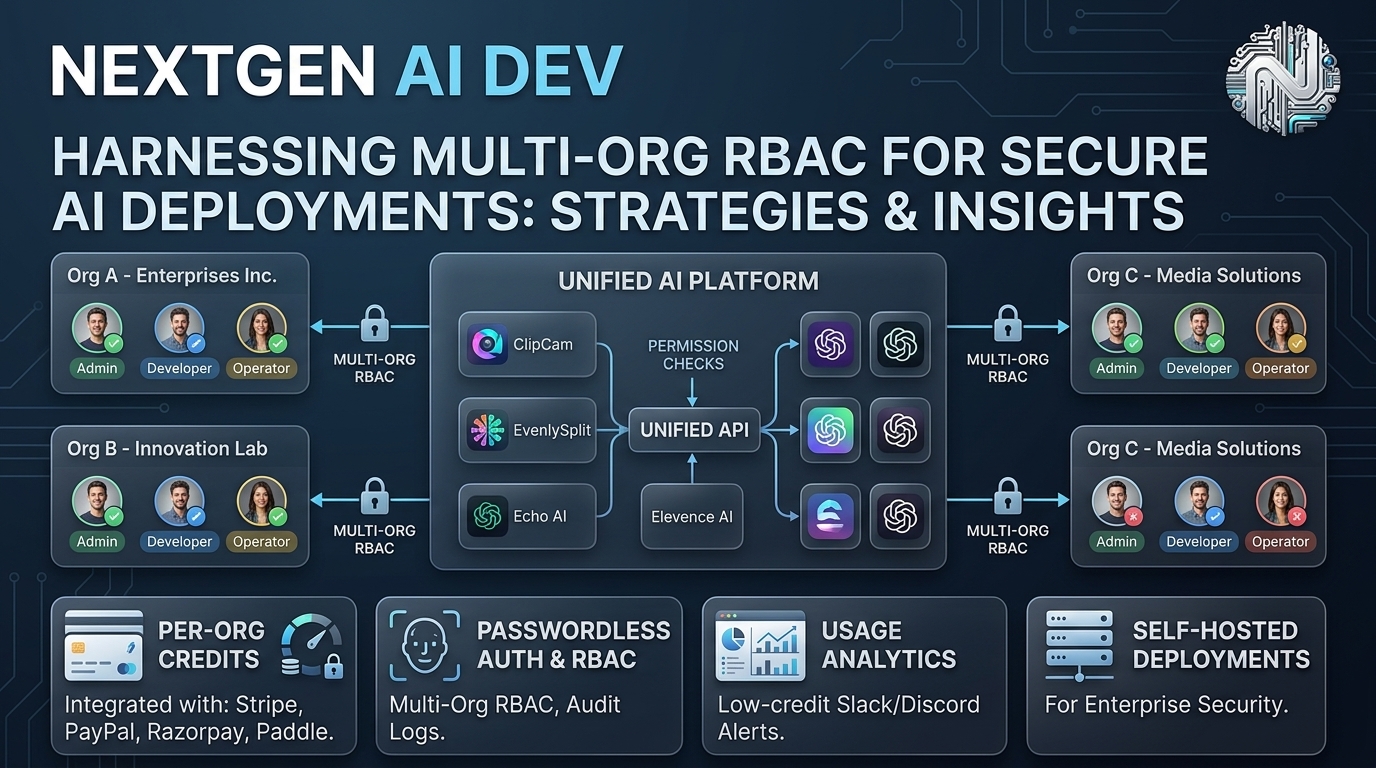
Multi-Org RBAC is an advanced access control model aimed at managing permissions in multi-tenant environments. It divides access responsibilities across multiple organizations or tenants, allowing for granular permission settings. Each tenant has unique roles that dictate what resources and actions they can access—this ensures that users only get the access they need, based on their organizational affiliation.
Key components of Multi-Org RBAC include user roles, permissions, and organizational hierarchies. These elements work together to create a system that enables fine-tuned access control while promoting security across AI applications. By employing Multi-Org RBAC, organizations can significantly mitigate risks related to unauthorized access and data breaches.
Importance of Secure AI Deployments
AI applications often handle sensitive data, making secure authorization paramount. Ineffective access control can lead to data leaks, misuse of information, or even full system compromises. Multi-Org RBAC addresses these concerns by providing a structured approach to user management. When implemented correctly, it offers organizations peace of mind, knowing that their AI systems are fortified against potential threats.
Moreover, compliance with regulations such as GDPR or HIPAA becomes more manageable with Multi-Org RBAC, as it allows for clearer tracking of permissions and access history. This is essential not only for compliance but for building trust with users who entrust their data to AI systems.
Key Benefits of Multi-Org RBAC
Enhanced Tenant Isolation
One of the primary benefits of Multi-Org RBAC is enhanced tenant isolation. This means that data and resources are compartmentalized by organizational boundaries, which helps prevent unauthorized access even within a shared environment. Each tenant's data remains protected from others, reducing the risk of cross-tenant data leaks and vulnerabilities.
Isolation is vital in shared AI applications where multiple organizations interact. It provides a barrier that safeguards each tenant's data integrity and privacy. With distinctly formed roles and permissions, Multi-Org RBAC ensures that each tenant's access is tailored to their specific needs while remaining securely isolated from the others.
Context-Aware Authorization
Context-aware authorization takes security a step further by considering the circumstances under which access requests are made. With Multi-Org RBAC, context can include user location, time of access, and the sensitivity of the data being requested. This additional layer ensures that access is granted based not only on roles but on real-time situational factors.
Such dynamic authorization enhances compliance with data protection regulations and protects against internal and external threats. By establishing parameters that take context into account, organizations can significantly bolster their security postures and maintain the integrity of their AI deployments.
Challenges and Limitations of Multi-Org RBAC
Limitations in AI Deployments
Despite its advantages, Multi-Org RBAC is not without challenges. One limitation is its complexity, particularly in environments where roles and permissions frequently change. Every modification needs thorough documentation to maintain clarity and effectiveness, which can be demanding for organizations.
Furthermore, the static nature of RBAC can lead to disadvantages in rapidly evolving AI landscapes, where adaptability is crucial. As organizations grow and scale their operations, managing roles and permissions manually can introduce errors and potential security gaps.
The Need for Runtime Policy Checks
To counterbalance the limitations of Multi-Org RBAC, runtime policy checks are imperative. These checks analyze ongoing requests in real-time to ensure compliance with established policies. By validating user roles and access contexts as requests are made, organizations can quickly respond to potential security issues.
Integrating runtime checks into existing systems requires forward-thinking strategies, as it necessitates the synchronization of access management protocols with real-time usage patterns. This combination of Multi-Org RBAC and runtime validation can dramatically improve security in AI applications.
Integrating Multi-Org RBAC with Advanced Models
Shifting from RBAC to ABAC
While Multi-Org RBAC offers significant benefits, organizations might consider transitioning to Attribute-Based Access Control (ABAC) for even more flexibility. ABAC incorporates a broader set of attributes—such as user characteristics and environmental conditions—into access decisions, enabling a more nuanced approach compared to traditional RBAC.
This shift can empower organizations to tailor access even further, allowing for personalized user experiences while maintaining a strong security framework. Adaptability within access control can meet the demands of modern AI scenarios, making ABAC a compelling option.
Combining RBAC with OAuth
Another strategy involves combining RBAC with OAuth for effective identity and access management. OAuth enhances short-lived authorization grants that work seamlessly alongside defined roles in Multi-Org RBAC. This synergy allows organizations to manage temporary access without compromising security, striking a balance between flexibility and control.
Additionally, identity separation for auditing and execution purposes helps ensure that access is managed responsibly. By interlinking these models, organizations can secure AI deployments while still providing users the necessary accessibility to perform their work.
Best Practices for Implementing Multi-Org RBAC
Establishing Tenant Boundaries
Establishing clear tenant boundaries is crucial for the successful implementation of Multi-Org RBAC. Organizations should outline who has access to what data and ensure that administrative privileges are only granted to those who genuinely require them. Effective boundary management helps prevent unauthorized access and reinforces security.
Utilizing tools that assist in visualizing and managing these boundaries can simplify this process. These tools aid compliance efforts and serve as foundational elements to promote a security-first culture in AI deployments.
Policy Enforcement Strategies
Continuous policy enforcement is vital in maintaining the integrity of Multi-Org RBAC environments. Organizations should adopt best practices such as regular audits and automated compliance checks to ensure that policies remain effective as circumstances evolve. Employing a combination of manual and automated enforcement strategies can further enhance security.
Incorporating insights gained through monitoring can guide future adjustments, making policy enforcement a dynamic aspect of security management.
Looking Ahead: Future of Multi-Org RBAC in AI Security
Emerging Trends
The landscape of Multi-Org RBAC in AI security is continually evolving. With emerging technologies and increasing regulatory scrutiny, organizations must adapt their approaches to access management. Trends such as decentralized identity systems, AI-driven security solutions, and the growing emphasis on privacy by design will shape the future of RBAC strategies.
By being aware of these trends, organizations can remain ahead of the curve, ensuring that their security frameworks are comprehensive and resilient.
The Role of AI in Access Management
AI has the potential to revolutionize access management by introducing intelligent automation for user verification and behavior analysis. AI can help detect anomalies, ensuring that any unauthorized access is flagged promptly. Moreover, AI-driven insights can inform access policies, enhancing efficiency and security in your Multi-Org RBAC framework.
As regulations continue to evolve, AI will play a crucial role in ensuring compliance and improving the agility of access management systems. The collaborative potential of AI and Multi-Org RBAC will provide organizations with an unprecedented level of security and flexibility.
Ready to secure your AI deployments with effective multi-org RBAC? Start exploring our solutions today!