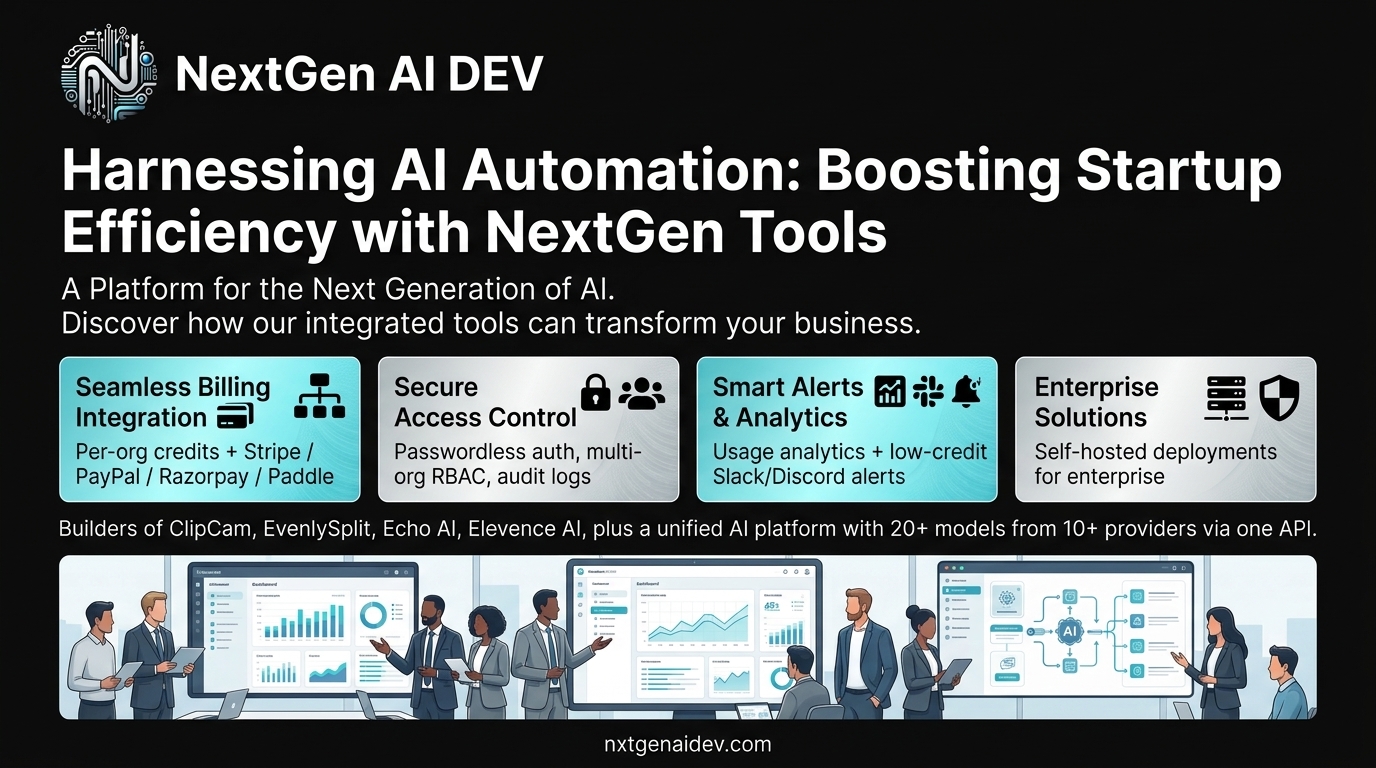
Harnessing AI Automation: Boosting Startup Efficiency with NextGen Tools
Discover how AI automation can boost your startup's efficiency. Unlock your potential and streamline operations today.
Harnessing AI Automation: Boosting Startup Efficiency with NextGen Tools
Imagine a world where your startup operates seamlessly, workflows are optimized, and every team member is empowered to focus on creative problem-solving rather than mundane tasks. This is the promise of AI automation, transforming how startups achieve efficiency and effectiveness.
Understanding AI Automation
What is AI Automation?
AI automation integrates artificial intelligence tools into business processes, streamlining operations, reducing overhead costs, and increasing productivity. In a landscape dominated by rapid technological advancements, embracing AI automation is no longer optional for startups — it’s essential. As startups increasingly face competitive pressures, leveraging AI can give them the edge they need to thrive in their market.
Key Components of AI Automation
At its core, AI automation encompasses several critical components that work together to create efficient systems:
Machine Learning (ML): This subset of AI allows systems to learn from data and make informed decisions without explicit programming for each task, improving efficiency over time.
Robotic Process Automation (RPA): RPA automates repetitive tasks by mimicking user actions, freeing valuable human resources for more complex responsibilities.
Intelligent Automation: This combines RPA with cognitive technologies (like ML and natural language processing) to handle more intricate business processes.
Understanding these components helps startups identify which technologies can be effectively applied to their unique challenges.
The Impact of AI Automation on Startup Efficiency
How AI Automation Improves Efficiency
By harnessing AI automation, startups can streamline operations in various key areas:
Enhanced Productivity: Automating routine tasks reduces time spent on low-value activities, allowing teams to focus on strategic initiatives.
Improved Decision-Making: AI tools analyze vast amounts of data rapidly, providing insights that inform better business decisions.
Cost Reduction: By optimizing workflows and reducing labor costs, AI tools can significantly decrease operational expenses.
According to a study by McKinsey, companies that adopt automation technologies can increase their productivity by up to 30% within a few years (source).
Case Studies of Effective AI Implementation
Let’s explore a few real-world scenarios where startups successfully integrated AI tools:
A Tech Startup focused on app development utilized machine learning algorithms to analyze user behavior. This led to tailored features being rolled out, significantly improving customer satisfaction and retention.
An E-commerce Platform implemented RPA for inventory management, which reduced human error and ensured timely replenishment of stock. Their operational downtime decreased by 40%, leading to higher sales and customer trust.
These examples show that AI automation can provide tangible benefits, increasing both productivity and profitability.
Choosing the Right AI Tools for Your Startup
Top AI Tools for Small Businesses
Selecting the right AI tools is crucial for maximizing efficiency. Here are some standout solutions tailored for small businesses:
Zapier: A no-code platform that connects different apps, automating tasks across various platforms without the need for programming skills.
ChatGPT: An AI-driven chatbot that enhances customer service by providing instant responses to FAQs, thereby improving customer interaction.
Trello with Butler: Integrating AI with task management fosters automation in project workflows, allowing teams to stay organized and focused.
Affordability and Accessibility of AI Solutions
Pricing models for AI tools range from free trials to subscription-based services. Early-stage startups often benefit from platforms that offer flexible pricing—enabling them to scale as needed without upfront costs. The integration of these tools isn’t just about cost; it’s about choosing solutions that fit seamlessly into the workflows already established.
Integrating AI Automation with Existing Tools
Assessing Current Systems
Before diving into integration, startups should carefully evaluate their existing software and systems. Assess how these current tools interact with potential AI solutions and identify areas for improvement. Ask the following questions:
Which tasks are the most time-consuming?
Where are the bottlenecks in our current processes?
Can existing software be upgraded to incorporate AI tools?
Taking the time to conduct this analysis ensures that the integration process is strategic and targeted.
Best Practices for Integration
Integrating AI solutions with existing workflows can be complex. Here are some best practices for ensuring success:
Pilot Projects: Start small by deploying AI tools in specific departments or tasks, analyzing results, and then scaling solutions as needed.
User Training: Ensure that team members are trained on utilizing AI tools effectively to maximize their benefits.
Continuous Monitoring: After implementation, keep an eye on performance metrics to measure effectiveness, making adjustments as necessary to optimize workflows.
The Role of Intelligent Automation in Digital Transformation
Defining Intelligent Automation
Intelligent automation goes beyond basic AI and RPA, incorporating advanced machine learning and cognitive technologies. This means not just achieving efficiency but also enhancing agility, adaptability, and accuracy within business processes.
Benefits for Modern Startups
For startups, intelligent automation can lead to substantial advantages:
Enhanced Scalability: As operations grow, intelligent systems can adapt to increased workloads without significant manual intervention.
Risk Reduction: By automating decision-making processes based on data-driven insights, startups can reduce human errors and mitigate risks.
With intelligent automation, startups can position themselves for sustained growth in an ever-changing digital landscape.
Enhancing Customer Interactions with AI
AI in Customer Service
AI tools are revolutionizing customer service by offering real-time support, automating responses, and tracking interactions. Companies deploying AI in customer service report higher satisfaction rates as customers receive instant answers to their queries.
Personalization and User Experience
AI's ability to analyze data allows startups to offer personalized customer experiences. For instance, tailored recommendations based on previous purchases can enhance user engagement and loyalty, significantly impacting the bottom line.
Startups employing AI-driven personalization have seen substantial increases in customer retention rates, reaffirming the tool's value in enhancing user experience.
Future Trends in AI Automation for Startups
Emerging AI Technologies
The landscape of AI automation is rapidly changing. Here are some trends startups should watch:
Hyperautomation: This involves the use of multiple automation tools and technologies to streamline and enhance business processes even further.
AI-Powered RPA: As AI continues to evolve, RPA systems will not only automate repetitive tasks but also improve their operation through machine learning.
Staying attuned to these trends can set the foundation for future growth.
Preparing for Future Automation
To stay ahead, startups must adopt a forward-thinking mindset. Here are strategies for embracing continuous change:
Invest in Training: Equip your team with skills to leverage new technologies, ensuring everyone is on board with advancements.
Stay Informed: Regularly review updates in AI technology and consider how these changes can impact your operations.
By fostering a culture of innovation and adaptability, startups can thrive in an era dominated by automation.
Harnessing AI automation is not just a strategic advantage; it’s a necessity for modern startups looking to boost efficiency and ensure sustained growth. Discover how AI automation can elevate your startup by exploring our comprehensive guides and resources.