Exploring AI Coding Assistants: Future Trends & Developer Insights
Discover how AI coding assistants can revolutionize your development process. Transform your coding efficiency today!
Understanding AI Coding Assistants
What Are AI Coding Assistants?
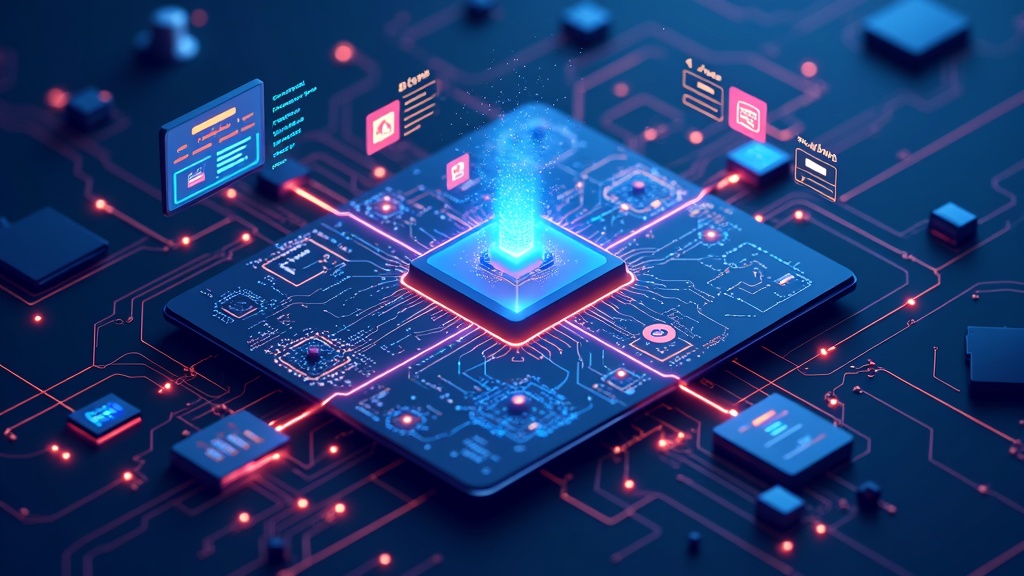
AI coding assistants are tools designed to streamline software development by assisting programmers with code generation, debugging, and overall productivity. These intelligent systems analyze vast amounts of programming data and provide real-time suggestions, making it easier for developers to focus on complex tasks. Tools like GitHub Copilot and Tabnine are prime examples, effectively acting as smart companions that not only enhance coding but also significantly reduce the potential for errors.
How Do They Work?
At the heart of AI coding assistants are sophisticated algorithms and expansive training data sets. These assistants utilize machine learning models, particularly from the realms of natural language processing (NLP) and deep learning, to comprehend programming languages and the nuances that various coding scenarios present. These systems can predict what code a developer might need next based on prior context, making them invaluable for both seasoned professionals and those new to programming.
Current Trends in AI Coding Assistants
Integration with Development Environments
As technology progresses, AI coding assistants have increasingly found their way into Integrated Development Environments (IDEs) such as Visual Studio Code and JetBrains. By seamlessly integrating within these environments, these tools offer contextual code suggestions and automated corrections directly from within the coding interface, streamlining workflows. Users can experience instantaneous feedback on their code, which empowers them to make better decisions swiftly.
Advancements in Natural Language Processing
Recent advancements in NLP are improving the accuracy of code generation. AI coding assistants can now interpret user queries in a more human-like manner, allowing for nuanced inputs. Developers are more inclined to adopt these tools as user feedback consistently affirms improved code quality and relevance. Statistics show that tools like Copilot have seen a significant spike in usage, with developers noting the augmented confidence in code quality and structure.
Practical Implications for Developers
Improving Code Quality
AI coding assistants can help catch bugs long before runtime. They leverage predictive analytics to identify potential issues in real-time. For instance, if a developer inadvertently uses a deprecated function, an AI tool can notify them before they even try to run the code. This proactive approach reduces debugging time significantly and leads to cleaner outputs.
Enhancing Developer Productivity
In addition to quality improvements, these tools also accelerate the coding process. By using intelligent suggestions, developers can spend less time writing boilerplate code and more on solving complex problems. For example, a developer working on a data processing script could input a command, and the AI could generate the required data transformation functions automatically. Numerous case studies show that teams using AI coding assistants have reported time savings of up to 30%, allowing for faster project turnarounds.
Ethical Considerations and Limitations
Bias and Security Concerns
Despite the advancements, ethical concerns surrounding AI code assistants persist. Biases inherent in the training data can inadvertently lead to flawed code suggestions, which may affect overall quality. Security also poses a significant challenge; code generated blindly by AI might introduce vulnerabilities if not scrutinized thoroughly. Developers are encouraged to maintain a healthy skepticism regarding suggestions and validate them through established security practices.
Impact on Employment
The rise of AI coding assistants stirs fears of job displacement among developers. While some believe that these tools may replace entry-level programming positions, others see them as augmenting human capabilities. As AI takes over mundane tasks, developers can focus on higher-level design and architectural decisions. The collaboration between AI and human thinkers could pave the way for a more innovative programming landscape.
The Future of AI Coding Assistants
Predicted Trends and Innovations
Looking ahead, several trends are anticipated to influence the evolution of AI coding assistants. Increased personalization, where the AI learns individual developer preferences and practices, is just one possibility. Advancements in context-aware networks could enhance the relevance of suggestions, allowing for a smoother integration of AI-driven workflows.
Long-term Developer Adoption
As AI technology continues to evolve, so too will the role of developers. With the integration of smarter coding assistants, developers may find themselves taking on new roles, focusing on creativity and innovation rather than repetitive coding tasks. The idea of "co-coding" between humans and AI may become the norm, fostering a symbiotic relationship that expands the boundaries of what's possible in software development.
User Adoption and Real-world Use Cases
Industries Adopting AI Coding Assistants
A range of industries, from fintech to healthcare, are leading the charge in adopting AI coding assistants. Companies are using these tools to not only speed up development cycles but also enhance compliance with industry standards. The financial sector, for instance, utilizes AI to help ensure accuracy in complex transactions and data handling, demonstrating its capacity to adapt across various disciplines.
Success Stories from Developers
Numerous developers have shared success stories about incorporating AI coding assistants into their workflow. For example, one developer noted that using GitHub Copilot significantly shortened their development cycle for a web application, allowing for more time to refine user experience. We encourage you to share your own experiences and case studies in the comments; community feedback can provide invaluable insights and encourage others to explore these technologies.
AI coding assistants are revolutionizing the software development landscape, promising enhancements in code quality, efficiency, and even job roles. As we move forward, these tools will likely become integral to the developer’s toolkit.
How have AI coding assistants changed your approach to development tasks? Share your thoughts and experiences!
💬 Join the conversation — share your take in the comments and tell us what you’d add.