Enhancing User Experiences in SaaS with Multimodal AI Integration
Unlock the power of Multimodal AI to elevate user experiences in your SaaS applications. Discover strategies and tips!
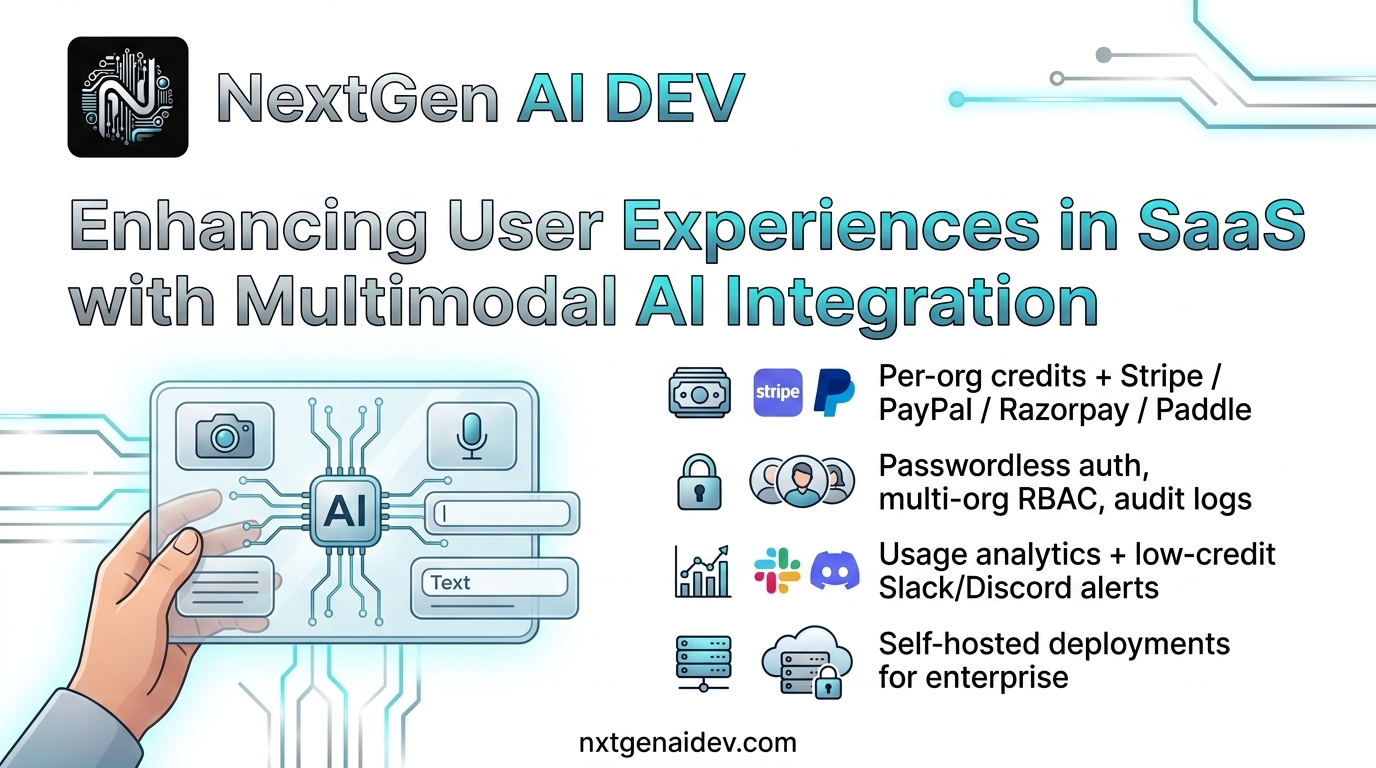
Enhancing User Experiences in SaaS with Multimodal AI Integration
In the realm of Software as a Service (SaaS), user experience can make or break a product. Imagine being greeted not just by text, but a rich tapestry of audio, images, and personalized content tailored specifically for you. Welcome to the world of multimodal AI, where the integration of multiple data forms elevates user interactions to a whole new level.
Understanding Multimodal AI in SaaS Applications
What is Multimodal AI?
Multimodal AI refers to systems that can process and analyze data across various modes—text, audio, images, and more. Unlike traditional AI models that rely on a single form of input, multimodal AI combines these elements to provide a richer, more nuanced understanding of user demands and contexts. For SaaS applications, this means enhancing engagement by intelligently interpreting user behaviors across different channels and inputs.
Benefits of Multimodal AI in SaaS
The primary advantage of incorporating multimodal AI in SaaS is enhanced personalization. By utilizing diverse data inputs, SaaS applications can tailor experiences to individual users, improving customer satisfaction and retention rates. Moreover, the integration of such AI boosts efficiency; workflows become streamlined as the AI automates interactions that would typically require human oversight, providing timely responses and insights. As noted by industry experts, the efficiency gained through multimodal AI can drive significant cost savings and scalability for SaaS providers (source).
Current Applications of Multimodal AI in SaaS
Enhancing Customer Support
One of the most immediate applications of multimodal AI lies in customer support. SaaS companies are increasingly utilizing chatbots enhanced with multimodal capabilities, allowing them to interpret and respond to user inquiries in real time. For instance, these chatbots can analyze customer sentiment through both text and voice tone, resulting in more empathetic and effective responses. The success stories are numerous; companies leveraging this technology have reported up to a 30% increase in customer satisfaction scores (source).
Automating Decision-Making
Multimodal AI also plays a pivotal role in automating decision-making. SaaS platforms harness data across channels to implement automated workflows that enhance operational efficiency. For example, businesses can utilize multimodal AI to predict sales trends or inventory shortages, resulting in data-driven decisions that are both timely and accurate. By integrating analytics from multiple sources, companies can streamline their operations and reduce the burden on their human resources.
Embedding Analytics and Contextual Guidance
Furthermore, embedding analytics and contextual guidance into applications significantly improves user experience. With multimodal AI, users can receive immediate alerts and recommendations based on their actions within the software. For instance, if a user is struggling with a specific feature, a pop-up could provide a video tutorial while also offering textual tips based on their past usage. This holistic approach not only enhances usability but also promotes user self-sufficiency.
Challenges of Implementing Multimodal AI in SaaS
Scalability Issues
Despite the potential benefits, implementing multimodal AI presents certain challenges. Scalability, in particular, is a significant concern for SaaS providers. As these systems become more complex, the need for advanced infrastructure grows. SaaS applications must navigate multi-tenant environments while ensuring consistent performance for all users. This often requires sophisticated resource allocation and architectural strategies.
Data Quality and Governance
Another hurdle is maintaining data quality and governance. For multimodal AI to function effectively, the data it processes must be accurate and up-to-date. Organizations must establish robust data governance policies to manage data integrity, privacy, and compliance. Without these measures, companies expose themselves to ethical dilemmas and potential regulatory repercussions (source).
Ethical Considerations
Ethical considerations also loom large in the implementation of multimodal AI. The gathering and processing of diverse data types can raise privacy concerns, especially when users are not fully aware of how their information is being utilized. SaaS companies must adopt transparent practices and engage in user education to mitigate these concerns while adhering to ethical AI standards.
Future Trends and Innovations in Multimodal AI
The Evolving Role of AI in SaaS
Looking ahead, the integration of AI will likely become a core feature in many SaaS solutions. As technology evolves, we can expect to see advances in AI capabilities that allow for even richer and more complex interactions. These innovations will not only enhance user experiences but also provide SaaS platforms with a competitive edge in an increasingly crowded market.
Subscription Models and AI Intelligence Tiers
Additionally, subscription pricing models are evolving to reflect the sophistication of AI features. Companies may start offering tiers based on AI capabilities, empowering organizations to select the level of functionality that aligns with their needs. This targeted approach allows users to unlock the full potential of multimodal AI while ensuring they’re only paying for what they use.
Maximizing User Engagement with Multimodal AI
Personalized User Experiences
To maximize user engagement, SaaS platforms must leverage multimodal AI for creating personalized experiences. By analyzing user behavior across different inputs, companies can craft tailored content and services that resonate on a more personal level. For example, a software application could suggest features based on previous interactions, thereby enhancing user satisfaction and loyalty.
Enhancing User Onboarding
Moreover, multimodal interfaces can vastly improve user onboarding processes. A seamless onboarding experience, enhanced by AI-driven support systems that offer interactive tutorials and personalized guidance, can lead to higher retention rates. Users are more likely to continue using a service if they feel supported from their very first interaction.
Conclusion: Embracing Multimodal AI for Future Success
As the landscape of SaaS continues to evolve, the adoption of multimodal AI stands out as a game-changer for enhancing user experiences. Companies that integrate this technology will not only benefit from improved engagement and efficiency but also set the stage for future success. Stay ahead of the curve by keeping an eye on AI trends and innovations that can elevate your SaaS products.
Explore how incorporating multimodal AI can transform your SaaS application today!