Enhancing Security with Passwordless Authentication in SaaS Products
Enhance security with passwordless authentication and multi-org RBAC in SaaS products. Discover effective strategies today!
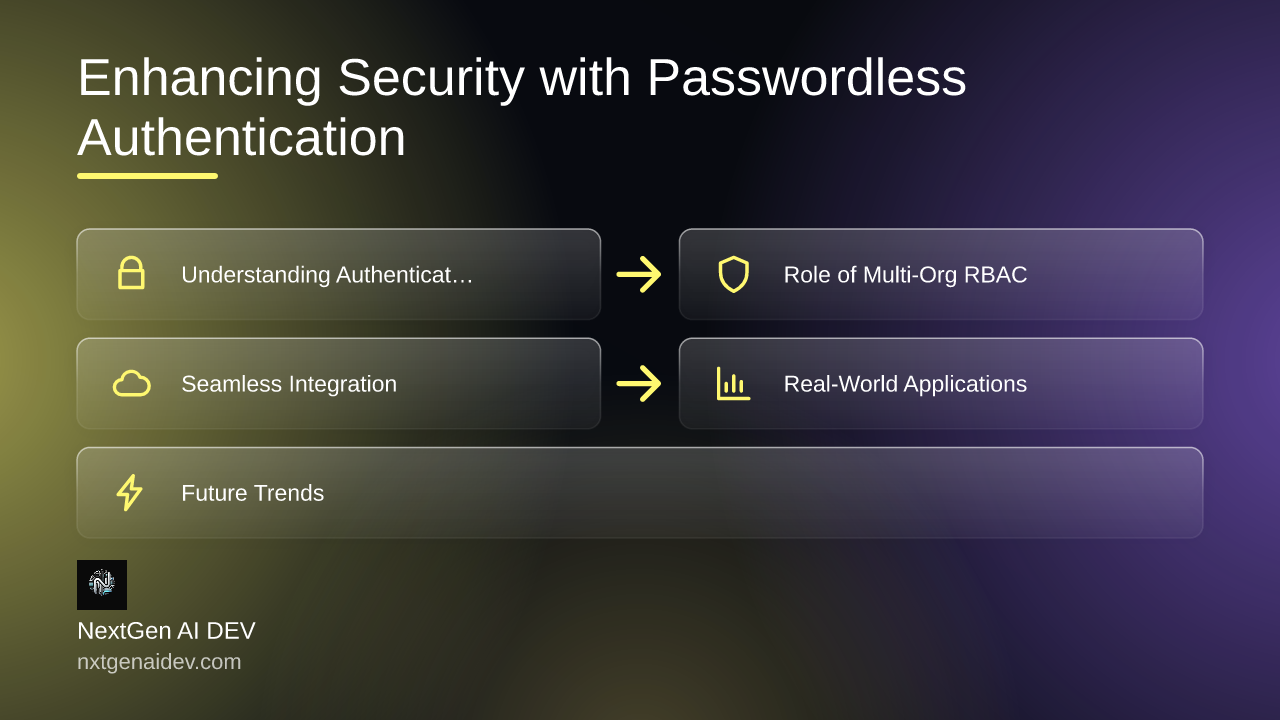
Enhancing Security with Passwordless Authentication in SaaS Products
Security breaches have become increasingly common in the digital landscape, making it imperative for SaaS products to adopt advanced security measures. Passwordless authentication is a transformative approach that not only enhances security but also simplifies user experiences. By eliminating passwords, SaaS products can significantly reduce vulnerabilities associated with phishing, credential theft, and user frustration.
Understanding Passwordless Authentication
What is Passwordless Authentication?
Passwordless authentication, particularly in SaaS, refers to methods that allow users to access their accounts without the need for a password. Instead, these methods leverage alternative verification techniques like biometrics, one-time codes, or magic links. This approach is not just a trend but a necessary evolution in the way users interact with their applications.
How Does Passwordless Authentication Work?
At its core, passwordless authentication relies on two key elements: possession and biometrics. For instance, users might receive a unique code via email or SMS that they enter to verify their identity. Alternatively, biometric data, such as a fingerprint or face scan, can be used to grant access. These mechanisms are underpinned by secure algorithms that ensure data is encrypted, making unauthorized access nearly impossible.
Benefits of Passwordless Authentication
The benefits of adopting a passwordless system in SaaS products are substantial. Firstly, it dramatically reduces the risk of phishing attacks by removing the primary target—passwords. Users benefit from a smoother experience, as they no longer have to remember complex passwords or deal with tedious password resets. Additionally, integrating passwordless authentication not only enhances security but improves user satisfaction and retention.
The Role of Multi-Org RBAC in SaaS Security
What is Multi-Org RBAC?
Multi-Org Role-Based Access Control (RBAC) is a framework that assigns permissions based on roles across different organizational units. In a multi-tenant SaaS environment, RBAC is essential for ensuring that users can only access data pertinent to their organization while preventing unintended access to others' information.
Why Use RBAC in Multi-Tenant SaaS Environments?
Implementing RBAC improves security and compliance in multi-tenant architectures. It allows organizations to tailor access levels according to the specific needs of different user groups, thus limiting exposure to sensitive data. By clearly defining roles and access restrictions, SaaS companies can bolster both user trust and regulatory compliance.
Implementing Multi-Org RBAC with NextGen AI DEV
NextGen AI DEV offers a streamlined solution to implement Multi-Org RBAC effectively. Its built-in features facilitate the definition of roles and associated permissions tailored to the unique requirements of each organization. This integration aids in scaling while maintaining a firm grip on security protocols.
Seamless Integration of Passwordless Authentication and RBAC
Integrating Passwordless Authentication with RBAC
Combining passwordless authentication with RBAC can significantly enhance security and user experience in SaaS applications. Through NextGen AI DEV, organizations can seamlessly integrate these two approaches, allowing for a verification method that not only aligns with security standards but is user-friendly as well.
Technical Considerations and Challenges
While the integration of passwordless authentication and RBAC is advantageous, challenges may arise, particularly with legacy systems. Companies may face compatibility issues or resistance to adopting new methods. However, NextGen AI DEV addresses these concerns with adaptable APIs and detailed documentation to ensure a smooth transition.
Best Practices for Implementation
To achieve effective integration, the following best practices are recommended:
User Education: Offer training sessions to familiarize users with new authentication methods and access controls.
Pilot Programs: Implement a phased rollout, starting with a particular department before company-wide adoption.
Regular Audits: Keep track of access logs and roles to ensure compliance and secure practices.
Real-World Applications and Case Studies
Success Stories in Passwordless Authentication
Several organizations have successfully implemented passwordless authentication strategies to enhance their security fabric. For example, a healthcare SaaS company witnessed a 40% reduction in security incidents after transitioning to passwordless methods via NextGen AI DEV.
Impact of Multi-Org RBAC on Scalability
Adopting Multi-Org RBAC has allowed SaaS companies to scale efficiently, ensuring that different user groups have appropriate access to resources. One financial services provider enhanced its operational efficiency by over 50% after restructuring access controls with NextGen AI DEV.
Using NextGen AI DEV for Real-World Solutions
NextGen AI DEV provides robust tools and features that facilitate the practical application of both passwordless authentication and RBAC. With capabilities such as per-org credits and self-hosted deployments, organizations can tailor their security infrastructure to fit specific needs—streamlining their overall user experience.
Future Trends in Passwordless Authentication and RBAC
Emerging Trends in Passwordless Technologies
As technology evolves, so do the methods for secure authentications such as passwordless systems. Innovations in biometrics, such as palm recognition and voice authentication, are on the rise. These emerging technologies promise to enhance user security while maintaining convenience.
AI-Driven Innovations in Security
Artificial Intelligence is set to revolutionize passwordless authentication by enhancing accuracy in user verifications and anomaly detection. AI-driven analytics can provide insights into user behavior, enabling proactive identification of potential security risks.
Preparing for the Future with NextGen AI DEV
NextGen AI DEV is well-positioned to adapt to these evolving trends. With features that integrate effortlessly with new security technologies, organizations can remain ahead of the curve while fortifying their security landscape.
Conclusion: The Path Forward for SaaS Security
Integrating passwordless authentication and Multi-Org RBAC offers a comprehensive approach to securing SaaS environments. By utilizing NextGen AI DEV, organizations not only upgrade their security but also deliver enhanced user experiences that foster loyalty and efficiency.
Discover how NextGen AI DEV can transform your SaaS security with passwordless authentication and multi-org RBAC—start your free trial today.