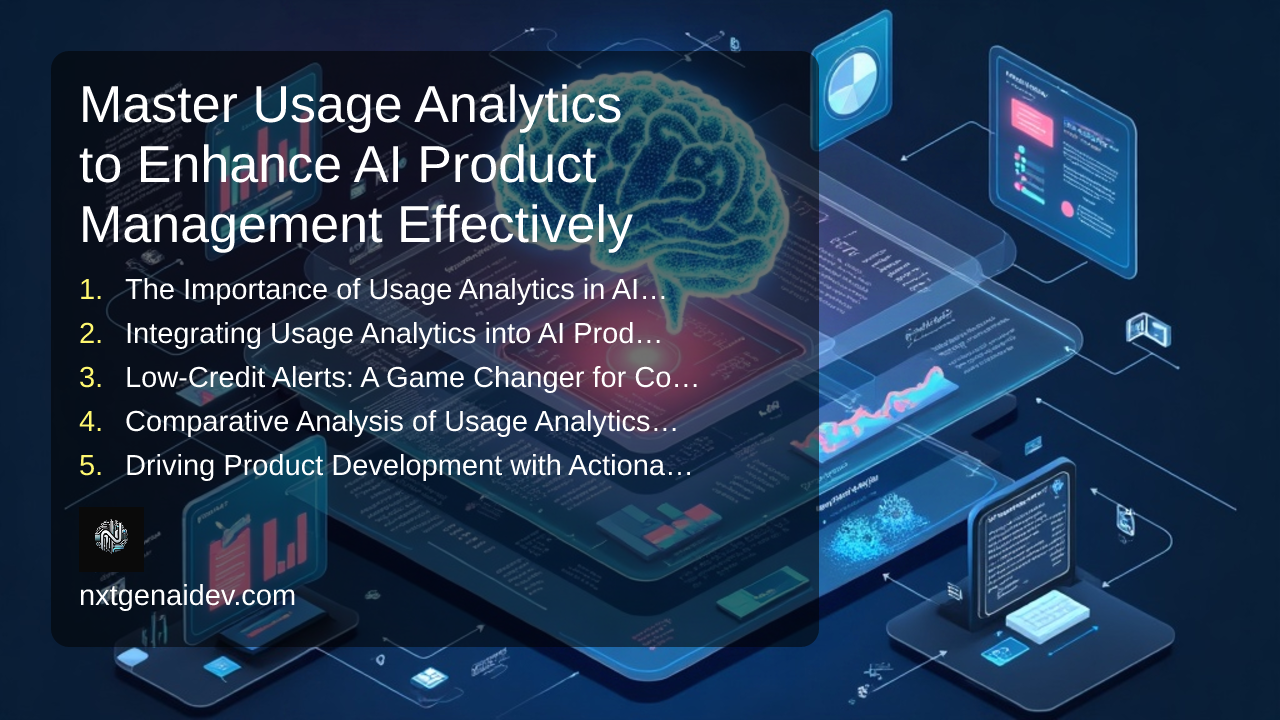
Master Usage Analytics to Enhance AI Product Management Effectively
Boost AI product management with usage analytics and alerts. Unlock insights and enhance decision-making today!
The Importance of Usage Analytics in AI Products
In the fast-paced world of AI product management, data is king. Understanding how users interact with your AI solutions isn't just beneficial—it's essential for informed decision-making and driving user engagement. That's where usage analytics come into play, acting as a compass guiding product managers toward more effective strategies.
Understanding Usage Analytics
Usage analytics refers to the systematic tracking and measurement of how users engage with your AI products. This data provides critical insights into user behavior, preferences, and pain points, ultimately allowing product managers to fine-tune offerings. When incorporated into AI product management, usage analytics can transform decision-making from gut feelings into data-driven processes that boost user satisfaction.
Key Benefits for Product Managers
The integration of usage analytics delivers several advantages for product managers:
Enhanced Decision-Making: With robust data at your fingertips, decisions can be made with greater confidence. Instead of analyzing hypothetical scenarios, you can base your strategies on actual user interactions.
Improved User Engagement: By understanding how users utilize your product, you can tailor experiences that resonate with them, facilitating better engagement and retention.
Increased Retention Rates: Usage analytics help identify when users are likely to churn, enabling proactive measures to enhance the user experience and retain valuable customers.
Incorporating usage analytics into your AI product strategy isn't just a recommendation—it's a necessity in today's competitive landscape.
Integrating Usage Analytics into AI Product Workflows
Implementing usage analytics within your AI product's workflow might seem daunting, but it doesn’t have to be. Follow this step-by-step guide to make the integration seamless.
Step-by-Step Implementation Guide
Identify Metrics: Determine the key metrics that align with your product goals, such as user retention, feature usage, and engagement rates.
Select Your Tools: Choose the right analytics tools that suit your needs. NextGen AI DEV, for example, provides an integrated analytics feature that simplifies data collection and interpretation.
Setup Tracking: Implement tracking codes across your AI tools to gather precise data on user interactions.
Analyze Data: Regularly review the collected data. Use visual tools for better understanding and interpretation.
Act on Insights: Make iterative improvements based on the gathered insights to enhance your AI product continually.
Best Practices for Maximizing Insights
Focus on User Behavior: Look beyond surface metrics and delve into how users navigate your product.
Implement Real-Time Monitoring: Use NextGen AI DEV's real-time analytics features to make immediate adjustments when needed.
Encourage Cross-Functional Collaboration: Product managers should involve developers and marketers in the analytics process to gain varied perspectives on the data.
Tools and Techniques for Real-Time Data Analysis
Leveraging tools like the analytics services offered by NextGen AI DEV allows product managers to harness the power of real-time data without extensive engineering efforts. With features like targeted alerts through Slack and Discord, you're always in the loop regarding user interactions (NextGen AI DEV).
Low-Credit Alerts: A Game Changer for Cost Management
Cost management in AI products can be tricky, but the introduction of low-credit alerts can simplify the process remarkably.
How Low-Credit Alerts Function
Low-credit alerts are proactive notifications that inform users when their account credits are running low. This feature ensures that product managers can effectively monitor costs and take necessary actions before hitting unexpected roadblocks.
Using NextGen AI DEV's alert systems, your team will receive immediate notifications, allowing timely replenishment of credits, thus preventing service disruptions and promoting cost efficiency.
Real-World Cost Savings Examples
Take, for instance, a mid-sized tech company that adopted low-credit alerts within their workflow. With proactive notifications from NextGen AI DEV, they managed to save over 30% in spend by preventing service interruptions and minimizing idle time when credits were low. Such measures allow teams to stay focused on optimizing product functionality instead of scrambling to manage costs.
Comparative Analysis of Usage Analytics Across AI Platforms
When evaluating usage analytics tools, it's vital to understand the unique offerings of various platforms.
Evaluating Effectiveness
Many AI platforms claim to offer usage analytics capabilities, but not all are created equal. Understanding what differentiates them is key for product managers.
Strengths of NextGen AI DEV's Usage Analytics
NextGen AI DEV stands out with its user-friendly interface, allowing for seamless data extraction and reporting. Moreover, its integrated analytics capabilities, real-time alerts, and strong emphasis on user experience set it apart as a robust choice for product managers.
Numerous satisfied product managers have highlighted the ease with which they can interpret analytics data, facilitating quicker decision-making and fostering greater team alignment.
Driving Product Development with Actionable Insights
Usage data isn’t just for post-mortem analysis; it should actively inform your product roadmap and drive continuous improvement.
Using Data to Inform Roadmaps
Effective product managers utilize usage analytics to shape their roadmaps strategically. By focusing on which features drive the most engagement, teams can prioritize resource allocation toward areas that yield high user satisfaction. For example, insights gleaned from NextGen AI DEV's analytic tools can inform which features need additional enhancements or which should be deprecated.
Feedback Loops for Continuous Improvement
Incorporating user feedback into your analytics process is vital. Create feedback loops where user experiences inform product iterations. This approach allows for a smoother alignment between product development goals and user needs.
Data-driven strategies foster team cohesion, driving everyone toward a common objective of enhancing user experience.
Looking Ahead: Future Trends in AI Usage Analytics
The landscape of AI and its analytics capabilities is continuously evolving, and staying ahead of the curve is crucial for sustained success.
Emerging Technologies Impacting Analytics
As artificial intelligence develops, so too will the tools for usage analytics. Expect advancements in machine learning algorithms that better predict user behavior and offer tailored insights. NextGen AI DEV is actively investing in innovative technologies that will shape future analytics capabilities.
Preparing for Continuous Change
Staying proactive and adaptive is essential. Engage in ongoing education and training using NextGen AI DEV’s resources to keep your skills sharp and your team's capabilities robust. This will ensure that you can maximize the utility of the analytics features at your disposal.
By leveraging the full potential of usage analytics, product managers can transform their strategies and drive successful outcomes.
Discover how NextGen AI DEV's usage analytics can transform your AI product strategy today! Optimize your approach and lead your team towards unprecedented levels of engagement and efficiency.