Emerging Technologies: Unlocking AI Productivity for the Future
Explore how emerging technologies boost AI productivity and reshape industries. Discover insights for leveraging innovation effectively.
The Role of Emerging Technologies in Enhancing Productivity
As businesses clamor for efficiency and effectiveness, emerging technologies have become pivotal in driving productivity. Among these, Artificial Intelligence (AI) stands out, not merely as a buzzword but as a transformative force reshaping workflows and outcomes across industries. With generative AI alone boosting individual productivity by an average of 30%, its implications for the future of work are monumental.
Understanding AI's Productivity Gains
AI has transcended its initial role as a supportive tool, evolving into a critical driver of productivity. Research shows that organizations that embrace AI initiatives could see a significant enhancement in productivity and GDP by 2055. The immediate benefits can be felt across various sectors as AI tools are rapidly integrated into everyday business processes.
Key Trends in AI Adoption
Current trends indicate a swift uptake of AI technologies. More organizations are investing in AI solutions, integrating them into existing workflows to streamline operations and reduce manual tasks. This shift towards automation allows employees to focus on value-added activities, catalyzing innovation and fostering creativity. Companies that recognize these trends and act quickly will gain a competitive edge.
Measuring the Impact of AI on Productivity
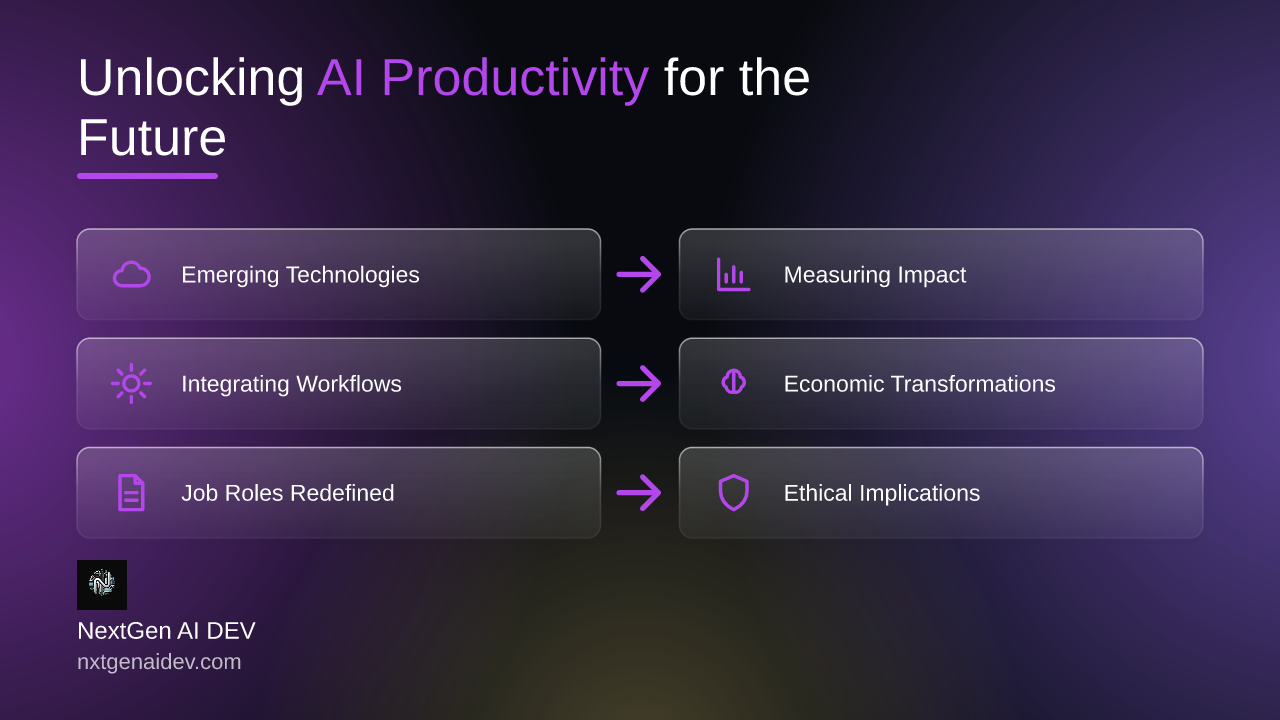
With such transformative potential, measuring the impact of AI on productivity is essential for organizations seeking to validate their investments.
Defining Success Metrics
Identifying clear metrics for success is fundamental in assessing the effectiveness of AI initiatives. Organizations should focus on time savings and output quality as primary indicators. By establishing both qualitative and quantitative measures, businesses can better understand the return on investment from AI deployment.
KPI Options for AI Initiatives
Key Performance Indicators (KPIs) for AI should include metrics like productivity rates, project completion times, and the overall quality of output. Advanced tools such as dashboard analytics can facilitate real-time measurement, allowing businesses to quickly adapt strategies based on performance outcomes.
Integrating Emerging Technologies with Existing Workflows
Implementing AI within established workflows requires thoughtful strategy and planning.
Strategies for Successful AI Implementation
Pilot programs are a pragmatic approach to testing AI tools before full-scale deployment. By starting small, organizations can evaluate the tools' effectiveness and make necessary adjustments. Engaging stakeholders early ensures alignment with broader business goals, fostering a supportive environment for change.
Best Practices for Seamless Integration
Comprehensive training is a must for a smooth transition to AI-enhanced workflows. Employees need the necessary skills and understanding to navigate new technologies effectively. Regular workshops, hands-on sessions, and ongoing support can break down resistance and encourage adaptability.
The Economic Transformations Due to AI
The quick adoption of AI technologies is catalyzing substantial shifts in global economies.
Long-Term Impacts on Global Economies
As AI continues to infiltrate various sectors, its potential economic impact is profound. By automating routine tasks, AI frees up workforce capacity, enabling employees to focus on strategic endeavors. Projections indicate the economic role of AI will only magnify over the next few decades, shaping the way industries operate.
Sector-Specific Adaptations and Innovations
Industries like programming are being revolutionized by generative AI tools like ChatGPT. These technologies not only enhance productivity but also open avenues for innovation, enabling enterprises to experiment with new products and solutions. As more sectors adapt, the collective economic landscape will continue to evolve.
Redefining Job Roles and Skill Sets in an AI-Driven World
The emergence of AI isn't just about technology; it’s reconfiguring job roles and skill requirements.
Emerging Skills for the Future Workforce
As AI technology evolves, new roles will emerge that demand skills in AI fluency and data analysis. Workers will need to adapt, moving away from traditional responsibilities towards a more collaborative relationship with technology. Upskilling and reskilling are crucial for workforce preparedness as job markets shift.
Navigating Ethical Issues in AI Employment
Ethical considerations will be paramount as AI becomes more integrated into workplaces. Organizations should strive to uphold standards of fairness and transparency, addressing ethical concerns surrounding AI deployment. This proactive approach will mitigate risks while fostering a stable and equitable work environment.
Addressing the Ethical Implications of AI Deployment
Navigating the ethical landscape of AI deployment is increasingly critical for organizations.
Frameworks for Ethical AI Use
Developing ethical frameworks is essential for responsible AI usage. These guidelines should prioritize transparency, ensuring stakeholders are aware of how AI systems operate and make decisions. By instilling accountability into AI practices, organizations can cultivate trust and foster collaboration.
Mitigating Risks of AI Implementation
Potential risks associated with AI deployment must be continuously assessed to prevent misuse. Organizations should regularly engage in discussions regarding ethical AI use, considering the broader implications of automation on the workforce. Strategies should be in place to address unintended consequences while maximizing the benefits of technology.
The Future Landscape of AI-Driven Productivity
As we look toward the future, it’s vital to anticipate the evolving role of AI in productivity.
Predictions for AI's Role in Future Work
Advancements in AI capabilities promise to enhance workflows further. Businesses must cultivate a culture of innovation, encouraging experimentation and adaptation to new technologies. Those that stay ahead of the curve will be more resilient in facing future challenges.
Preparing for Change in Work Environments
Organizations must prepare for ongoing change in work environments brought about by AI integration. Understanding the trajectory of AI will empower companies to adapt proactively, ensuring they leverage opportunities while mitigating potential disruptions.
What strategies have you implemented in your organization to integrate AI, and how have they transformed your team's productivity?
💬 Join the conversation — share your take in the comments and tell us what you’d add.