Emerging Technologies: The Role of Browser Agents in Modern Software Development
Explore how emerging technologies shape browser agents in software development. Discover essential insights to stay ahead in your projects!
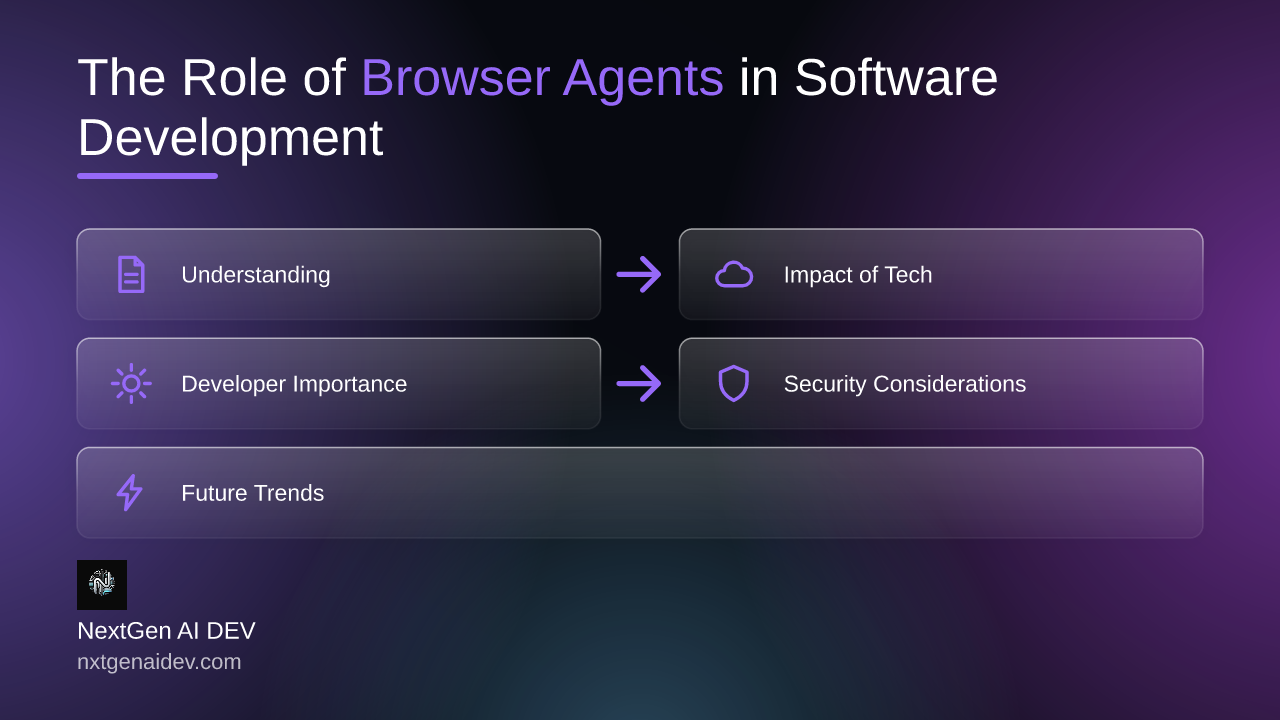
Understanding Browser Agents
What are Browser Agents?
Browser agents, or user agents, are crucial components in modern web interactions, acting as the intermediaries between users and the web applications they access. They primarily serve the purpose of identifying the user's browser, operating system, and device type. Essentially, when a user visits a website, the browser sends an HTTP header referred to as the user agent string, which provides servers with necessary information for optimal content delivery.
A fundamental distinction exists between traditional browser agents and their AI-powered counterparts. While traditional agents perform basic identification tasks, AI-driven agents leverage machine learning algorithms to provide enhanced functionalities, such as personalized experiences and predictive analytics, revolutionizing how users interact with software.
How do Browser Agents Work?
At the core of each browser agent lies a user agent string, which contains information formatted as follows:
Mozilla/5.0 (Windows NT 10.0; Win64; x64) AppleWebKit/537.36 (KHTML, like Gecko) Chrome/91.0.4472.124 Safari/537.36This example illustrates an agent running on a Windows machine using Chrome, revealing not only the operating system but also the browser version.
Internally, browser agents stimulate various processes by parsing this string through key components, including the rendering engine, JavaScript engine, and networking stack. By efficiently interpreting user agent data, a browser can adapt components like layout engines and script execution environments, ensuring a smooth browsing experience.
The Impact of Emerging Technologies on Browser Agents
AI-powered Browser Agents
The introduction of AI into the domain of browser agents marks a transformative shift in the capabilities developers can leverage. AI-powered browser agents utilize intelligent algorithms to analyze user behavior, providing insights that drive better user engagement. They offer features like automated responses, tailored content, and predictive suggestions based on previous interactions.
For instance, projects like AI chatbots have shown how these agents can enhance customer service on websites, providing real-time assistance to users while significantly reducing human intervention (source).
WebAssembly and Low-Code Platforms
WebAssembly (Wasm) provides a robust environment for running binaries in the browser at near-native speed, which is a game changer for browser agents. By utilizing WebAssembly, developers can build applications that are significantly faster and more efficient, allowing browser agents to process information at rates previously imagined only in native applications.
The rise of low-code and no-code platforms further amplifies the accessibility of implementing browser agents into development workflows. Platforms like Microsoft Power Apps and Mendix enable developers and non-developers alike to create browser agents effortlessly, fostering innovation across various sectors. Given that over 60% of developers are now using low-code platforms, the integration of browser agents is becoming increasingly straightforward (source).
Why Developers Should Care About Browser Agents
Benefits of Browser Agents
Incorporating browser agents into development processes offers numerous advantages. These agents streamline workflows by automating tasks that traditionally required human oversight. From automatically filling forms to performing data validation, browser agents save considerable time and reduce human error.
Real-world examples, like the use of browser agents in e-commerce, demonstrate their ability to enhance sales efficiency. For instance, implementing bots trained to assist with product recommendations can lead to increased conversion rates of up to 30%, emphasizing their value in competitive markets (source).
Challenges Developers Face
Despite the advantages, several challenges persist. Performance issues can arise when browser agents are not optimized, potentially leading to increased loading times and user dissatisfaction. Integration hurdles, particularly with existing systems, can complicate deployment. Developers must also consider the complexity of managing multiple types of browsers and devices, ensuring that their agents deliver consistent performance across the board.
Security Considerations in Using Browser Agents
Common Security Vulnerabilities
As with any technology, browser agents are not immune to security vulnerabilities. One common threat is the risk of spoofing, where malicious actors impersonate a legitimate user agent to exploit vulnerabilities within applications. Such attacks can bypass security measures, leading to unauthorized data access or service disruptions.
Best Practices for Secure Implementation
To mitigate these risks, developers should implement several best practices. First, validating user agents on the server side can help detect alterations in user agent strings. Additionally, employing Content Security Policies (CSP) can dramatically reduce the risk of cross-site scripting (XSS) attacks that could exploit browser agents.
Creating a secure environment particularly for AI-powered agents requires continuous monitoring and updates. Employing techniques like obfuscation of sensitive data and ensuring regular security audits can bolster defense mechanisms against potential threats.
Future Trends in Browser Agent Development
Agentic Browsers
The concept of agentic browsers—where browsers themselves exhibit autonomous behaviors—is emerging as a fascinating trend. These browsers will not only respond to user instructions but also anticipate needs based on historical data and machine learning. For example, an agentic browser might automatically provide pertinent information during a video call based on the ongoing conversation, moving towards more interactive and intelligent browsing experiences.
Statistical Insights
Recent statistics find that browser agents are being adopted by over 75% of web applications, with functionalities continually expanding. As technological advancements persist, we can anticipate a surge in the complexity and versatility of browser agents, further embedding them in daily software development practices (source).
Conclusion
Emerging technologies are reshaping the landscape of software development, and browser agents are at the forefront of this evolution. Their ability to enhance user experiences, streamline workflows, and automate processes is unmatched, while the challenges they present can be effectively managed with the right strategies.
What has been your experience with integrating browser agents into your software development processes? Share your insights and challenges in implementing this transformative technology!
💬 Join the conversation — share your take in the comments and tell us what you’d add.