
Emerging Technologies: The Rise of Browser Agents in SaaS Platforms
Discover how emerging technologies like browser agents enhance user experience in SaaS platforms. Learn more and stay ahead!
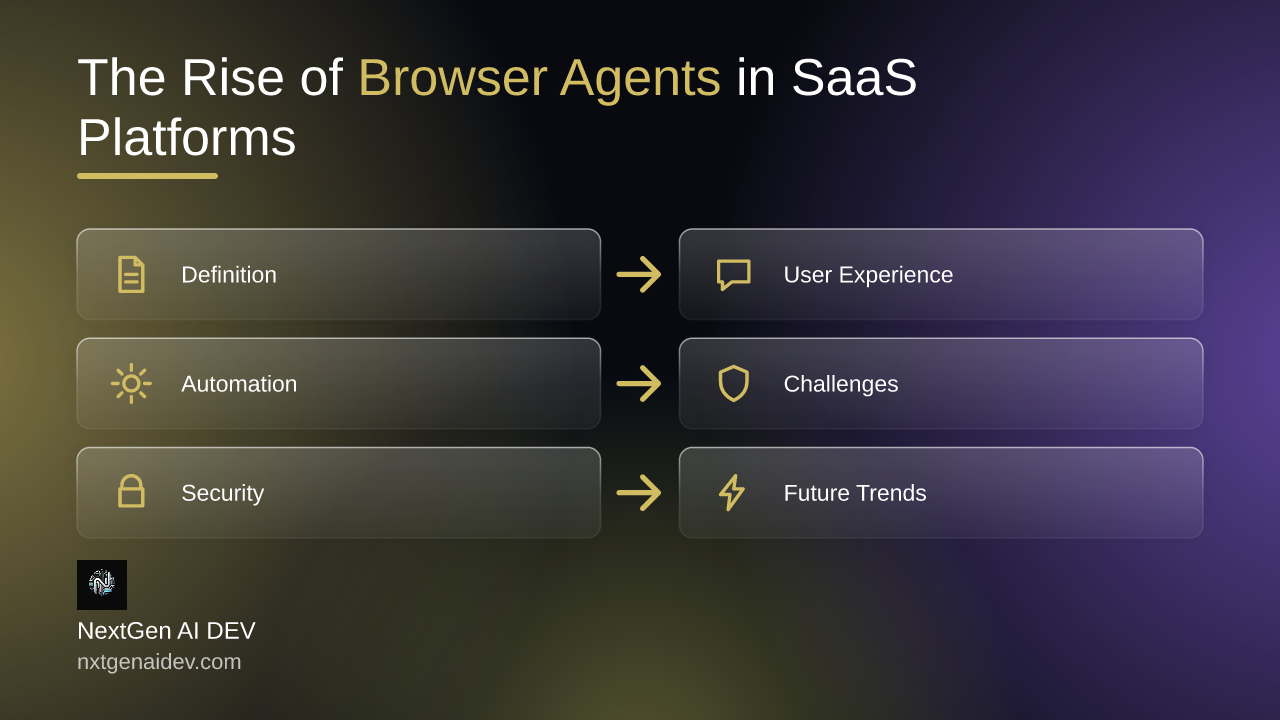
Understanding Browser Agents
Definition and Functionality
Browser agents are sophisticated tools operating within web browsers to facilitate interactions between users and SaaS platforms. These agents act as intermediaries, streamlining tasks by automating processes that would otherwise be manual and tedious. By utilizing browser agents, SaaS applications can enhance functionality, personalize user experiences, and improve efficiency.
At their core, browser agents are designed to perform specific functions: they can gather data, execute commands, or support users in navigating complex workflows. This means they often include features like web scraping for data gathering, automated form filling to save time, and custom script execution tailored to user needs. With such capabilities, browser agents fundamentally change how users interact with software in a digital landscape that demands agility and efficiency.
Key Technologies Behind Browser Agents
The technology stack supporting browser agents typically includes JavaScript, AJAX, and various APIs that facilitate direct communication with SaaS back-end systems. Together, these components create a seamless experience for users. For instance, JavaScript is crucial for executing actions within the browser in real-time, while AJAX can send and receive data asynchronously, enhancing user experiences without requiring page reloads.
Further, browser agents often leverage machine learning algorithms to adapt to user behavior, offering personalized experiences and recommending features based on usage patterns. These advanced frameworks make it possible to build intelligent agents capable of handling complex tasks with minimal user input.
Enhancing User Experience with Browser Agents
User-Centric Features
Browser agents are transforming user experiences in SaaS platforms by introducing a range of user-centric features designed to keep users engaged and satisfied. By automating repetitive tasks such as data entry, content management, and other routine operations, these agents allow users to focus on more critical aspects of their roles. The reduction in manual effort leads to higher satisfaction and a notable decrease in the likelihood of error.
Moreover, browser agents can empower users to access information more quickly and efficiently, integrating features like natural language processing to interpret user queries. This ability enhances interactions by ensuring users receive relevant responses promptly, thereby improving overall user engagement and retention.
Real-World Applications
Numerous SaaS products effectively integrate browser agents to create memorable user experiences. For example, platforms like HubSpot and Salesforce utilize such technologies for automating customer relationship management processes. Users can keep track of communications, schedule follow-ups, and manage leads without having to manually update records.
Similarly, project management tools like Asana employ browser agents to streamline task assignment and ensure deadlines are met. Automated alerts prompt team members on essential tasks, helping to prevent project delays and enhancing team collaboration.
Challenges Faced by Browser Agents in SaaS
Technical Limitations
Despite their advantages, browser agents encounter various technical challenges during implementation. One primary hurdle is compatibility across different browsers and operating systems. As each platform has unique settings and capabilities, ensuring consistent agent performance can be complex.
Additionally, browser agents must manage substantial data volumes, which can affect performance. Poor optimization can lead to slow load times, which detracts from the user experience. Developers must employ robust coding practices to minimize these issues, ensuring that browser agents function optimally across diverse environments.
User Adoption Issues
Beyond technical considerations, browser agents face user adoption challenges. Many users may view these agents as intrusive or worry about privacy concerns, particularly regarding data security. An effective browser agent must transparently communicate its functions to users to build trust and alleviate concerns.
Furthermore, the learning curve associated with adopting these new technologies can be steep. Users may resist changing familiar workflows, leading to a cautious approach to integrating browser agents into their daily tasks. To overcome this, comprehensive training and support materials are essential to ensure users feel confident and informed.
Automation and Workflow Transformation
Reducing Manual Tasks
One of the most compelling advantages of browser agents is their capacity to reduce manual tasks within SaaS applications. By automating processes like data entry and report generation, these agents minimize the time spent on administrative duties. This efficiency allows staff to allocate their efforts towards strategic planning and critical problem-solving rather than routine tasks.
For example, browser agents can automate the importation of data from different sources into spreadsheets, saving users hours of duplicate work. Moreover, they can generate reports automatically by pulling data from various modules of a SaaS product, offering real-time insights without additional effort from the user.
Impact on Productivity
Organizations that incorporate browser agents often report significant productivity gains. By freeing employees from monotonous tasks, companies can enhance workforce morale and reduce burnout. According to a survey by McKinsey, businesses that actively implement automation technologies can improve productivity by up to 40%.
This increase is especially evident in sectors relying heavily on data processing and customer interaction. With intelligent browser agents, teams can more effectively manage customer relationships, streamline operations, and respond proactively to market demands.
Security Considerations with Browser Agents
Potential Risks
While browser agents provide compelling benefits, they also introduce security risks that organizations must address. The primary risk involves data breaches, as agents often handle sensitive information. If not adequately secured, malicious actors can exploit vulnerabilities within these agents to access or manipulate data.
An additional concern is the potential for misuse, where users may inadvertently expose systems to external threats through lax browsing habits. Therefore, organizations need to consider the implications of deploying browser agents within their systems to safeguard against these risks.
Mitigation Strategies
To ensure the secure operation of browser agents in SaaS platforms, organizations can implement several mitigation strategies. First, integrating strong encryption protocols ensures that data is safeguarded during transmission. Regularly updating software and employing robust cybersecurity measures will also help limit vulnerabilities.
Employee training should focus on the best practices for using browser agents securely, thus empowering users to protect against threats. Finally, adopting frequent security audits can help assess the function and safety of browser agents, identifying weaknesses before they can be exploited.
The Future of Browser Agents in SaaS
Emerging Trends
The landscape of SaaS is continuously evolving, with emerging trends indicating a shift towards "agent-first" user interfaces. This paradigm focuses on employing intelligent browser agents as the primary mode of interaction, offering users a much more intuitive engagement model.
As user preferences shift toward more personalized experiences, the demand for adaptive technology becomes paramount. Future trends may see browser agents leveraging advanced AI capabilities, enabling them to not only perform tasks but also anticipate user needs, suggesting proactive actions based on historical behaviors.
Predictions for Adoption
Looking ahead, we anticipate rapid adoption of browser agents in various SaaS platforms as organizations seek to derive greater value from their technology investments. With an increasing need for efficiency and personalization, companies are likely to prioritize the integration of intelligent agents into their workflows.
By 2025, analysts predict that an overwhelming majority of SaaS solutions will incorporate some form of browser agent technology, fundamentally changing how users interact with software. This integration promises to foster enhanced productivity, user engagement, and streamlined processes, creating a significant impact on the SaaS ecosystem.
What challenges have you faced or witnessed with browser agents in your SaaS experiences?
💬 Join the conversation — share your take in the comments and tell us what you’d add.