Building Scalable Applications: Mastering Cloud Infrastructure for AI Solutions
Unlock the potential of cloud infrastructure to build scalable AI solutions. Discover strategies that drive efficiency and innovation.
Understanding Cloud Infrastructure for Scalability
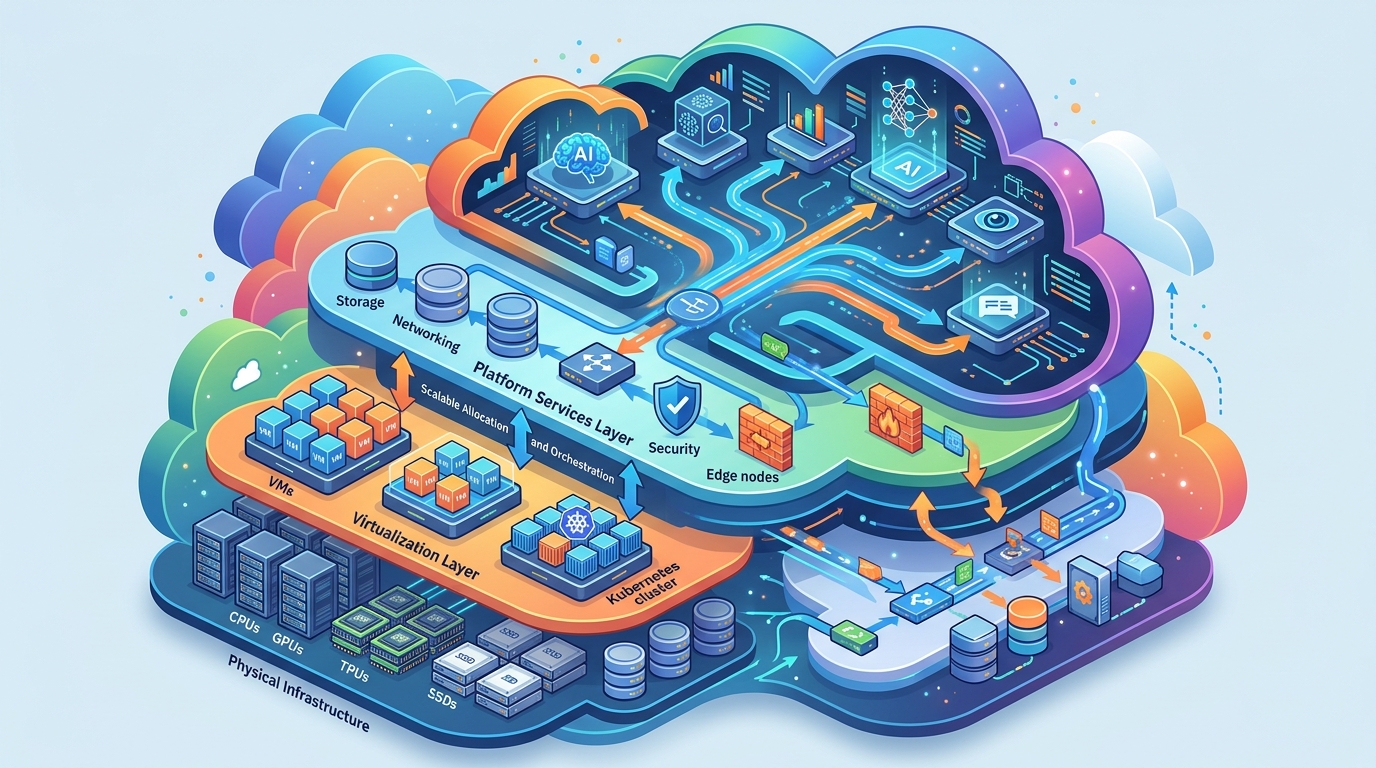
Building scalable applications hinges on understanding cloud infrastructure, which forms the backbone of successful AI solutions. Cloud infrastructure is a collection of hardware and software components needed to support the cloud computing model, essential for efficiently managing resources and scaling your applications as demand fluctuates.
What is Cloud Infrastructure?
Cloud infrastructure refers to the integration of various IT resources provided as a service. This encompasses virtual machines, storage, and networks delivered via the Internet, allowing businesses to avoid the capital expense of physical hardware. Scalability is one of the primary benefits of adopting cloud infrastructure; businesses can easily adjust resources based on demand, fostering agility and innovation.
Key Components of Cloud Infrastructure
To grasp how cloud infrastructure contributes to scalability, it's vital to understand its core components:
Servers: Virtual servers host applications and manage workloads, which can be dynamically allocated based on current needs.
Storage: Data storage solutions come in various forms (e.g., block storage, object storage), facilitating rapid access to data crucial for AI applications.
Networking: Cloud providers offer configurable networks that securely connect different services, ensuring stable communication between servers and storage.
Virtualization: This technology allows multiple operating systems to run simultaneously on a single physical server, optimizing resource use.
These components work together to provide flexibility, cost-effectiveness, and seamless scaling, an essential aspect for thriving in the AI landscape.
Cloud-Native Architectures and Their Role in Scalability
Introduction to Cloud-Native Architectures
Cloud-native architectures enable enterprises to harness cloud computing fully. Instead of traditional monolithic applications, these architectures encourage the use of microservices and containerization, allowing for incremental updates without downtime. This approach is fundamental to achieving scalability.
Advantages of Using Kubernetes and Microservices
Kubernetes has emerged as the de facto standard for container orchestration. It allows developers to manage containerized applications across a cluster, automatically scaling them based on resource demand. By segmenting applications into microservices, each facilitated by Kubernetes, teams can deploy and manage components independently. This leads to enhanced scalability, as services can grow or shrink in isolation based on user load.
MLOps: Streamlining AI Workflows on the Cloud
What is MLOps?
MLOps, or Machine Learning Operations, unifies ML system development and operations. It emphasizes collaboration between data scientists and IT, enhancing agility through automation and continuous integration/deployment (CI/CD) practices.
Benefits of MLOps for AI Scalability
Integrating MLOps into AI solutions facilitates the management of the entire AI lifecycle, from data processing to model deployment. It provides clearer visibility throughout the workflow, enabling quicker diagnosis of bottlenecks. Real-world cases, such as Netflix's recommendation engine, demonstrate how scalable AI solutions benefit from MLOps by adapting to changing viewer preferences in near real-time.
Serverless Computing: A Game Changer for AI Applications
Understanding Serverless Computing
Serverless computing allows developers to focus solely on writing code while the cloud provider manages infrastructure concerns. Without the need to provision servers directly, applications can scale automatically based on usage patterns.
Advantages and Challenges
The key benefits of serverless computing for AI applications include:
Cost Savings: You pay only for compute time you consume, making it budget-friendly for fluctuating workloads.
Automatic Scaling: The infrastructure scales automatically, ensuring optimal performance during traffic spikes.
However, challenges exist, such as vendor lock-in and cold start issues that may affect performance during the initialization phase of functions.
Hybrid and Multi-Cloud Strategies for Enhancing Scalability
What is a Hybrid Cloud Strategy?
A hybrid cloud strategy combines public and private cloud environments, allowing businesses to choose where they run workloads. This strategy enhances flexibility and scalability by ensuring sensitive applications can operate in secure environments while leveraging the vast resources of public clouds.
Benefits of Multi-Cloud Approaches
Multi-cloud strategies enable organizations to distribute workloads across several cloud service providers, improving reliability and performance. For instance, a company can utilize AWS for computational needs and Google Cloud for big data analytics, taking advantage of each platform's strengths. Case studies, such as Spotify’s use of multi-cloud, reveal success in scaling applications tailored to user demands.
Leveraging Edge AI for Low Latency Applications
What is Edge AI?
Edge AI refers to running AI algorithms closest to the source of data, significantly reducing latency and bandwidth usage. It’s particularly relevant in scenarios requiring real-time processing, such as autonomous vehicles or smart city solutions.
Benefits of Edge Computing
The primary advantages of Edge AI include:
Reduced Latency: Processing data closer to the source diminishes delays, crucial for time-sensitive applications.
Improved Performance: Offloading processing from the cloud to local devices enhances overall system performance.
Industries such as healthcare use edge AI for scalable solutions like remote patient monitoring, emphasizing the substantial impact of location-aware intelligence.
Overcoming Challenges in Developing Scalable Cloud Applications
Common Challenges
Scaling AI applications does not come without difficulties. Common challenges include:
Resource Management: Optimizing the allocation of resources can be complex as workloads fluctuate.
Load Balancing: Ensuring even distribution of traffic to avoid service interruptions is critical.
Best Practices to Address These Challenges
Here are some strategies to tackle these issues:
Optimize Resource Management: Utilize predictive analytics to anticipate resource needs based on historical usage.
Implement Load Balancers: Using load balancers can help distribute incoming traffic evenly among servers.
Continuous monitoring and performance optimization practices, like using A/B testing, are essential for maintaining application efficiency.
As you delve into these strategies, consider the various tactics at your disposal. What specific strategies have you found effective in scaling your AI applications using cloud infrastructure?
💬 Join the conversation — share your take in the comments and tell us what you’d add.