Boost Security with Self-Hosted Deployments in Enterprise AI Solutions
Discover how self-hosted deployments can boost your enterprise AI security. Transform your approach today!
Boost Security with Self-Hosted Deployments in Enterprise AI Solutions
As enterprises increasingly harness the power of AI, the conversation shifts toward securing sensitive data and maintaining control. Self-hosted deployments in AI solutions like NextGen AI DEV emerge as a beacon of strength, providing security that cloud options often fail to ensure.
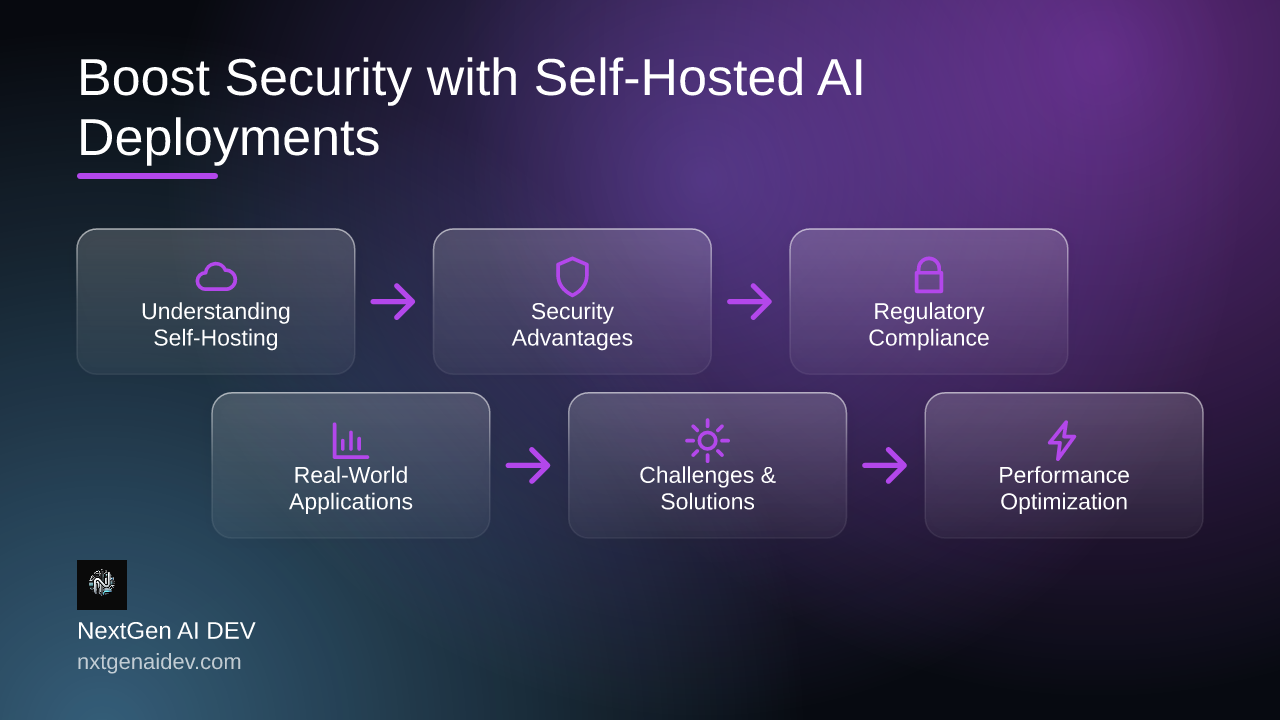
Understanding Self-Hosted Deployments
What are Self-Hosted Deployments?
Self-hosted deployments refer to the installation and operation of AI solutions on an organization’s own servers rather than relying on third-party cloud providers. This model gives enterprises full control over their data—ranging from sensitive customer information to proprietary algorithms—ensuring that everything remains within their secure environment. NextGen AI DEV enables these self-hosted deployments, leveraging its unified platform that integrates over 20 AI models from multiple providers via a single API.
Benefits of Self-Hosting
Embracing a self-hosted model offers specific advantages for enterprises. First and foremost is data privacy. Organizations don’t need to worry about data being exposed to external environments. Self-hosting also grants operational control over updates and maintenance, empowering teams to respond rapidly to security threats. Moreover, organizations can configure their infrastructures to meet specific compliance requirements, enhancing their security posture.
The Security Advantages of Self-Hosting in AI
Enhanced Data Privacy
One of the most compelling reasons for self-hosting is enhanced data privacy. By keeping sensitive information on-premises, organizations can significantly reduce the risks of data breaches often associated with public cloud solutions. NextGen AI DEV enables businesses to implement enterprise-level security measures, ensuring robust protection against unauthorized access.
Reduced Attack Surface
Self-hosted environments can also lead to a reduced attack surface. By limiting the exposure of applications to the internet, organizations can minimize potential vulnerabilities. With NextGen AI DEV’s self-hosted model, enterprises can effectively implement firewalls, intrusion detection systems, and other security measures tailored to their specific needs, further strengthening their defenses.
Regulatory Compliance Made Easier
Compliance with GDPR and HIPAA
For organizations operating in regulated industries, compliance with frameworks like GDPR or HIPAA is non-negotiable. Self-hosted deployments can simplify this process. By maintaining control over their data, organizations can implement the necessary safeguards to meet stringent regulatory requirements. NextGen AI DEV aligns with these regulations by allowing enterprises to customize their data management practices effectively.
Auditing and Monitoring Capabilities
NextGen AI DEV enhances compliance through its robust auditing and monitoring features. The platform includes comprehensive audit logs that track data access and changes, enabling organizations to ensure they comply with regulatory scrutiny. Monitoring tools also provide real-time insights into system health, allowing teams to proactively address any anomalies.
Real-World Applications and Case Studies
Successful Self-Hosted Implementations
Numerous enterprises have already benefited from self-hosted deployments using NextGen AI DEV. For instance, a leading financial institution leveraged the platform to create an in-house AI model for fraud detection. By maintaining self-hosted deployments, they ensured all transactions remained private and secure, substantially reducing the risk of breaches.
Cost Management for AI Training
Self-hosting not only strengthens security but also aids in cost management during AI development. Enterprises can optimize resource allocation by utilizing their existing infrastructure and minimizing additional cloud service fees. NextGen AI DEV supports this by facilitating efficient training processes, allowing organizations to deploy models without incurring extra costs from cloud usage.
Challenges and Solutions in Managing Self-Hosted Deployments
Technical Challenges
Despite the advantages, organizations may encounter technical challenges in managing self-hosted deployments, including system setup and integration issues. NextGen AI DEV addresses these hurdles through comprehensive documentation and dedicated support resources, ensuring that enterprises can leverage the platform efficiently.
Operational Issues
Operationally, self-hosting can strain internal teams if they lack the necessary resources and expertise. However, NextGen AI DEV’s intuitive interface and detailed support help alleviate these issues. By providing robust training resources and customer support, NextGen AI DEV empowers teams with the knowledge and tools required for successful deployment.
Optimizing Performance in Self-Hosted AI Environments
Performance Considerations
To fully harness the power of AI, it's crucial to consider performance when implementing self-hosted solutions. On-premise infrastructures, particularly those equipped with GPUs, can dramatically increase processing speed and efficiency. Investing in high-performance hardware enhances the overall AI experience, allowing more complex models to run smoothly.
Advanced Infrastructure
NextGen AI DEV optimizes performance further by allowing organizations to fine-tune their environments according to specific needs. Enterprises can adjust computation power, storage, and memory allocation based on project demands, ensuring that performance never becomes a bottleneck.
NextGen AI DEV's Self-Hosted Deployment Features
Key Features Overview
NextGen AI DEV stands out with an array of features tailored for self-hosted deployments. It includes multi-org role-based access control (RBAC) settings, passwordless authentication, and comprehensive audit logs, making it easier for organizations to maintain security and compliance. The system's usage analytics provide insights that empower teams to make informed operational decisions.
Getting Started with Self-Hosting
Implementing a self-hosted deployment with NextGen AI DEV is straightforward. Start by assessing your organization’s infrastructure and determining the necessary resources. Follow the detailed setup guide provided by NextGen AI DEV, which outlines each step of the installation process. Once configured, leverage the security and management options available to tailor the environment to suit your needs.
In conclusion, self-hosted deployments offer significant advantages for enterprises looking to bolster their security frameworks while maintaining control over their AI applications. With NextGen AI DEV’s robust features, organizations can achieve a seamless transition to self-hosting.
Explore how NextGen AI DEV can facilitate your enterprise's transition to self-hosted deployments by visiting our platform today.