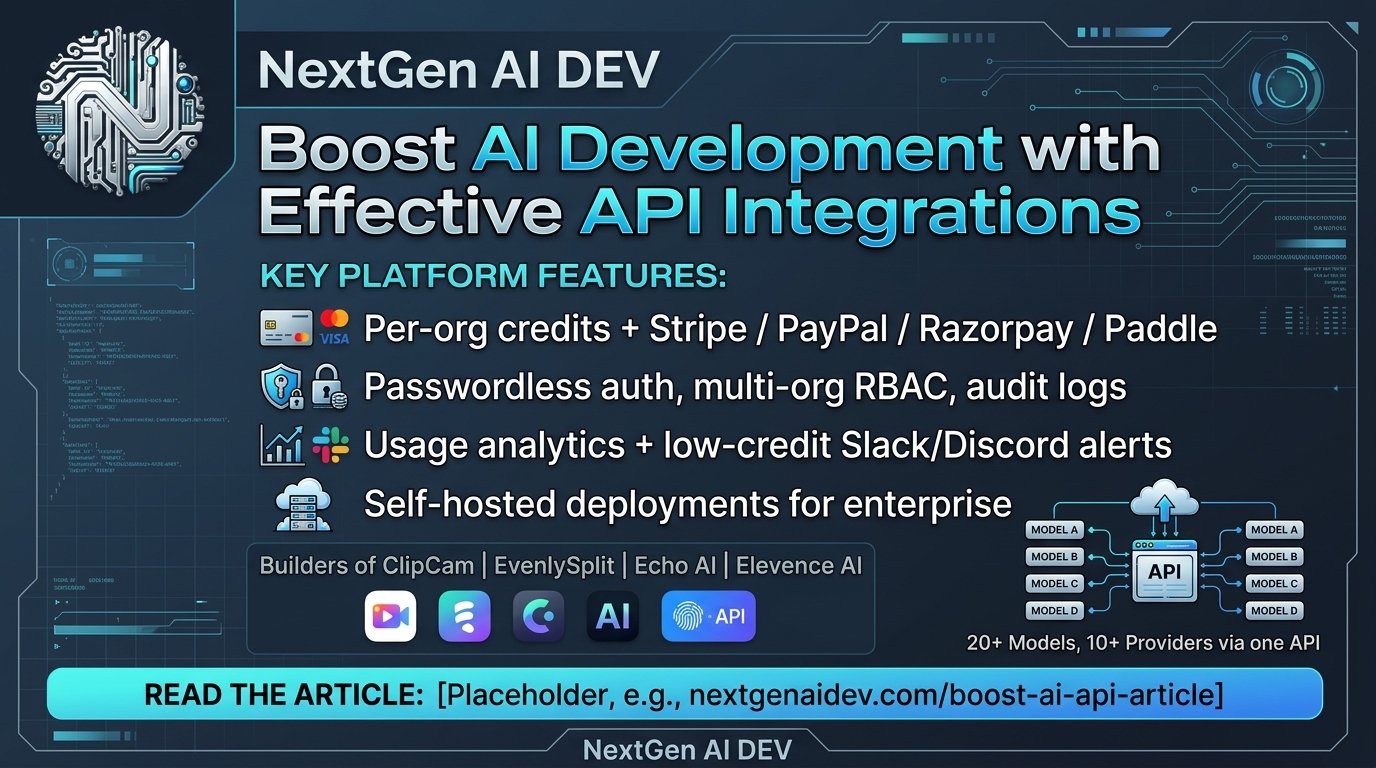
Boost AI Development with Effective API Integrations
Unlock the power of API integrations for efficient AI development. Discover how to streamline workflows and enhance functionality today!
Boost AI Development with Effective API Integrations
The intersection of artificial intelligence (AI) and application programming interfaces (APIs) is a vibrant landscape where innovation thrives. Businesses leveraging API integrations can amplify the performance of their AI models by streamlining data access and enhancing functionality. Let’s dive deep into how these integrations can drive your AI development forward.
Understanding API Integrations
What are API Integrations?
API integrations serve as the bridges connecting various software applications, enabling them to communicate effortlessly. They allow different systems to share data and functionality, which is particularly crucial in a world where information flows from multiple sources. By establishing these connections, organizations can ensure that their applications work harmoniously, effectively turning disparate functionalities into a cohesive solution.
The Role of APIs in AI Development
APIs are essential in AI development due to their ability to facilitate data exchange and functionality across various systems. They enable AI models to pull in data from diverse sources—whether that’s social media, IoT devices, or other applications—resulting in more enriched models. Without effective API integrations, AI would struggle with real-time data access, hindering its performance and usability.
How API Integrations Enhance AI Development
Improving Workflow Efficiency
When it comes to AI, the speed of integration matters. APIs significantly accelerate the process of bringing together diverse data sources, allowing developers to build more sophisticated AI applications quickly. For instance, an API might connect an AI system to a real-time weather feed, enhancing the system's ability to provide accurate forecasts or recommendations. As a result, businesses can stay agile and responsive to changing conditions.
Streamlining Data Access
Real-time data access is imperative for effective AI training and execution. APIs play a pivotal role here by enabling systems to feed fresh data continuously into AI models. Consider a recommendation engine that updates its suggestions based on user interaction over time. With efficient API integrations, this engine can analyze user behavior and preferences instantly, leading to improved customer experiences. Successful case studies highlight how organizations like Netflix employ APIs to provide personalized content recommendations, revolutionizing user engagement.
AI-Powered APIs and Their Mechanisms
What are AI-Powered APIs?
AI-powered APIs are specialized interfaces designed to harness the capabilities of artificial intelligence. These APIs stand out by offering enhanced features like natural language processing (NLP) or machine learning (ML) algorithms built-in. Through these features, businesses can deploy sophisticated AI functionalities without building everything from scratch.
How Do They Work?
The power of AI-powered APIs lies in the underlying technologies that enable them. They often utilize machine learning models trained on massive datasets to offer predictions or serve requests. For instance, the Google Cloud Vision API leverages advanced image recognition techniques to analyze visuals in real-time, providing valuable insights across various industries such as healthcare and retail.
The Role of AI in API Management
Enhancing Security and Efficiency
As companies increasingly rely on API integrations, the need for robust security measures becomes vital. AI can enhance API management by identifying vulnerabilities and threats more effectively than traditional methods. Using machine learning algorithms, organizations can monitor API traffic patterns, detecting anomalies that may indicate security breaches.
Automating API Monitoring
AI-driven solutions can automate the process of monitoring APIs, ensuring optimal performance and uptime. For example, these systems can track API usage patterns and notify developers about potential inefficiencies or slowdowns. By understanding how APIs are used, organizations can make informed decisions that optimize both the user experience and resource allocation.
Challenges in Integrating AI with APIs
Compatibility with Legacy Systems
One of the most significant hurdles when integrating AI with APIs is ensuring compatibility with legacy systems. Many organizations operate on outdated technologies that may not support modern API protocols. This lack of compatibility can stall progress and delay AI projects.
Managing Change
Integrating new APIs into existing systems requires change management strategies that account for both technical and human factors. Stakeholders may be resistant to adopting new technologies, necessitating effective communication and training. Organizations can navigate these challenges by fostering a culture of innovation and continuous learning.
Best Practices for API Integration in AI Development
Strategy for Seamless Integration
To enhance API integrations, businesses should follow a systematic approach. Start by clearly defining your objectives and identifying the APIs that align with your AI development goals. Create a step-by-step plan that outlines how to implement these APIs while minimizing disruption to existing workflows.
Ensuring Security and Compliance
Security and compliance should be at the forefront of API integration strategies. Implement measures such as OAuth for secure authentication, and conduct regular audits to ensure that data handled by APIs complies with industry regulations. By prioritizing these practices, organizations can mitigate risks associated with data breaches and non-compliance.
Future Trends in API Integrations and AI
The Rise of GraphQL and gRPC
The demand for flexible API frameworks is on the rise, with GraphQL and gRPC leading the charge. These technologies allow developers to specify precisely what data they need, reducing unnecessary data transfers. As AI continues to evolve, these frameworks could become instrumental in optimizing AI applications, offering greater adaptability.
Event-Driven Architectures
Event-driven architectures are gaining traction as a way to support real-time data exchanges. These architectures can significantly enhance AI development by ensuring that systems react promptly to changes in data or user interactions. As businesses seek to leverage AI for dynamic applications, adopting event-driven approaches will be critical.
Conclusion
The integration of APIs into AI development isn’t just a trend; it’s a necessity for businesses aiming to stay ahead of the curve. By understanding the nuances of API integrations, organizations can significantly boost their AI capabilities.
Discover how our API integration tools can transform your AI development process today!