Automation: Building Intelligent Mobile Applications with AI Insights
Discover how automation can streamline your mobile app development and enhance user experience. Start building smarter today!
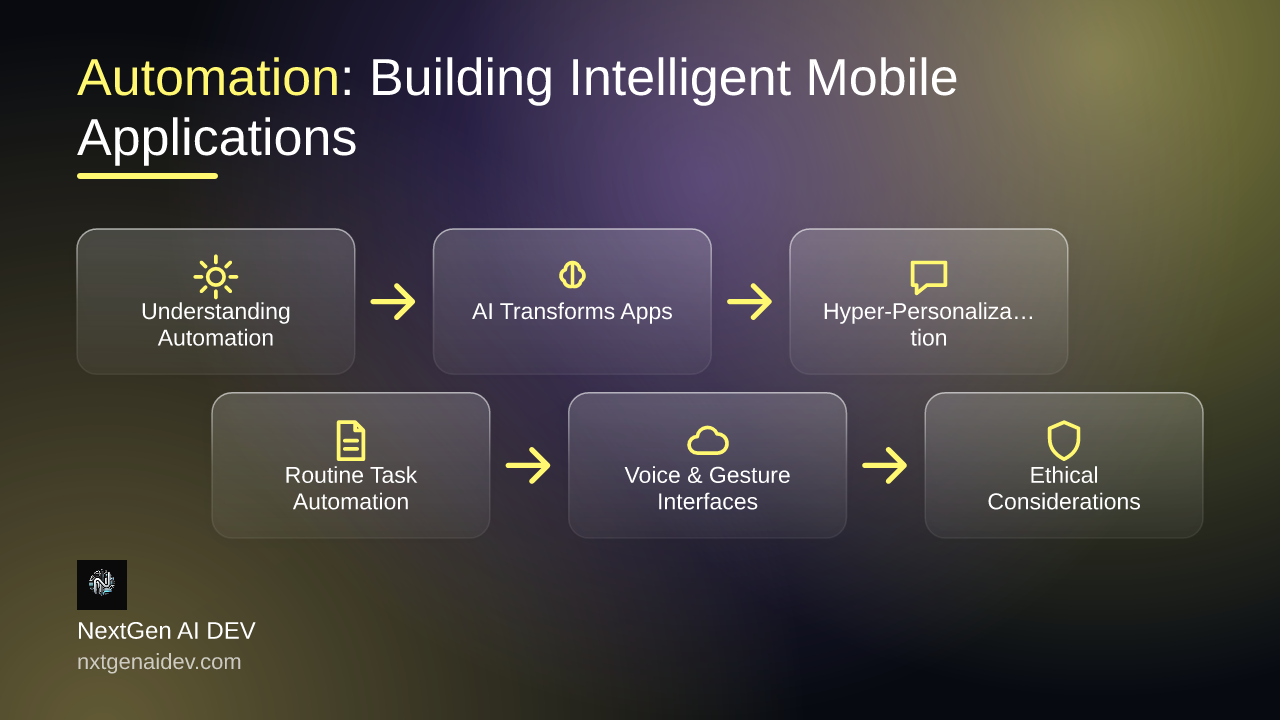
Understanding Automation in Mobile App Development
Building intelligent mobile applications relies heavily on automation, enabling developers to streamline processes and enhance user experience. But what exactly does automation look like in the context of mobile apps? It’s not just about making life easier for developers; it’s also about enriching the end-user experience.
What is Automation in Mobile Apps?
Automation in mobile app development refers to the use of technology to perform tasks that would otherwise require human intervention. This could encompass a wide range of functionalities, from automated testing to the integration of AI for personalized user interactions. At its core, automation elevates applications by introducing elements that learn and adapt, which allows features to respond to users' needs with greater precision.
Key Benefits of Automation
The integration of automation in mobile apps brings along several advantages:
Improved Efficiency: Automated systems can execute tasks at a much faster rate than manual processes, significantly speeding up app development and deployment.
Reduced Errors: By minimizing human intervention, automation helps to decrease the likelihood of errors during the coding and testing stages, ensuring a more reliable end product.
Faster Deployment: Developers can push out updates and new features quickly, allowing for a more agile response to market needs.
Integrating automation equips developers to focus on innovation rather than routine tasks, ultimately enriching both the app and the user's experience.
How AI Transforms Mobile Application Automation
AI plays a vital role in enhancing automation within mobile apps, enabling capabilities that were once merely theoretical.
Technologies Behind AI and Automation
Several key technologies facilitate the integration of AI in mobile apps, including:
Machine Learning (ML): With ML algorithms, apps can analyze vast amounts of user data to adapt and personalize experiences. For example, music or video streaming apps often use machine learning to suggest content based on user preferences.
Natural Language Processing (NLP): NLP allows applications to understand and respond to human language, transforming user interactions into seamless conversations. Chatbots equipped with NLP can handle customer inquiries effectively, providing 24/7 support.
Real-world Applications of AI in Mobile Apps
Successful example of AI integration abound; for instance, Netflix's recommendation algorithm analyzes users’ viewing habits to provide tailored suggestions that keep users engaged. Spotify does something similar by creating customized playlists based on listening history, thereby enhancing user retention.
Another example is Google Maps, which utilizes real-time data to automate route recommendations, leveraging AI to not only provide users with the fastest route but also to predict traffic patterns. Through these integrations, AI drastically improves the personalization of mobile applications.
Hyper-Personalization Using AI in Mobile Applications
AI's capability for hyper-personalization transcends what was once possible, leveraging data analytics to create tailored user experiences.
Understanding User Behavior
AI analyzes user interactions to predict future behavior effectively. This means that applications can proactively adapt content and features to meet users' expectations. For instance, e-commerce apps track users’ browsing histories and tailor product suggestions accordingly, which can significantly increase conversion rates.
Customizing User Experiences
Personalized experiences can manifest across various aspects of mobile applications. Social media platforms, for instance, curate feeds based on user interactions to present the most engaging content. The use of predictive analytics allows apps to deliver content that resonates personally with each user, enhancing engagement while reducing user fatigue.
However, hyper-personalization must be approached cautiously. Privacy considerations are crucial; apps must ensure they handle user data ethically and transparently to maintain trust.
Automation of Routine Tasks in Mobile Applications
Automation is particularly useful for handling routine tasks, allowing developers to redirect their focus toward innovation.
Task Automation Techniques
Specific tasks ripe for automation in mobile apps include:
Push Notifications: Automating notifications based on user behavior can enhance engagement without overwhelming them.
User Support: Chatbots and automated FAQs can handle repetitive user inquiries, freeing up support teams for more complex issues.
Benefits of Automating Routine Operations
The efficiency gains from automating these routine tasks are significant. Developers can allocate more time to creative endeavors, such as enhancing app functionality or exploring innovative features. By enabling automation, teams can ensure that user support is efficient and effective, ultimately leading to higher user satisfaction.
Voice and Gesture-Based AI Interfaces in Mobile Apps
Emerging technologies such as voice and gesture recognition are shifting how users interact with mobile applications.
Emerging Trends in User Interfaces
Adoption of voice-activated features has surged, with users increasingly expecting this functionality in mobile applications. Features like Siri, Alexa, and Google Assistant showcase how voice recognition can enhance user interaction, allowing for hands-free operation and multi-tasking.
Case Studies and Examples
For instance, a navigation app incorporating voice commands can dramatically improve usability while driving. Gesture-based controls in gaming apps, like touchless commands, can transform user interaction into a more immersive experience.
These advancements not only make applications more engaging but also cater to a demographic that includes differently-abled users, broadening accessibility.
Ethical Considerations in AI-Powered Mobile Applications
As apps become smarter through AI, ethical considerations come to the forefront.
Navigating AI Ethics
The integration of AI in mobile applications raises significant ethical challenges. Questions around user data privacy, algorithmic bias, and transparency become paramount. For instance, how user data is collected and how algorithms are trained can drastically affect what information users receive.
Best Practices for Responsible AI Use
Developers have a responsibility to ensure ethical AI implementation. Best practices include:
Fostering transparency by explaining how user data is used to enhance features.
Regularly auditing algorithms to minimize biases.
Implementing readily accessible privacy settings, allowing users to control their data.
By focusing on these practices, developers can build trust and encourage a more ethically aware sector.
As we continue to explore the integration of AI and automation in mobile applications, one question stands out: What specific challenges have you faced when integrating AI automation into your mobile applications? Your insights could play a crucial role in shaping future developments!
💬 Join the conversation — share your take in the comments and tell us what you’d add.