AI Innovation: Transforming Future Software Engineering Practices
Discover how AI innovation is revolutionizing software engineering practices. Stay ahead with cutting-edge insights and strategies!
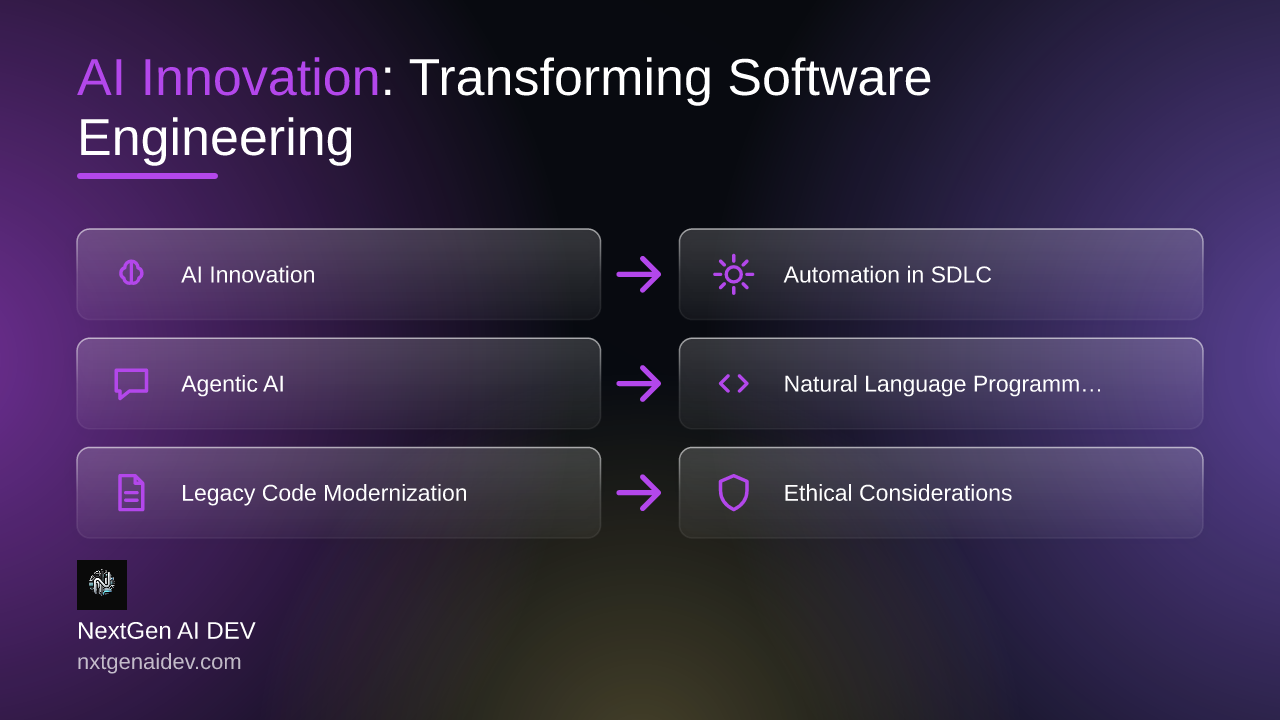
Understanding AI Innovation in Software Engineering
What is AI Innovation?
AI innovation refers to the application of artificial intelligence (AI) technologies and methodologies that revolutionize existing paradigms, particularly in software engineering. By integrating AI into the fabric of software development, organizations can not only enhance efficiency but also improve the quality and reliability of their software products. This transformation is pivotal as businesses increasingly seek to harness data-driven insights and automation in their engineering practices.
Historical Context of AI in Software Development
The journey of AI in software engineering began several decades ago. Early milestones include the creation of logic-based programming languages in the 1960s, the development of expert systems in the '70s and '80s, and the more recent emergence of machine learning technologies. These advancements set the stage for the robust tools we utilize today, such as automated coding assistants and intelligent bug-fixing algorithms. As AI continues to evolve, it reshapes traditional methodologies across the software development lifecycle.
Automation Across the Software Development Lifecycle (SDLC)
AI in Requirements Gathering
The initial phase of software development—requirements gathering—is often fraught with miscommunications and oversights. AI tools, such as natural language processing algorithms, can automate this process by analyzing user feedback and extracting key requirements. For instance, tools like Jira with AI integration allow teams to automate the extraction of requirements from stakeholder interviews and feedback documents, thus minimizing human error.
AI-Powered Design and Development
During the design and development phases, AI contributes significantly to efficiency. Algorithms can analyze existing code repositories, suggest design patterns, and even auto-generate code. Tools like GitHub Copilot exemplify this by using machine learning to suggest code snippets in real-time based on comments and previously written code. This not only speeds up the development process but also ensures that best practices are followed, leading to cleaner, more efficient code.
Continuous Integration/Continuous Deployment (CI/CD) Automation
AI's role in CI/CD has been transformative. By utilizing AI-powered tools, developers can automate testing, deployment, and monitoring processes. For example, CircleCI leverages AI to predict build failures before they happen, allowing teams to address potential issues proactively. This predictive capability not only accelerates the release cycle but also enhances software quality by reducing the risk of undetected bugs.
The Emergence of Agentic AI in Engineering Tasks
Capabilities of Agentic AI
Agentic AI refers to systems that can independently perform tasks by making decisions based on learned data and contextual factors. These systems can take over complex engineering tasks such as architecture design and even coding. Unlike traditional AI that operates as a tool within a specific environment, agentic AI demonstrates a level of autonomy that can significantly enhance productivity within software engineering teams.
Real-World Applications and Case Studies
Several organizations have successfully implemented agentic AI. For instance, Google's DeepMind has developed systems capable of creating complex algorithms for various applications, showcasing how agentic AI can expedite problem-solving in complex engineering projects. Other companies leverage agentic AI for automated code reviews, allowing developers to focus on higher-level design decisions while reducing the burden of manual code scrutiny.
The Role of Natural Language Programming
Benefits of Natural Language Programming
Natural language programming (NLP) democratizes software development by enabling non-programmers to express their ideas in everyday language. This approach makes coding more accessible, allowing teams to focus on collaboration rather than on learning intricate coding languages. Tools such as OpenAI's Codex highlight the potential of NLP in bridging gaps between technical and non-technical team members.
Challenges and Limitations
Despite its benefits, natural language programming still faces challenges. Ambiguities in natural language can lead to misunderstandings and incorrect implementations. Moreover, the technology requires a robust understanding of context to translate user intent accurately, which is still a work in progress. Developers must remain cognizant of these limitations and be prepared to intervene when necessary.
AI-Driven Legacy Code Modernization
Techniques for Modernizing Legacy Code
Many organizations are burdened with legacy code that is challenging to maintain. AI offers innovative strategies for modernization, including code refactoring tools that analyze old codebases and suggest updates or replacements. For example, tools like SonarQube use AI to detect vulnerabilities and improve code quality, helping teams modernize their legacy systems systematically.
Impact on Developer Productivity
The modernization of legacy code through AI not only ensures code maintainability but also has a profound effect on developer productivity. When outdated systems are revitalized, developers can focus on innovative features rather than wrestling with old code. Studies show that teams leveraging AI-driven tools report a significant increase in development speed and a decrease in time spent debugging obsolete systems (source).
Ethical Considerations of AI in Software Engineering
Addressing Bias in AI
As AI tools become more prevalent in software engineering, addressing bias in these systems is critical. Algorithms can inadvertently perpetuate biases present in training data, leading to flawed outputs. Companies must prioritize fairness and inclusivity in AI development to ensure ethical standards are met.
Governance and Transparency
Equally important is the governance and transparency of AI applications in software engineering. It's essential that organizations establish clear policies for AI usage, ensuring that stakeholders understand how and why AI tools make certain decisions. Implementing frameworks that prioritize transparency will foster trust and accountability in AI applications.
Collaboration Between Human Developers and AI Tools
Enhanced Productivity through Collaboration
The symbiotic relationship between human developers and AI tools leads to heightened productivity. AI can handle repetitive tasks, allowing developers to engage in more creative problem-solving. This collaboration creates a more efficient workflow where both AI and human expertise coexist to drive innovation and accuracy in development.
Future Trends in Developer and AI Partnerships
Looking forward, the future of software engineering will likely see deeper collaborations between developers and AI. As AI tools continue to evolve, we can anticipate even greater integration into the workflow. Developments in assistive AI technologies will empower developers, providing them with insights that were previously unattainable.
AI innovation is not merely a trend; it is a transformative force reshaping software engineering practices. As organizations integrate AI tools into their workflows, they open the door to increased efficiency, enhanced collaboration, and modernized legacy systems.
How have you integrated AI tools into your software engineering practices, and what challenges did you encounter?
💬 Join the conversation — share your take in the comments and tell us what you’d add.