AI Agents: Revolutionizing Business Automation in 2023
Discover how AI Agents transform business automation, boosting efficiency and innovation. Explore the future with us!
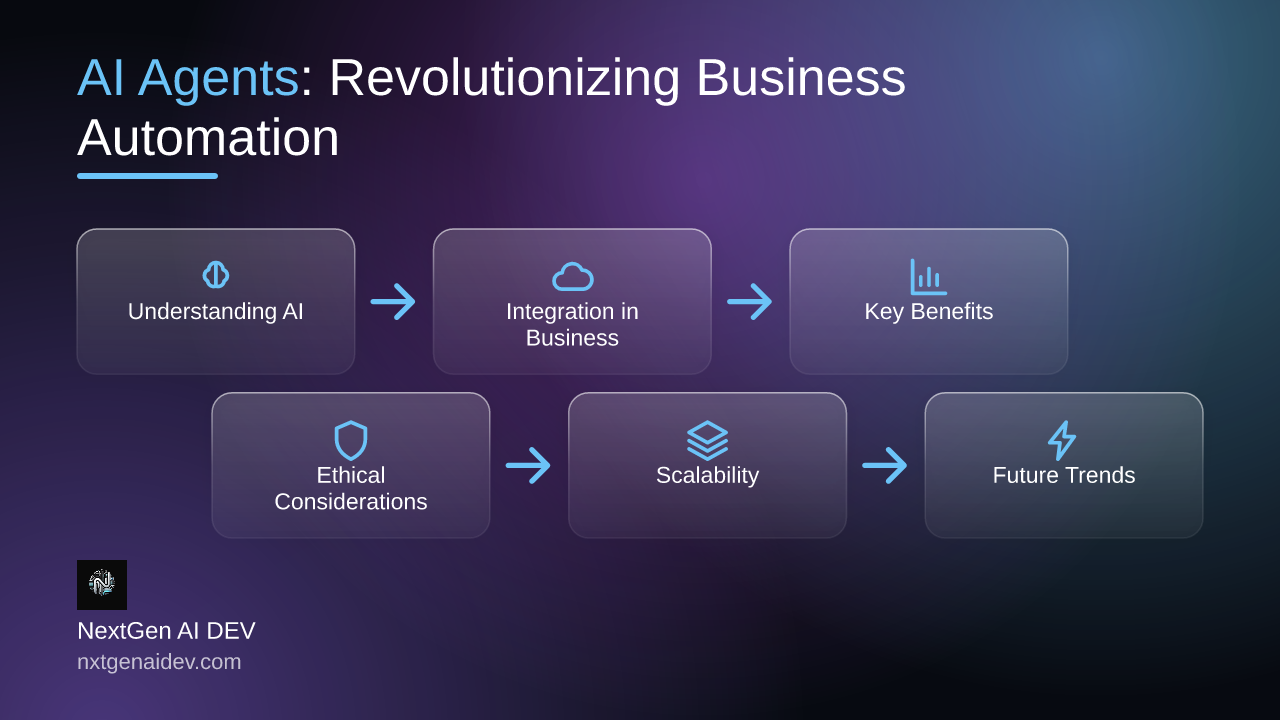
Understanding AI Agents
What is Agentic AI?
AI agents are revolutionizing how we perceive automated systems. Unlike traditional software, these intelligent agents operate autonomously, making decisions and learning from their environment. In essence, agentic AI can think and act independently within a predefined framework. This allows businesses to streamline processes, respond to customer needs in real-time, and even predict future trends based on data analysis.
Differences from Traditional AI
While traditional AI relies on pre-programmed algorithms and extensive input from human operators, agentic AI is designed for self-sufficiency. The key distinction lies in how these systems learn and adapt. Traditional AI may require reconfiguration for different tasks, whereas AI agents can evolve their strategies based on ongoing interactions and data input, becoming increasingly efficient over time. This adaptability makes them capable of handling complex business dilemmas that traditional systems simply cannot manage.
Integration of AI Agents in Business Automation
Industry Adoption Rates
The incorporation of AI agents into business has seen explosive growth in 2023. Industries like retail, finance, and healthcare are leading the charge, driven by the need for greater efficiency and responsiveness. According to recent studies, 72% of organizations now utilize some form of agentic AI to augment their operations, a sharp increase from previous years. This rapid adoption is fueled not just by the technology’s efficiency but also by a competitive market that demands innovation.
Real-world Applications
Real-world applications of AI agents range from customer service to sales optimization. For instance, many e-commerce platforms now employ AI chatbots to provide instant assistance to shoppers. These bots manage inquiries, recommend products, and even facilitate transactions autonomously. A well-documented case includes a major online retailer that reported a 30% increase in sales after implementing AI agents, thanks to their ability to engage customers promptly and effectively throughout their shopping journey.
Key Benefits of AI Agents
Cost Reduction
One of the paramount benefits of AI agents is their ability to cut costs significantly. By automating repetitive tasks—such as data entry, appointment scheduling, and even troubleshooting—businesses can redirect valuable human resources towards more strategic initiatives. A study revealed that automating these standard tasks can reduce operating costs by as much as 20%.
Real-time Optimization
Real-time optimization is another game-changing capacity of AI agents. These intelligent systems can analyze large sets of data instantly, allowing businesses to adapt their strategies mid-course. For example, an AI agent monitoring social media trends can alert marketing teams towards a rising topic, enabling them to pivot campaigns swiftly and maintain relevance.
Enhanced Customer Engagement
AI agents also greatly improve customer interactions. By personalizing communication and providing immediate responses, these agents enhance overall customer satisfaction. For example, one telecommunications company reported a 50% reduction in response times due to its new AI-supported customer service solution, drastically improving customer satisfaction ratings and retention rates.
Ethical Considerations with AI Agents
Governance Challenges
As the use of AI agents becomes more prevalent, governance becomes a critical consideration. Organizations face ethical challenges regarding data privacy, transparency in decision-making, and accountability for outcomes produced by AI. Establishing a robust governance framework is essential to navigate these complex issues while maintaining consumer trust.
Addressing Cybersecurity Risks
Alongside governance, cybersecurity remains a pressing concern when deploying AI agents. Potential vulnerabilities arise when integrating these systems into existing infrastructures. Businesses must conduct thorough security assessments and implement strong protocols to protect both their data and that of their customers. This includes conducting risk assessments, regular software updates, and adopting best practices for data encryption.
Scalability of AI Agents for Small Businesses
Overcoming Barriers to Adoption
While large enterprises are effectively leveraging AI agents, small businesses often face significant hurdles to adoption. Budget constraints, lack of technical skill, and minimal understanding of integrating such technologies can be daunting. However, these barriers can be overcome through tiered implementations or by utilizing SaaS (Software as a Service) solutions that require minimal upfront investment.
Success Stories from Small Enterprises
Despite the challenges, numerous small enterprises have successfully harnessed AI agents for automation. For example, a local retail shop implemented an AI-driven inventory management system that predicts stock levels and suggests optimal ordering times. This resulted in a 25% reduction in excess inventory and improved cash flow, showcasing that even small ventures can benefit dramatically from agentic AI.
Future Trends in Agentic AI
Advancements in Technology
As we look to the future, advancements in AI technology will only enhance agentic capabilities. Machine learning algorithms will continue to evolve, making AI agents smarter, more intuitive, and even more capable of handling intricate business tasks. Innovations like natural language processing, improved data algorithms, and better integration with other technologies promise a new wave of efficiency.
Potential Industry Impacts
Some industries are poised to experience significant transformations due to agentic AI advancements. Sectors such as logistics, finance, and healthcare stand to benefit enormously as these systems streamline operations and enhance service delivery. For example, AI agents could revolutionize patient care by managing appointments, monitoring health metrics, and providing personalized health advice, thereby freeing healthcare professionals to focus on more complex cases.
How has your business approached the integration of AI agents in its processes? What challenges or successes have you encountered?
💬 Join the conversation — share your take in the comments and tell us what you’d add.